
Why Southeast Asia’s Gaming Future Is Bigger Than Most People Realize
From mobile-first communities to competitive esports ecosystems, Southeast Asia is quietly reshaping the global gaming landscape.
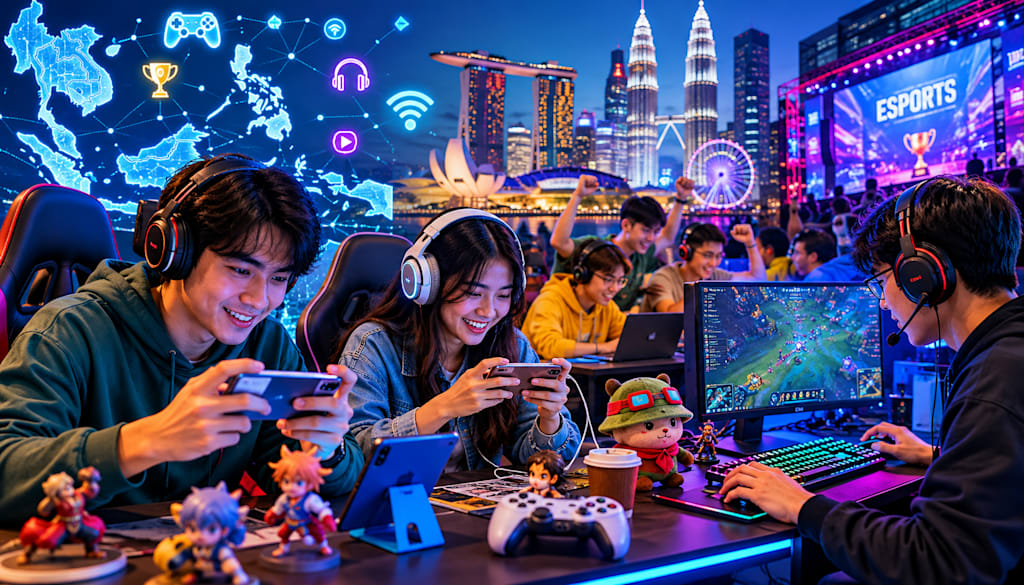
The train doors slide open in Bangkok. A student steps out, eyes fixed on a smartphone screen. Across the region, a similar scene unfolds in Jakarta, Manila, Ho Chi Minh City, and Kuala Lumpur. Between classes, commutes, coffee breaks, and late-night gatherings, millions of players are logging into virtual worlds.
Gaming in Southeast Asia is no longer simply a pastime. It has become a social space, a form of entertainment, a competitive arena, and for some, even a career path. While global attention often focuses on North America, China, or Europe, another story is unfolding—one driven by mobile connectivity, youthful populations, and rapidly evolving digital habits.
According to Mordor Intelligence, the Southeast Asia gaming market size is estimated at approximately USD 14.86 billion to USD 15 billion in 2026 and is projected to grow at a CAGR of 0.19% during 2026–2031. This steady trajectory highlights the region’s continued importance within the global gaming ecosystem.
For readers searching questions such as “What is the future of gaming in Southeast Asia?”, “How large is the Southeast Asia gaming market?”, or “Which gaming regions are attracting global attention?”, the answer increasingly points toward one interconnected digital community.
A Region Built for Connected Gaming Experiences
Unlike many mature gaming markets that evolved around consoles and PCs, Southeast Asia followed a different path. Affordable smartphones and expanding internet access placed gaming directly into people's pockets.
This accessibility transformed who could participate. Gaming was no longer limited to dedicated enthusiasts with expensive hardware. Students, office workers, parents, and casual users could join multiplayer experiences with just a mobile device and an internet connection.
Several factors continue to shape current Southeast Asia gaming market trends:
Strong mobile gaming adoption
Growing esports audiences
Expanding digital payment ecosystems
Increased social gaming participation
Cross-border gaming communities
Rising interest in live-streamed gaming content
The result is a uniquely connected environment where gaming frequently overlaps with communication, entertainment, and social interaction.
The modern Southeast Asia gaming Industry reflects this diversity. Competitive players stream tournaments, casual gamers participate in cooperative events, and creators build audiences through gaming-related content. Rather than a single audience segment, the region supports multiple gaming lifestyles simultaneously.
Beyond Entertainment: Why Global Companies Are Paying Attention
Imagine launching a game across multiple countries with different languages, cultures, and gaming preferences—yet discovering that players share a common enthusiasm for community-driven experiences.
That challenge has become an opportunity.
Publishers increasingly view Southeast Asia as a strategic region because engagement often extends beyond gameplay itself. Communities gather on social platforms, participate in tournaments, watch livestreams, and contribute to online discussions that keep games relevant long after release.
This broader ecosystem helps explain why discussions around Southeast Asia gaming market growth continue to attract interest from investors, developers, and technology companies.
Equally important is the region's demographic profile. Many countries maintain relatively young populations that are comfortable with digital technologies and online entertainment. These audiences are often early adopters of emerging gaming formats, from cloud gaming concepts to social multiplayer experiences.
When analysts discuss the Southeast Asia gaming market share, they are increasingly referring to a region that contributes not only revenue but also cultural influence. Popular gaming behaviors frequently emerge from local communities before spreading globally through social media and streaming platforms.
What the Next Chapter Could Look Like
Predicting the future of gaming is never simple. Technologies change, player preferences evolve, and new platforms emerge unexpectedly.
Yet several themes appear likely to remain influential throughout the coming years.
First, mobile gaming is expected to remain central to player engagement. Convenience continues to be a defining characteristic of how many people access games across the region.
Second, community-driven experiences may become even more valuable. Players increasingly seek environments where they can connect, collaborate, compete, and share experiences with friends and broader audiences.
Third, content creation is likely to play a growing role. Streamers, influencers, and gaming creators are helping shape discovery and engagement across multiple countries.
These developments contribute to the broader Southeast Asia gaming market forecast, which reflects a region maintaining its significance within the global gaming economy. While growth rates may differ from those seen during earlier expansion phases, the market's scale and influence continue to command attention.
The story is ultimately about more than revenue figures. It is about how millions of people interact with technology, build communities, and create shared experiences across borders.
As gaming becomes increasingly woven into everyday life, Southeast Asia's role appears less like an emerging opportunity and more like an established force within the digital entertainment world.
The next major gaming innovation may not originate where many expect. It could emerge from a smartphone screen in Jakarta, a tournament stage in Manila, or a gaming café in Bangkok—where the future is already being played.
For anyone tracking the Southeast Asia gaming market, one thing is becoming clear: the region's influence extends far beyond its borders.
What do you think will shape the next generation of gaming in Southeast Asia—mobile innovation, esports, content creators, or something entirely different? Share your thoughts below.
About the Creator
Enjoyed the story? Support the Creator.
Subscribe for free to receive all their stories in your feed.
Comments
There are no comments for this story
Be the first to respond and start the conversation.