
Why Some Shy Children Struggle with Social Skills (and What Helps Them Feel More Confident)
A gentle look at childhood shyness, confidence building, and how small steps like saying “hello” can make a difference

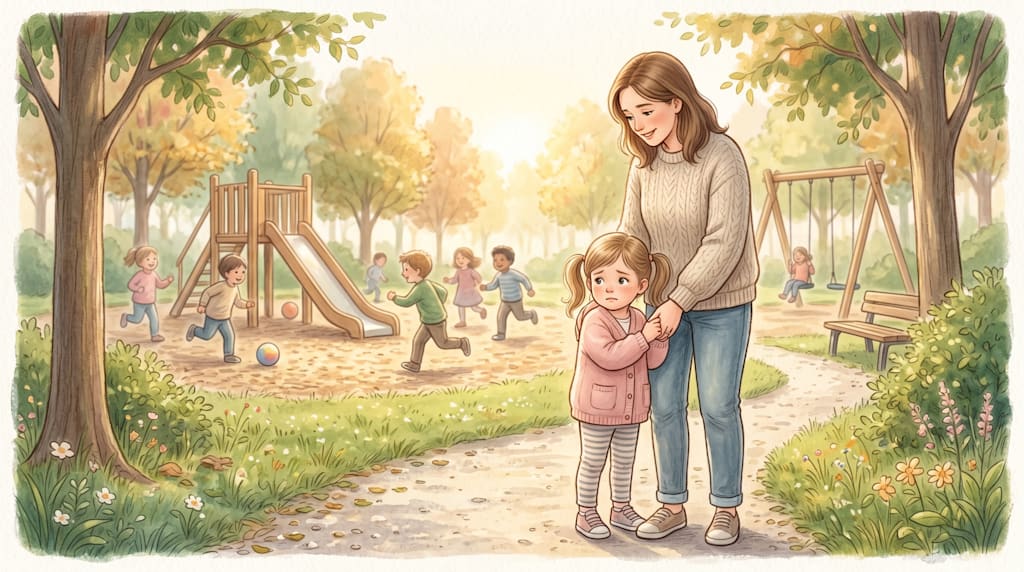
Why Some Kids Find It So Hard to Say “Hello”
I used to think that shyness in kids was just a phase.
You hear it all the time. People say, “They’ll grow out of it,” or “They just need more time.” And maybe that’s true for some children. But after watching closely, I started to notice that for others, it’s not that simple.
Some kids don’t just stay quiet.
They hesitate.
They want to join in. You can see it in their eyes. They watch other children playing, laughing, talking freely. And for a moment, it feels like they might step forward… but then they don’t.
They stay where they are.
And that moment the one where they almost try started to feel more important than I expected.
---
## It’s Not About Confidence the Way We Think
We often imagine confident children as the loud ones. The ones who speak easily, make friends quickly, and jump into situations without thinking twice.
But confidence, especially for a child, doesn’t always look like that.
Sometimes it looks like something much smaller.
It’s the quiet decision to stay instead of walking away.
It’s making eye contact for just a second longer.
It’s whispering “hi” so softly that only one person can hear it.
For a shy child, these are not small things.
They are big steps.
---
## The Part That’s Hard to See
What makes it difficult is that shyness often happens inside.
From the outside, it might look like the child is simply choosing not to speak. But internally, there’s usually a mix of thoughts and feelings happening all at once uncertainty, worry, overthinking, and sometimes even fear.
Telling a child to “just say hello” doesn’t remove those feelings.
If anything, it can make them more aware of what they’re struggling with.
That’s something I didn’t fully understand at first.
---
## Trying to Help (and Not Always Getting It Right)
Like many people, I tried to encourage more interaction.
Gentle reminders. Small nudges. Even a bit of reassurance before social situations.
Sometimes it helped a little.
But other times, it felt like the pressure was still there just in a softer form.
And I started to realize that what shy children might need most is not encouragement in the usual sense, but something that feels safer.
Something indirect.
---
## Why Stories Feel Different
That’s when I noticed how differently children respond to stories.
There’s no pressure in a story.
No one is asking them to act. No one is watching their response. They can simply listen, imagine, and feel.
And when a child sees a character going through something familiar, it creates a quiet kind of connection.
They don’t feel alone in that moment.
They don’t feel judged.
They just understand.
---
## A Story That Stayed With Me
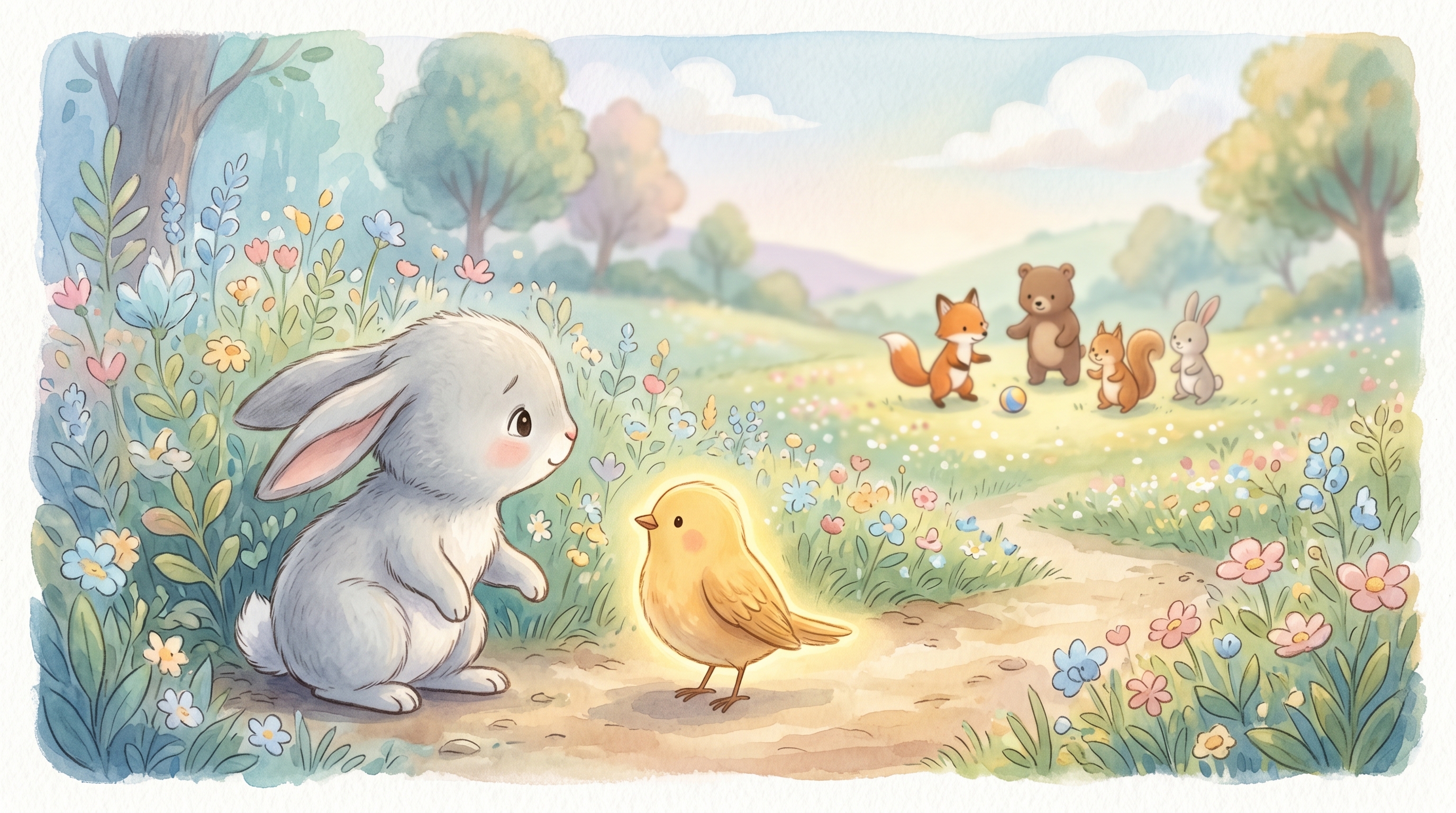
At some point, I came across a simple story about a shy rabbit.
It wasn’t dramatic or fast-paced. Nothing big really happened.
The rabbit didn’t suddenly become confident or change overnight.
He simply struggled to say “hello.”
He watched others. He waited. He tried, then stopped. And then, very slowly, he tried again.
That’s what made it feel real.
Later, I found out the story was called *Benny the Shy Rabbit and the First Brave Hello*. And what stayed with me wasn’t just the message, but the way it respected the pace of the character.
There was no rush.
Just a small, meaningful step forward.
---
## Letting Growth Be Slow
That idea changed how I look at these moments.
Instead of focusing on the outcome whether a child speaks or not I started noticing the attempt.
The pause before the action.
The willingness to stay present instead of stepping away.
Those small moments matter more than we think.
Because that’s where confidence actually begins.
---
## Final Thought
Not every child needs to become outgoing.
Not every quiet moment needs to be filled.
Sometimes, the most important thing we can do is create space.
Space where a child feels safe enough to try.
And maybe, when the moment feels right…
they’ll say “hello.”
In their own way. In their own time.
About the Creator
Tamer saleh
Science-based fitness for real results. Join thousands transforming their bodies at: https://linktr.ee/little.hero.academy
Enjoyed the story? Support the Creator.
Subscribe for free to receive all their stories in your feed.
Comments
There are no comments for this story
Be the first to respond and start the conversation.