
Why Solopreneurs Are Treating Their Bio Like a Business Card?
Solopreneurs Are Treating Their Bio Like a Business Card
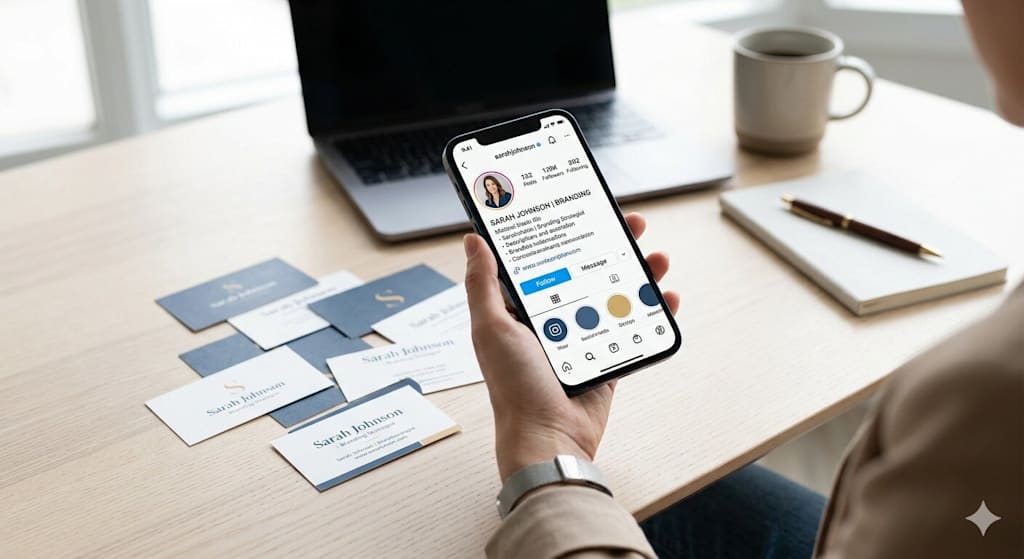
There is a moment that every solopreneur eventually experiences.
Someone lands on your Instagram profile, your Twitter page, or your LinkedIn. They read your bio in about three seconds. Then they decide whether to follow you, click your link, or move on forever.
You are not there for that moment. You cannot explain yourself or add context. Your bio does all the talking on your behalf.
That is exactly why solopreneurs in 2026 are treating their bios with the same care that previous generations gave to printed business cards. The bio is not just a description. It is the first pitch, the first impression, and often the deciding factor in whether someone becomes a follower, a client, or a customer.
What Changed? From Business Cards to Bio Boxes
A business card used to carry your name, title, contact details, and maybe a tagline. It communicated your professional identity in a compact, portable format. You handed it to someone and it lived in their wallet or on their desk as a reminder of who you are.
The social media bio does the same thing, just at a much larger scale. Instead of handing it to a hundred people at a networking event, you are handing it to thousands of strangers every single month. Some of those people become clients. Some become collaborators. Some share your profile with others.
The stakes are higher because the reach is larger. And unlike a printed card, your bio can be updated instantly when your offer, niche, or identity shifts.
Solopreneurs figured this out faster than most traditional businesses. When you are a one-person operation, your personal brand is your business brand. Every touchpoint matters. And the bio is the most visited touchpoint of all.
The Attention Economy Problem
Here is the uncomfortable truth about social media in 2025: attention is harder to earn than ever before.
The average person scrolls through hundreds of profiles, posts, and pieces of content every single day. Most of it blurs together. A generic bio that reads "Entrepreneur. Coach. Mom of 3. DM for collabs" does nothing to stop that scroll.
Solopreneurs who understand the attention economy know they need two things to work in their favor at the same time. The bio needs to look interesting and read interesting. Visual appeal gets the first glance. Clear, specific copy keeps it.
This is why the smartest solo creators now think about their bio in two layers: the visual presentation and the actual words.
The Visual Layer: Why Font Style Matters More Than People Expect?
Walk through any high-performing Instagram or TikTok profile in the personal brand space and you will notice something. The bio rarely looks like plain default text. Names appear in flowing cursive. Taglines carry bold or fancy fonts. Line breaks and spacing are deliberate.
This is not accidental decoration. It is a strategic choice.
Styled text draws the eye. In a feed where everything is the same default font, a bio written in calligraphy or elegant bold Unicode styling stops the scroll for an extra second. That extra second is the difference between a follow and a skip.
Unicode font styling, the kind that works on Instagram, TikTok, Twitter, Facebook, and Discord without any special software, lets solopreneurs add visual personality to plain text fields. No app downloads, no design skills required. You type your bio, choose a style, and copy it directly into the platform.
The effect is subtle but real. A bio in a styled cursive font reads as more intentional, more polished, and more personal than the same words in default text. It signals that this person cares about how they show up, and people respond to that signal with trust.
The Copy Layer: What a Great Solopreneur Bio Actually Says?
Visual style gets attention. But the words close the deal.
The best solopreneur bios do several things inside a very tight character limit. On Instagram, that limit is 150 characters. On Twitter and X, it stretches to 160. Every word has to earn its place.
Here is what the highest-performing solo creator bios tend to include:
- A clear statement of who they help or what they do (not just a job title)
- A specific result, outcome, or value they deliver
- A personality detail that makes them feel human and approachable
- A call to action that points to a link, a DM, or a next step
Notice what is missing from that list: vague buzzwords, laundry lists of roles, and anything that could apply to a thousand other people.
"Marketing consultant" tells you almost nothing. "I help small food brands get their first 10,000 Instagram followers" tells you exactly who this person is for and whether you are one of them.
The specificity is the pitch. And the pitch fits in the space where most people write something forgettable.
Why Solopreneurs Take This More Seriously Than Big Brands?
A large company has a sales team, a website, a blog, paid ads, and a customer support department to help convert interested people into customers.
A solopreneur has a bio and a link.
That difference changes everything about how seriously a one-person business takes that small block of text. There is no other system to catch people who bounce off the profile. The bio is the entire top of the funnel for many solopreneurs working in the creator economy.
This concentration of pressure on a tiny piece of text is exactly what pushes solopreneurs to obsess over every word, every line break, and yes, every font choice. It is not vanity. It is practical business thinking.
Real Examples of the Bio-as-Business-Card Mindset
Consider a freelance copywriter building her client base entirely on Twitter and Instagram. She writes her bio in styled Unicode text, uses a sharp one-line description of her specialty, and links directly to a portfolio page. Her profile converts visitors to inquiry emails at a rate that surprises even her.
Or think about a solo fitness coach on TikTok. His bio is three lines: who he helps, what his clients achieve in 90 days, and a link to his free starter guide. Nothing else. The styled font on his name makes his profile look polished before anyone reads a word.
These are not outliers. They are examples of a growing group of solopreneurs who treat their bio as a live, working asset rather than a filled-in form field.
Platform-by-Platform: How the Bio Works Differently?
The bio-as-business-card strategy plays out differently depending on which platform you use most.
Instagram gives you 150 characters and a link. Visual styling in the bio works particularly well here because Instagram is an image-first platform. Styled text in your bio matches the visual standard of the rest of your feed.
Twitter and X give you 160 characters. Punchy, specific copy tends to work better here than heavy styling. But a name or handle written in a bold Unicode style still stands out in a search result or tag mention.
TikTok gives you 80 characters in the bio. Every single word counts. Styled text helps the few words you have carry more visual weight.
LinkedIn is the most traditional of the bunch. Heavy decorative fonts can feel out of place here, but subtle styling on your name or headline in Unicode can still give your profile a cleaner, more intentional look.
Discord gives you a very short display name and a short bio. Styled usernames are common in creative communities and gaming spaces. They signal personality and help you be remembered across servers.
The Connection Between Bio and Brand Identity
For solopreneurs, the bio is not just a first impression. It is a declaration of brand identity.
Your bio answers the question: what do I stand for, and who am I for? When those answers are clear and visually compelling, the right people self-select. They follow, they click, they reach out.
When those answers are vague or visually dull, even the right people keep scrolling. Not because they are not interested in what you offer, but because nothing stopped them long enough to find out.
Building a bio that functions like a business card means treating it as a branding exercise, not an admin task. It means asking what a stranger should think, feel, and do after reading those few lines. And it means making intentional choices about how those lines look, not just what they say.
Final Thoughts: Treat Your Bio Like It Has a Job to Do
Because it does.
Your bio is on call every hour of every day, introducing you to strangers, qualifying leads, and setting the tone for every relationship that follows. It is the most compact and most visited piece of content you will ever write.
Solopreneurs who succeed in the creator economy understand this. They write their bios like sales copy. They style them like branding materials. They update them like living documents. And they measure results by what happens after someone lands on their profile.
If you have not looked at your bio recently, open it now. Ask whether it tells a stranger exactly who you are, who you help, and what to do next. Ask whether it looks as intentional as the content you work hard to create.
About the Creator
Enjoyed the story? Support the Creator.
Subscribe for free to receive all their stories in your feed.
Comments
There are no comments for this story
Be the first to respond and start the conversation.