
Why RISC-V Is Reshaping the Future of Computing
From smartphones to AI processors, the open-standard architecture is changing how the technology industry builds the next generation of devices.
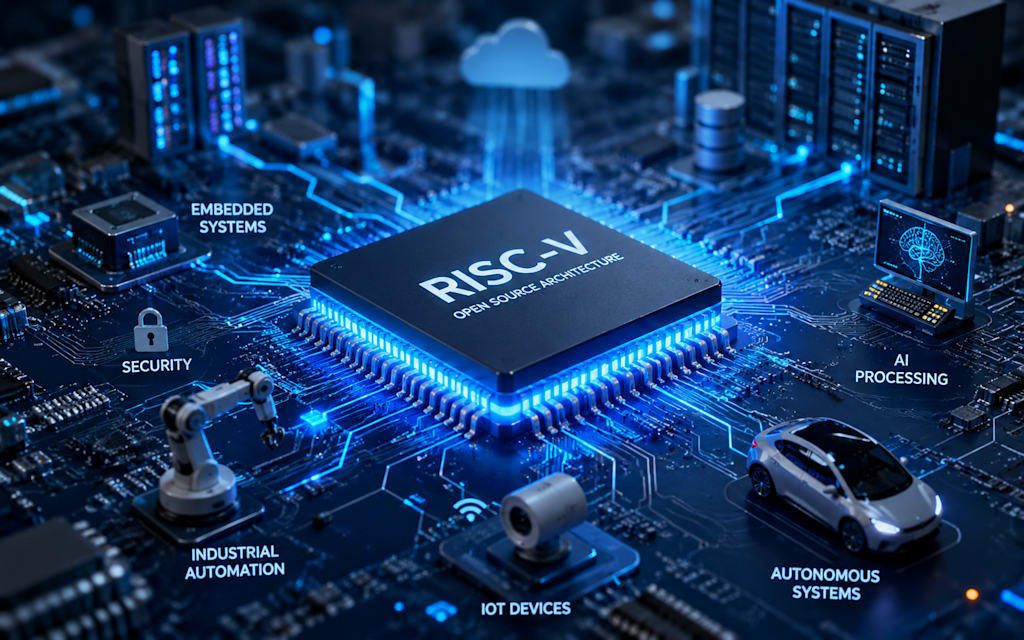
The race to build faster, smarter, and more efficient technology has often been dominated by a handful of established processor architectures. Yet, a quiet revolution is unfolding behind the screens we use every day. In research labs, startups, universities, and global technology companies, engineers are increasingly turning their attention toward an alternative that promises flexibility, openness, and innovation.
That alternative is Reduced Instruction Set Computing-V (RISC-V).
What began as an academic project has evolved into one of the most discussed developments in semiconductor design. As industries seek greater control over hardware development and reduced dependency on proprietary technologies, the momentum behind RISC-V continues to accelerate.
For many observers, the most fascinating aspect is not simply the technology itself—but how rapidly adoption is expanding across multiple sectors.
According to Mordor Intelligence, the RISC-V tech market is projected to grow from USD 1.89 billion in 2026 to USD 10.62 billion by 2031, registering a CAGR of 41.23% during the forecast period. This remarkable trajectory highlights growing interest in open-standard processor architectures and their expanding role in modern computing.
The Open Architecture Challenging Traditional Models
At its core, Reduced Instruction Set Computing-V (RISC-V) is an open-standard instruction set architecture that allows developers and organizations to design processors without relying on expensive proprietary licensing models.
Unlike traditional processor architectures that require licensing agreements, RISC-V enables companies to customize processor designs according to specific performance, power, and application requirements. This flexibility has become increasingly valuable as industries develop specialized computing solutions.
The growing interest is reflected in several important RISC-V tech market trends:
* Increasing demand for custom AI processors
* Expansion of edge computing infrastructure
* Growth of Internet of Things (IoT) devices
* Rising investment in semiconductor innovation
* Greater emphasis on technological independence
These factors are influencing the direction of the broader RISC-V tech Industry, where organizations are seeking more adaptable solutions to address evolving computational needs.
The appeal extends beyond large technology companies. Universities, research institutions, startups, and hardware innovators are also contributing to a rapidly expanding ecosystem. This diversity of participants encourages experimentation and accelerates innovation.
As a result, discussions surrounding RISC-V tech market growth increasingly focus on long-term opportunities rather than short-term adoption cycles. Industry observers view the architecture as a foundational technology capable of supporting a wide variety of future applications.
The conversation is also becoming more relevant in emerging fields such as autonomous systems, industrial automation, smart infrastructure, and advanced robotics, where tailored processor designs can deliver significant advantages.
Why the Next Decade Could Belong to RISC-V
Technology adoption often follows a familiar pattern. A concept emerges, gains support among specialists, and eventually reaches mainstream acceptance once its practical benefits become undeniable.
Many analysts believe Reduced Instruction Set Computing-V (RISC-V) is entering that critical phase.
One reason is the increasing demand for specialized computing. Modern workloads vary dramatically—from machine learning inference to sensor processing and cloud infrastructure. A one-size-fits-all processor architecture is becoming less practical in an environment where customization creates competitive advantages.
This shift is helping expand the RISC-V tech market share across multiple application areas. Organizations can optimize designs for specific use cases while maintaining greater control over development processes.
The growing ecosystem is another important factor. Hardware platforms, development tools, software frameworks, and educational resources continue to mature, making adoption more accessible than ever before.
When evaluating the long-term RISC-V tech market forecast, many observers focus on its ability to support innovation at scale. The architecture's open nature encourages collaboration across industries, fostering an environment where new ideas can move from concept to implementation more efficiently.
The projected expansion of the RISC-V tech market size further reinforces this narrative. As businesses pursue greater flexibility in processor development, interest in open-standard architectures is expected to remain strong.
For organizations planning future hardware strategies, the evolution of the RISC-V tech market represents more than a technological trend—it signals a broader shift in how computing platforms may be designed and deployed in the years ahead.
The story of RISC-V is still being written. What makes it compelling is not just its technical capabilities, but the collaborative vision behind it—a vision where innovation becomes more accessible, adaptable, and widely shared.
As open architectures continue to gain traction, one question remains:
Could RISC-V become the foundation of the next generation of computing devices that power our daily lives?
About the Creator
Enjoyed the story? Support the Creator.
Subscribe for free to receive all their stories in your feed.
Comments
There are no comments for this story
Be the first to respond and start the conversation.