
Why Real Estate Software Is Transforming the Property Industry Faster Than Ever
From AI-powered property management to cloud-based platforms, technology is reshaping how real estate professionals buy, sell, manage, and invest in properties.

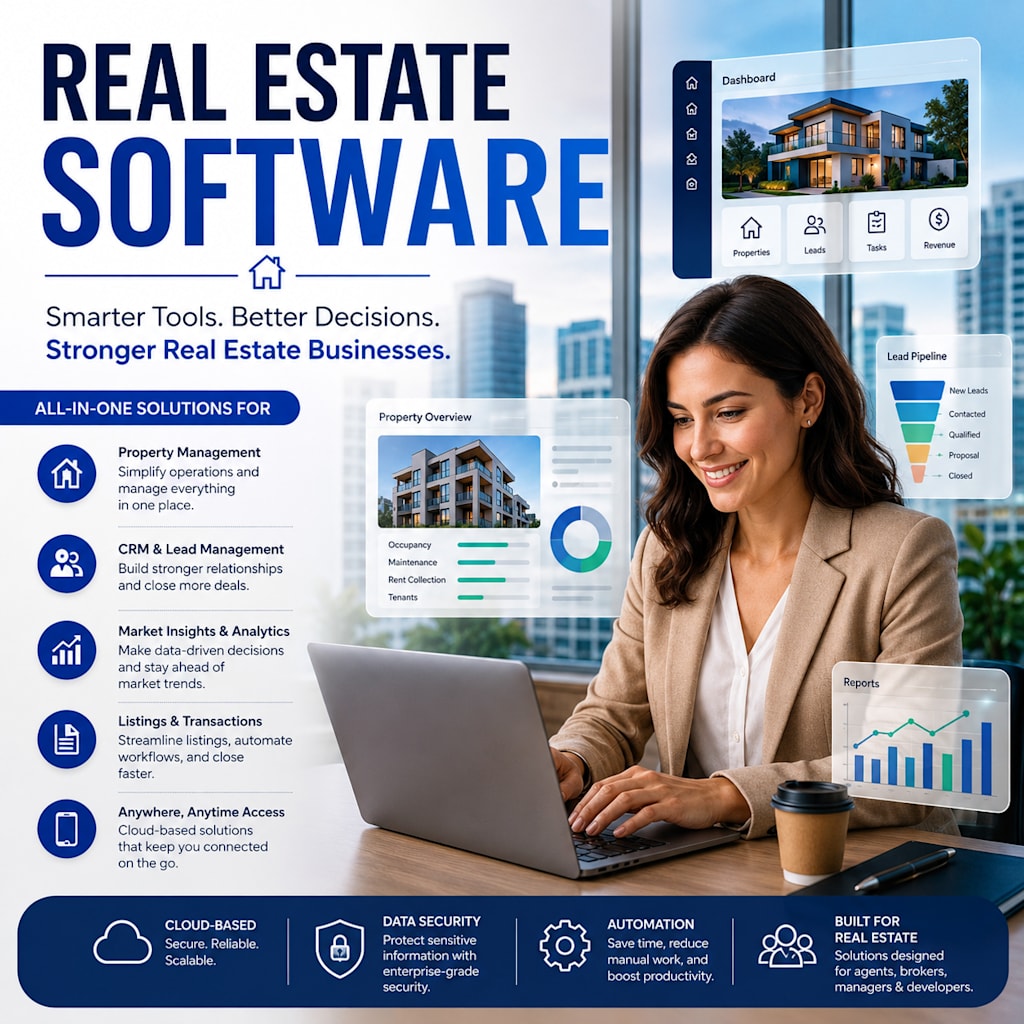
The real estate industry is undergoing a sweeping digital metamorphosis, unlike anything it has witnessed before. Technology is steadily embedding itself into every facet of operations – from sifting through listings and engaging clients to crunching investment data and masterminding property portfolios.
As property professionals navigate the ever-increasing torrent of data and soaring customer expectations, the rise of software solutions is paramount in sharpening work processes, amping up efficiency, and ensuring decisions hit the mark. This transformation is giving a massive boost to the global real estate software market, drawing heaps of attention from investors, developers, brokers, and property managers across the globe.
What was once a realm steeped in paper-pushing and manual drudgery is now rapidly evolving into a tech-driven ecosystem propelled by the power of cloud computing, artificial intelligence, mobile apps, and supercharged analytics.
Decoding the Growth of the Real Estate Software Market
In the last decade alone, the real estate software market size has skyrocketed as digital technologies become more deeply entrenched in the property sphere.
Valued at approximately USD 13.3 billion for 2025, it's projected to scale a staggering USD 29.4 billion by 2034, painting a picture of robust, long-term expansion. This growth trajectory underscores an intensifying reliance on digital instruments to oversee properties, enrich the tenant experience, and undergird smart decision-making.
At the heart of this phenomenon is the increasing complexity of real estate operations. Property managers, landlords, developers, and real estate agencies are tasked with managing sprawling portfolios and a wider spectrum of client needs than ever before. Consequently, software platforms have become an indispensable tool for modern real estate firms.
Why Real Estate Companies Are Flocking to Software Solutions
The property landscape of today is a veritable ocean of information, generated minute by minute. Lease agreements, repair requests, client correspondence, financial data, occupancy numbers, market trends - the list is endless. Trying to manage all this with manual processes is not only a monumental waste of time but also opens the door to costly errors.
Real estate software brings sanity to this chaos by centralizing all operations onto a single, integrated platform. Such solutions empower businesses to:
* Effortlessly manage properties.
* Precisely track leads and client interactions.
* Automate tedious administrative chores.
* Generate comprehensive financial reports.
* Smooth out communication between all parties involved.
* Access real-time business intelligence and insights.
For a great number of organizations, software is no longer considered a mere option; it’s now a strategic asset that fuels growth and boosts operational performance.
The Exponential Rise of Real Estate CRM Platforms
Within this booming market, customer relationship management (CRM) technology stands out as a rapidly ascending star. The escalating demand for CRM solutions has significantly bolstered the real estate CRM market share as agencies pour resources into better engaging their customers and converting leads.
In today's hyper-competitive marketplace, fostering strong bonds with buyers, sellers, tenants, and investors often determines the difference between success and mediocrity. Modern CRM platforms give businesses the tools to:
* Keep a well-organized central repository of customer information.
* Monitor the progression of sales funnels.
* Automate follow-up communications.
* Tailor messages to individual needs.
* Optimize the process of nurturing leads.
By providing a holistic view of client engagement, CRM software equips real estate professionals to deliver outstanding customer experiences while simultaneously improving conversion rates. In a landscape where customer expectations are in constant flux, CRM systems have emerged as the backbone of contemporary real estate technology.
Cloud-Based Platforms: The New Industry Standard
Cloud computing has emerged as one of the most revolutionary forces shaping the proptech sector. In stark contrast to traditional on-premise software systems, cloud-based platforms grant secure access to data and functionality from practically anywhere on the planet. This flexibility has become especially crucial as companies increasingly adopt remote work arrangements and mobile-centric operations.
Cloud solutions offer a host of compelling advantages:
* Reduced infrastructure expenses.
* Seamless real-time collaboration.
* Automatic software updates.
* Enhanced ability to scale operations up or down.
* Improved data security measures.
These benefits are propelling a steady migration of real estate businesses of all sizes toward cloud environments, solidifying cloud adoption as one of the primary growth drivers in the market.
Artificial Intelligence: Revolutionizing Property Management
Artificial intelligence is quickly becoming a major competitive differentiator in real estate technology. Sophisticated software platforms can sift through massive volumes of data and uncover patterns and insights that would be virtually impossible for human analysts to identify. AI-driven capabilities are empowering organizations to:
* Forecast future market trends.
* Optimize pricing strategies in real time.
* Automate customer service interactions.
* Refine the process of lead qualification.
* Predict housing demand.
* Strengthen the basis for investment decisions.
This wave of technological advancement enables real estate professionals to make smarter, quicker decisions while simultaneously enhancing operational efficiency. As AI continues to develop, its influence on the real estate software industry is set to expand dramatically.
Mobile-First Technology: Redefining User Expectations
The days of real estate professionals working solely from a fixed office location are long gone. Agents are constantly on the move for showings, property managers are overseeing multiple sites, and investors are evaluating opportunities across different geographical markets. This has driven an immense surge in demand for software that is mobile-friendly and optimized for use on smartphones and tablets.
Mobile-first platforms allow users to:
* Access real-time property data at their fingertips.
* Schedule appointments and manage calendars seamlessly.
* Communicate with clients on the go.
* Address maintenance requests efficiently from the field.
* Review financial reports and performance metrics.
* Process payments and handle transactions remotely.
The capability to manage all aspects of their business from anywhere, at any time, has become a critical competitive advantage.
Strategic Partnerships Sparking Innovation
Another significant trend that is reshaping the market landscape is the rise of collaborative partnerships between software providers and real estate companies. These alliances facilitate the development of more niche and specialized solutions, thereby accelerating the pace of innovation. Tech vendors are increasingly integrating cutting-edge functionalities, such as:
* Artificial intelligence and machine learning.
* Big data analytics.
* Internet of Things (IoT) devices.
* Sustainability reporting and environmental, social, and governance (ESG) metrics.
* Predictive analytics for risk assessment and forecasting.
Such collaborations allow businesses to offer comprehensive platforms that meticulously address the evolving needs of property owners, managers, and investors alike.
Top Regional Markets Driving Digital Transformation
North America currently dominates the global real estate software market, driven by widespread digital adoption, advanced technological infrastructure, and a well-established property sector. In the United States particularly, numerous leading proptech companies are at the forefront of creating sophisticated solutions for property management, data analysis, and customer engagement. Meanwhile, the Asia-Pacific region is rapidly emerging as a fast-growing hub, spurred by rapid urbanization, burgeoning real estate investments, and expanding digital connectivity. Europe too is experiencing robust growth, fueled by a growing emphasis on sustainability initiatives and property modernization efforts, which in turn are creating new demand for technological tools.
Why the Future is Bright
If you've looked at a typical real estate software market report, you'll know that the industry is set for sustained and strong growth in the coming years. A confluence of powerful trends is fueling this expansion:
* An ever-accelerating pace of digital transformation.
* The rapid proliferation and adoption of cloud technologies.
* Increasing integration and application of artificial intelligence.
* A burgeoning demand for mobile-first, on-the-go solutions.
* The expansion and adoption of smart building technologies.
* A laser-like focus on delivering superior customer experiences.
As these trends continue to develop and intertwine, software platforms will unquestionably take center stage in defining the future of real estate operations.
About the Creator
Robert
Senior Market Researcher at IMARC Group, specializing in global market analysis, industry trends, and data-driven insights across diverse sectors.
Enjoyed the story? Support the Creator.
Subscribe for free to receive all their stories in your feed.
Comments
There are no comments for this story
Be the first to respond and start the conversation.