
Why Placement Changes Everything in a Residential Concrete Project
Residential Concrete Project

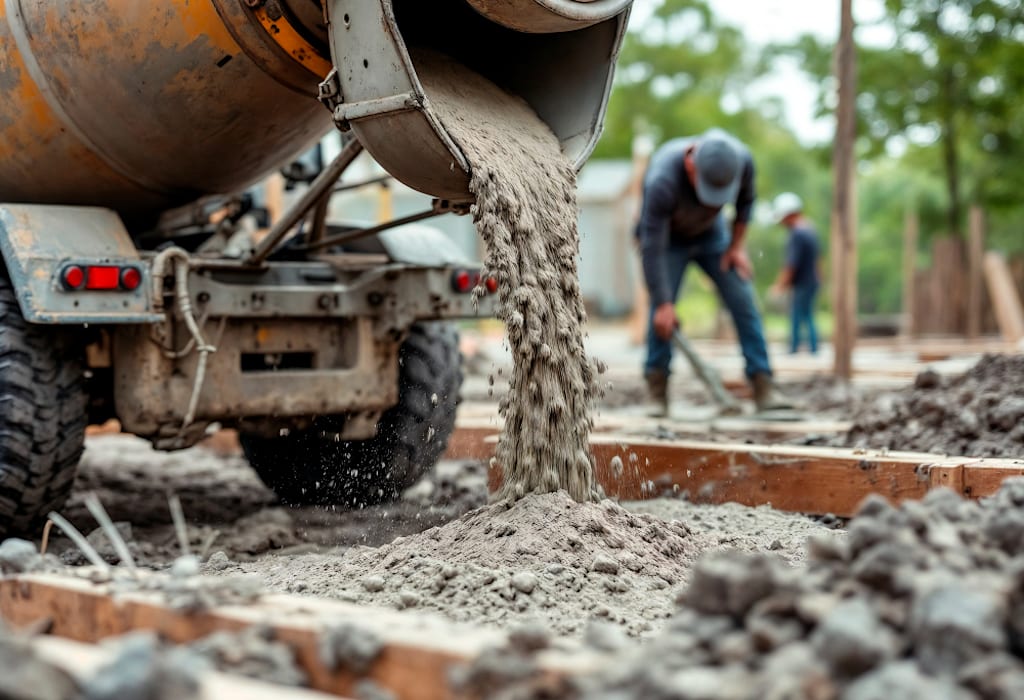
Most people think a concrete project starts when the truck arrives. It doesn’t. It starts when someone decides how that concrete is going to move once it’s on site. That decision affects speed, finish quality, and how smoothly the entire day unfolds. Concrete does not wait around while a crew figures things out. Once it is mixed, the clock is running.
For homeowners planning a driveway, patio, or foundation, placement should be part of the conversation early. Not as an afterthought. Not as something handled “on the day.” Because the way concrete gets from the truck to the forms can either simplify the project or complicate it.
What Concrete Pumping Actually Does
Concrete pumping is exactly what it sounds like. Instead of hauling wet concrete across the property in wheelbarrows or multiple transfers, it is delivered directly through a pump system to the area being poured. A boom or line pump moves the mix efficiently, keeping the flow steady and controlled.
In residential settings, this makes a noticeable difference. Backyards are rarely wide open spaces. There are fences, landscaping, tight side paths, and finished surfaces that homeowners want to protect. Pumping allows the crew to work with the layout of the property rather than fighting against it.
When people search for Concrete pumping Toronto, they are usually trying to solve one problem: access. Either the space is tight, the pour is large, or they want a cleaner and faster process. Pumping addresses all three without turning the job site into a maze of foot traffic and equipment.
Why Driveways Benefit from Controlled Placement
Driveways often look simple from the outside. In reality, they require consistency from start to finish. The surface needs even thickness and steady placement to avoid weak areas. When concrete is delivered in a controlled stream, crews can focus on leveling and finishing rather than rushing between loads.
A steady pour reduces interruptions. That helps prevent uneven transitions where one section begins setting before another is filled. Over time, those inconsistencies can show up as surface issues. Good placement does not guarantee perfection, but it removes unnecessary risk.
Patios and Backyard Projects Without the Chaos
Backyard pours bring a different set of challenges. Narrow access points, decorative landscaping, and existing structures limit movement. Dragging concrete across these spaces adds labor and increases the chance of disturbance.
With pumping, the concrete travels directly to the forms. There is less strain on the crew and less disruption to the property. Homeowners often notice that the job feels more organized. The focus stays on getting the patio level and finished properly rather than managing traffic across the yard.
Foundations Demand Precision
When pouring a foundation, placement becomes even more critical. Foundations rely on continuous flow to maintain structural integrity. Interruptions during the pour can create weak transition areas that no one wants in a load-bearing structure.
Pumping supports a consistent delivery rate. That allows the crew to maintain momentum and keep the pour unified. It is one of the reasons pumping has become common practice not just on commercial builds, but also on residential construction.
The Efficiency Factor Homeowners Do Not Always See
Time matters on pour day. The longer concrete is handled or transferred, the greater the pressure on the crew. Extra movement adds labor and fatigue. Pumping reduces the number of steps between the truck and the forms.
That efficiency often translates into a smoother overall experience. Less scrambling. Fewer adjustments. A clearer workflow. It does not make the job effortless, but it removes avoidable friction.
For many residential projects, especially those with limited access or larger surface areas, pumping is not about convenience alone. It is about managing the most time-sensitive part of the process with more control.
Choosing the Right Team for the Job
Not every project requires the same setup. The right equipment and an experienced crew make a difference. Communication before the pour is just as important as execution during it. The team should understand the layout of the property, the scope of the project, and the timing involved.
Working with a company that focuses on residential work helps ensure the approach fits the scale of the job.
It also means the crew is familiar with the realities of working around homes rather than open commercial sites.
Before You Schedule Your Next Pour
Concrete projects are investments in your property. Driveways, patios, and foundations are built to last, and the installation process plays a role in how well they hold up. Before approving the work, ask that first question again: how is the concrete getting from the truck to the forms?
If the answer involves efficiency, control, and planning, you are already on the right track. When placement is managed properly, everything that follows becomes easier to execute and more reliable over time.
About the Creator
Sandeep Katoch
Sandeeo Katoch is a versatile freelance content writer and marketer with a dynamic approach to storytelling.
Enjoyed the story? Support the Creator.
Subscribe for free to receive all their stories in your feed.
Comments
There are no comments for this story
Be the first to respond and start the conversation.