
Why Pallet Dimensioning Matters for Compliance with Cross-Border Shipping
Shipping various goods across borders is a complex undertaking that involves precision, efficiency and adherence to global laws. How we size pallets plays a big role in making international trade work well. When pallets have the right size, they meet legal requirements, make transport easier, and save money.
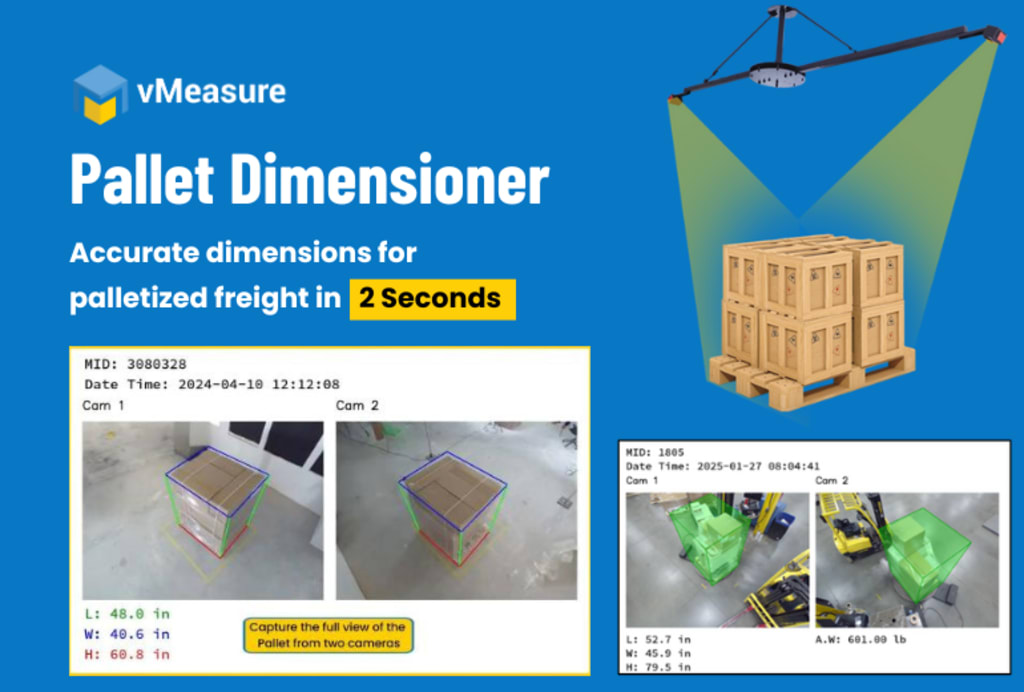
Getting pallet sizes right is key for cross-border shipping, and this blog post looks at how automated pallet dimensioners can change the game. Understanding
Comprehending Pallet Dimensioning
Sizing a pallet means figuring out how much it weighs and how tall, wide, and long it is. We need these measurements to decide how to pack, store, and move goods. Getting the sizes right makes sure pallets fit in shipping containers, avoids problems with logistics, and follows international rules.
Why Pallet Dimensions Matter
International Standards:
Regarding pallet sizes, several regions have their own standards.
For instance:
A typical pallet size in North America is 40 by 48 inches, but pallets of 1200x800 mm are more common in Europe. Meanwhile, Asia often uses pallets sized at 1100x1100 mm.
Following these recommendations is essential to guaranteeing the smooth operations of regional logistics networks and avoiding adjustments while in transit.
Efficient Space Utilization:
Making the most of the space in the shipping containers and warehouse can be achieved by utilizing pallets of the proper size. Pallets that are too large may wind up taking up too much room, and those that are too little may require more handling or repackaging.
Regulatory Compliance:
various organizations such as ISO have established particular set of dimensions and labeling standards for pallets that are used in international shipping. You may run the danger of fines, shipment delays, or even a cargo rejection if you don’t abide by these guidelines.
Challenges in Cross-Border Shipping
Shipping goods across borders can feel like trying to find your way through a intricate maze of rules, customs, and logistical challenges. One serious area where mistakes can throw a wrench in the works is pallet dimensioning.
Common Issues:
Dimension Variations: When pallet sizes are inconsistent, it can lead to compatibility problems with transport equipment or storage spaces.
Human Errors: Taking manual pallet measurements can easily lead to mistakes, which might spark billing disputes or trigger freight audits.
Delays: If dimensions are off, you might end up having to repackage or reroute shipments, which can cause delays and rack up extra costs.
The Role of Automated Pallet Dimensioners
Automated pallet dimensioners are sophisticated devices made to swiftly and precisely measure the weight and dimensions of pallets. They use technology-driven solutions that improve productivity and dependability in place of manual operations.
How Automated Dimensioners Work
The automated pallet dimensioners perform precise measures in a few seconds using high-definition cameras and laser-based or 3D infrared sensors. These pallet dimensioners are also capture photos of the pallet for documentation in a fraction of seconds.
Benefits of Automated Pallet Dimensioners
Now, let's discuss some of the key benefits of using automated pallet dimensioners in logistics:
Enhanced Accuracy: using automated pallet dimensioners can help you reduce manual errors. By providing consistent pallet measurements, these dimensioners help you to prevent conflicts caused by erroneous dimensioning data and ensures that everything meets international standards.
Time efficiency: Hand-measuring pallets may require a significant amount of time and effort. The automated pallet dimensioners can measure all shaped pallet in seconds, allowing your team to focus on other important tasks and boost overall operations.
Cost savings: The accurate pallet measurements would effectively help you reduce shipping errors and optimize your logistics strategy. And this means lower transit cost and fewer penalties for errors made by carriers or customers.
Improved warehouse management: With exact pallet dimensioning data from the automated pallet dimensioners, warehouse managers can streamline their operations and can keep a closer eye on inventory and better allocate space.
Transparency in freight audits: Automated pallet dimensioners also provide thorough records of pallet dimensions and state, which is a further benefit. This means fewer disagreements during freight audits and more openness with carriers.
Compliance with Cross-Border Shipping Regulations
International shipping regulations often specify requirements for pallet dimensions, labeling, and loading practices:
Size Standards: ISO standards dictate acceptable pallet sizes for different regions to ensure compatibility with transport containers.
Labeling Requirements: To adhere to customs procedures, pallets must have labels with handling guidelines, lifting techniques, and cargo information.
Loading Guidelines: To avoid mishaps while in transit, OSHA advises safe stacking heights of up to 60 inches.
By guaranteeing precise measurements and appropriate documentation, automated pallet dimensioners make compliance easier.
Future Trends in Pallet Dimensioning
It is projected that the use of automated pallet dimensioners will rise as businesses prioritize efficiency and compliance in international trade:
Integration with AI: Using artificial intelligence, state-of-the-art algorithms will predict the optimal packing configurations based on dimensions.
Blockchain Documentation: If blockchain technology is applied with automated procedures, supply chains may become more transparent.
Sustainability Objectives: Accurate dimensioning reduces needless packing, which supports environmental objectives.
Conclusion
Getting a correct pallet dim isn't just a box to tick—it's the smoothest key for international shipping. Nailing these measurements means you're in line with worldwide standards, which makes logistics easier and cuts costs. Automated pallet dimensioners are changing the game. They cut down on human slip-ups, save precious time, and make everything more see-through.
For businesses in the global trade game, investing in automated pallet dimensioning isn't just a nice extra—it's a must to stay on top in our connected world.
By jumping on these new tools now, companies can meet the needs of worldwide trade and set themselves up to run things more smoothly down the road.
About the Creator
Enjoyed the story? Support the Creator.
Subscribe for free to receive all their stories in your feed.
Comments
There are no comments for this story
Be the first to respond and start the conversation.