
Why Organic Biogas Could Power the Next Green Economy?
How waste is becoming one of the world's fastest-growing renewable energy opportunities
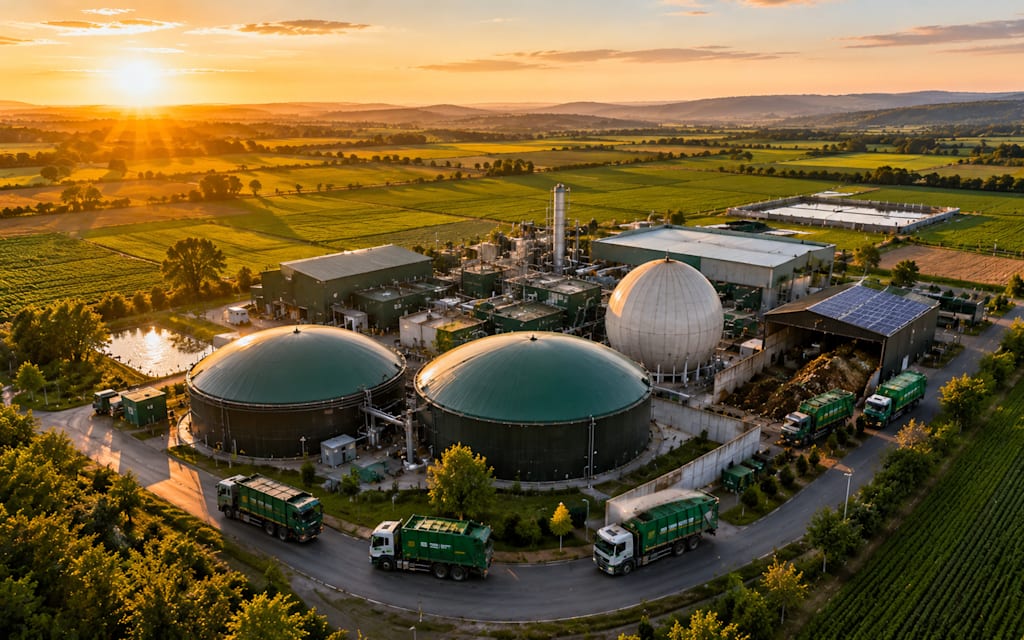
The banana peel tossed into a trash bin this morning may seem insignificant. A few hours later, it joins thousands of tons of discarded food scraps, crop residues, and organic waste generated every day around the world. Most people never think about what happens next.
But hidden behind the scenes, a remarkable transformation is taking place.
What if that waste could help power homes, fuel buses, support farmers, and reduce greenhouse gas emissions at the same time?
That's exactly the promise of organic biogas, an increasingly important renewable energy source that is turning society's waste problem into an economic opportunity. As governments and industries search for cleaner energy solutions, organic biogas is emerging as one of the most practical and scalable options available today.
The growing interest is reflected in the numbers. According to Mordor Intelligence, the global organic biogas market is expanding at a CAGR of 4.99% during the forecast period. This steady growth highlights the increasing role organic biogas is expected to play in the global energy transition.
From Waste to Renewable Energy
Organic biogas is produced through a natural process known as anaerobic digestion. In simple terms, microorganisms break down organic materials such as food waste, agricultural residues, livestock manure, and other biodegradable materials in an oxygen-free environment.
The result is biogas - a renewable fuel primarily composed of methane and carbon dioxide.
Unlike fossil fuels that require extraction from underground reserves, organic biogas is generated from materials that would otherwise end up in landfills or disposal sites. This creates a unique environmental advantage: it addresses both waste management challenges and energy production needs simultaneously.
Across the world, cities are struggling with growing volumes of organic waste. Landfills are filling up, disposal costs are rising, and methane emissions remain a major environmental concern. Organic biogas facilities offer an alternative pathway by capturing valuable energy from waste before it becomes an environmental liability. For communities seeking sustainable solutions, this approach is becoming increasingly attractive.
Why Governments Are Paying Attention
The transition toward cleaner energy systems is accelerating globally. Governments are setting ambitious climate targets, investing in renewable infrastructure, and encouraging alternatives to fossil fuels.
Organic biogas fits naturally into these strategies.
Unlike solar and wind energy, which depend on weather conditions, biogas production can operate continuously throughout the year. This reliability makes it a valuable complement to other renewable energy sources.
In many regions, policymakers are also recognizing the broader economic benefits. Organic biogas projects create opportunities across multiple sectors, including agriculture, waste management, transportation, and energy production.
Farmers can generate additional revenue from agricultural residues. Municipalities can reduce landfill dependence. Businesses can lower waste disposal costs. Consumers gain access to cleaner energy options.
This combination of environmental and economic benefits is one reason why the Organic biogas market continues to attract investment and policy support worldwide.
Explore Exclusive Details of the Report
The Agricultural Connection
Farm operations generate significant quantities of organic materials that can be converted into renewable energy. Crop residues, livestock manure, and other agricultural byproducts are increasingly being viewed as valuable energy resources rather than waste streams.
According to Mordor Intelligence, agricultural residues represented a significant portion of the Organic biogas market share in recent years, highlighting the sector's importance in overall market development.
For farmers, the benefits extend beyond energy production. Anaerobic digestion also produces nutrient-rich digestate, which can be used as fertilizer. This supports circular economy practices by returning nutrients to the soil while reducing dependence on synthetic alternatives.
As sustainability becomes a greater priority in agriculture, organic biogas offers a practical solution that aligns environmental goals with economic incentives.
A Growing Opportunity for Transportation
As cities seek cleaner alternatives to conventional fuels, renewable gas derived from organic waste is becoming an increasingly attractive option. Upgraded biogas can be used as vehicle fuel, helping reduce emissions while utilizing existing infrastructure.
Public transportation systems, logistics fleets, and commercial vehicle operators are exploring renewable gas solutions as part of broader decarbonization efforts.
This trend is expected to contribute further to market expansion over the coming years. For consumers, the idea may seem surprising: yesterday's food waste helping power tomorrow's bus ride. Yet this is becoming a reality in many parts of the world.
The Future of the Organic Biogas Market
The conversation around renewable energy often focuses on solar panels, wind turbines, and electric vehicles. While those technologies remain essential, organic biogas represents another important piece of the sustainability puzzle.
Its strength lies in its versatility.
It addresses waste management challenges, produces renewable energy, supports agricultural sustainability, and contributes to emissions reduction efforts. Few renewable technologies deliver benefits across so many sectors simultaneously.
As urban populations continue to grow and sustainability goals become more ambitious, the demand for practical waste-to-energy solutions is likely to increase.
The projected growth of the Organic biogas market size over the next decade reflects this reality. What was once considered a niche energy source is steadily becoming a mainstream component of the global renewable energy landscape.
The next time you throw away food scraps or see agricultural waste piled in a field, consider the possibility that those materials may hold untapped energy potential. The future of renewable energy may not always come from the sun or the wind.
Sometimes, it starts with what we throw away.
What do you think—would you support programs that convert household and agricultural waste into renewable energy for your community?
About the Creator
efingutthomas
My expertise is custom research across industries such as aerospace & defense, agriculture, animal wellness, automation, automotive, chemicals, consumer goods, electronics, energy, finance, food & beverages, healthcare, hospitality and ICT
Enjoyed the story? Support the Creator.
Subscribe for free to receive all their stories in your feed.
Comments
There are no comments for this story
Be the first to respond and start the conversation.