
Why Offices Still Need Video Conferencing Hardware
From hybrid work to AI-powered meetings, the devices behind virtual collaboration are reshaping modern workplaces worldwide.
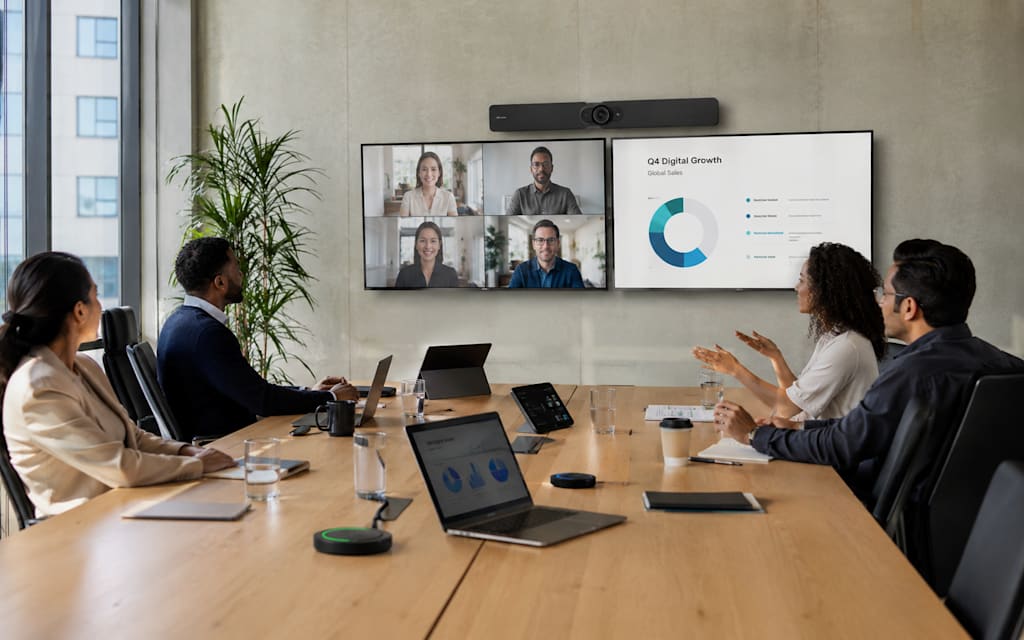
When the camera froze during a million-dollar client presentation, the room went silent. A delayed audio feed turned a confident sales pitch into an awkward guessing game. Across the table, executives exchanged frustrated glances while remote participants typed “Can you hear me now?” into the chat for the fifth time.
Moments like these are why businesses are investing heavily in smarter meeting room technology. Hybrid work may have normalized video calls, but it also exposed how unreliable workplace communication becomes without professional-grade devices. From boardrooms in New York to startups in Bengaluru, companies are redesigning how meetings happen — and the hardware powering those experiences is quietly becoming one of the most important investments in the modern office.
According to Mordor Intelligence, the video conferencing hardware market was valued at USD 7.03 billion in 2025 and is projected to grow from USD 8.1 billion in 2026 to USD 16.41 billion by 2031, registering a CAGR of 15.18% during 2026-2031. That single statistic says a lot about how businesses now view collaboration technology — not as an accessory, but as essential infrastructure.
The Meeting Room Has Become the New Digital Workplace
A few years ago, laptops and webcams were enough for most online meetings. Today, expectations are completely different. Employees want crystal-clear audio, intelligent cameras that track speakers automatically, noise cancellation, wireless content sharing, and seamless integration with collaboration platforms.
This shift is driving major changes in the video conferencing hardware Industry. Companies are no longer buying random webcams for conference rooms. Instead, they are building fully connected collaboration spaces designed for hybrid teams.
Search behavior around terms like:
“best conference room setup for hybrid work”
“AI meeting room cameras”
“how to improve remote meeting quality”
“enterprise video conferencing devices”
“smart meeting room technology”
shows how businesses are actively researching long-term workplace communication solutions.
One of the biggest video conferencing hardware market trends is the rise of AI-powered hardware. Smart cameras can now identify speakers, adjust framing automatically, and create more natural meeting experiences for remote participants. Advanced microphone arrays reduce background noise while improving voice clarity even in large rooms.
For employees working remotely, these upgrades matter more than many organizations realize. Poor audio quality causes fatigue, delays, and misunderstandings. Clear communication improves engagement and decision-making, especially for global teams working across multiple time zones.
Another important factor behind video conferencing hardware market growth is the increasing number of organizations downsizing traditional office spaces while investing more heavily in flexible collaboration rooms. Instead of rows of desks, businesses are prioritizing meeting spaces built for digital communication.
This transformation is happening across industries:
Healthcare teams conducting remote consultations
Universities enabling virtual classrooms
Government agencies supporting hybrid operations
Technology firms managing distributed workforces
Financial companies hosting secure virtual meetings
As remote and hybrid work become permanent for many organizations, reliable conferencing infrastructure is no longer optional.
Why Businesses Are Spending More on Smarter Collaboration Tools
The growing video conferencing hardware market size reflects a deeper workplace reality: people now expect digital meetings to feel as natural as face-to-face conversations.
Modern hardware ecosystems are evolving rapidly. Businesses are adopting:
4K conference cameras
Touch-enabled smart displays
Wireless presentation systems
Intelligent speaker tracking
Cloud-managed meeting devices
Integrated room scheduling panels
These tools reduce technical friction during meetings and create smoother collaboration experiences. In many offices, IT teams are standardizing meeting rooms globally so employees can walk into any location and start meetings instantly without setup delays.
Another reason behind rising demand is workplace inclusivity. Remote workers often feel disconnected during poorly managed meetings. Advanced conferencing systems help equalize participation by improving visibility and audio quality for everyone involved.
The increasing video conferencing hardware market share held by AI-integrated devices also reflects how automation is changing office technology. Smart meeting systems can now generate transcripts, detect active speakers, optimize lighting, and improve meeting analytics.
For organizations trying to attract younger professionals, seamless technology has become part of workplace culture itself. Employees entering modern offices expect intuitive digital collaboration environments similar to the tools they already use at home.
At the same time, global businesses are preparing for future disruptions. Whether caused by travel limitations, distributed hiring, or international partnerships, virtual communication has become central to business continuity planning.
The latest video conferencing hardware market forecast suggests this demand will continue accelerating as enterprises modernize workplace infrastructure worldwide. Companies are increasingly prioritizing scalable communication ecosystems rather than isolated hardware purchases.
And while software platforms often receive most of the public attention, the real meeting experience still depends heavily on physical hardware performance — the cameras, microphones, displays, and connectivity systems people interact with every day.
The Future of Meetings May Feel More Human Than Ever
Ironically, the more advanced meeting technology becomes, the less noticeable it should feel.
The goal of modern conferencing hardware is not flashy technology. It is invisible communication — systems that remove distractions and help people connect naturally regardless of location.
In the coming years, meeting rooms may automatically adjust lighting based on participant positions, translate conversations in real time, or create immersive virtual collaboration experiences powered by spatial audio and AI-enhanced video.
But even as innovation accelerates, one thing remains constant: people simply want meetings that work.
That basic expectation is fueling sustained momentum across the video conferencing hardware market as organizations continue adapting to a world where collaboration no longer depends on physical proximity.
The next time a virtual meeting starts instantly, voices sound perfectly clear, and remote participants feel fully included, most people will not think about the technology behind it.
Yet an entire industry is growing rapidly to make those seamless moments possible.
Would you rather work in an office built for hybrid collaboration — or one still struggling with “You’re on mute”?
About the Creator
Enjoyed the story? Support the Creator.
Subscribe for free to receive all their stories in your feed.
Comments
There are no comments for this story
Be the first to respond and start the conversation.