
Why Millions Now Trust Urgent Care Apps First
How urgent care apps are quietly reshaping the future of fast healthcare access
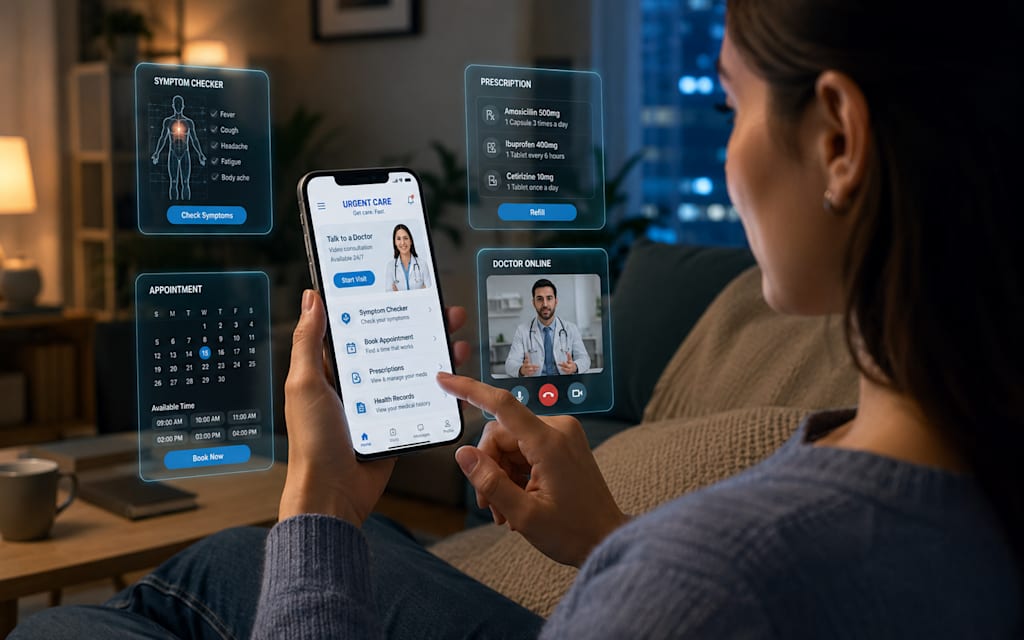
It was nearly midnight when the fever spiked again.
The pharmacy was closed. The family doctor wouldn’t be available until morning. And the nearest emergency room was already overwhelmed with patients waiting for hours.
For years, situations like this forced people into impossible decisions: wait, panic, or rush unnecessarily to overcrowded hospitals.
But now, millions of people reach for something else first.
Their phones.
Across cities, suburbs, and even rural communities, urgent care apps are rapidly becoming the new front door to healthcare. What once sounded futuristic—virtual consultations, digital prescriptions, symptom assessments, and instant care coordination—is now part of everyday medical access for growing numbers of patients worldwide.
This shift is fueling rapid expansion in the Urgent Care Apps Market, as healthcare systems race to meet rising demand for faster, more convenient, and digitally connected care experiences.
And the transformation may only be beginning.
---
### Healthcare Is No Longer Confined to Hospitals
For decades, healthcare revolved around physical locations.
Patients traveled to clinics.
Waited in crowded rooms.
Scheduled appointments days—or even weeks—in advance.
That model is changing rapidly.
Urgent care apps are helping healthcare move directly into people’s homes through smartphones, tablets, and connected digital platforms.
Modern urgent care applications now commonly support:
* Virtual doctor consultations
* Appointment scheduling
* Symptom checking
* E-prescriptions
* Digital health records
* Care navigation services
* Follow-up monitoring
Instead of navigating complicated healthcare systems physically, patients can often access immediate guidance within minutes.
That convenience is becoming one of the biggest drivers behind digital healthcare adoption globally.
According to Mordor Intelligence, the urgent care apps market size is expected to grow from USD 4.30 billion in 2025 to USD 5.90 billion in 2026 and is forecast to reach USD 28.84 billion by 2031 at 37.32% CAGR over 2026-2031. The growth reflects rising smartphone penetration, increasing telehealth adoption, growing healthcare digitization, and rising demand for convenient remote care solutions.
But beneath the market projections lies a deeper cultural shift:
People increasingly expect healthcare to function with the same speed and accessibility as modern digital services.
---
### Patients Want Faster Answers
Healthcare delays create anxiety.
A persistent cough at midnight.
A child developing sudden symptoms.
Unexpected medication side effects.
Many situations may not require emergency rooms—but patients still want quick reassurance and medical guidance.
Urgent care apps help bridge that gap by providing faster access to healthcare information and virtual care pathways.
AI-driven search behavior reflects this growing demand clearly.
Searches increasingly include:
* “Best urgent care app near me”
* “Can I talk to a doctor online now?”
* “Virtual urgent care explained”
* “24/7 healthcare apps”
People no longer search only for hospitals.
They increasingly search for immediate digital access to healthcare itself.
---
### The Pandemic Permanently Changed Patient Behavior
Global healthcare disruptions accelerated digital healthcare adoption dramatically.
During periods of restricted movement and overwhelmed healthcare systems, millions of patients turned to virtual healthcare platforms for the first time.
What began as a temporary solution quickly became a long-term behavioral shift.
Patients discovered that urgent care apps could provide:
* Faster consultations
* Reduced exposure risks
* Convenience from home
* Flexible scheduling
* Easier follow-up communication
Healthcare providers also recognized the operational advantages of digital triage and virtual patient management.
The result was a massive acceleration in telehealth infrastructure investment worldwide.
And patient expectations never fully returned to pre-pandemic norms.
---
### Convenience Is Becoming a Healthcare Standard
Modern consumers expect services to be:
* Instant
* Mobile
* Personalized
* Available anytime
Healthcare is increasingly adapting to those expectations.
Urgent care apps reduce many traditional healthcare friction points by allowing patients to access care without navigating transportation, waiting rooms, or administrative complexity.
For busy working professionals, parents, elderly patients, and rural communities, digital urgent care can significantly improve healthcare accessibility.
That convenience factor is becoming one of the strongest long-term growth drivers within the market.
---
### Rural Healthcare Access May Improve Significantly
In many regions, healthcare access remains uneven.
Patients in rural or underserved communities often face:
* Long travel distances
* Physician shortages
* Limited specialty care availability
* Delayed treatment access
Urgent care apps may help narrow some of those healthcare gaps by connecting patients with remote medical support more efficiently.
While digital care cannot fully replace physical examinations or emergency interventions, it can improve access to:
* Preliminary consultations
* Medication guidance
* Triage support
* Follow-up communication
As internet connectivity and smartphone adoption continue expanding globally, virtual healthcare accessibility may improve dramatically in underserved areas.
---
### Artificial Intelligence Is Entering Frontline Healthcare
Many urgent care platforms are increasingly integrating artificial intelligence tools designed to streamline patient interactions.
AI-powered systems can assist with:
* Symptom assessment
* Appointment routing
* Patient intake workflows
* Care recommendations
* Health monitoring reminders
This integration may help reduce administrative burdens while improving healthcare efficiency.
However, experts continue emphasizing that AI should support—not replace—clinical decision-making.
Human healthcare professionals remain central to patient diagnosis and treatment.
Still, the relationship between AI and digital healthcare is growing rapidly.
---
### Younger Generations Are Driving Adoption
Digital-native generations are especially comfortable managing healthcare through apps and connected platforms.
Younger patients increasingly expect healthcare experiences similar to:
* Mobile banking
* Food delivery services
* Streaming platforms
* Ride-sharing apps
They value convenience, responsiveness, and digital communication.
Urgent care apps align closely with those expectations.
This generational shift may continue accelerating healthcare digitization over the next decade as digital-first healthcare behaviors become increasingly normalized.
---
### Healthcare Workers Benefit Too
Urgent care apps are not only changing patient experiences.
They may also improve healthcare operations behind the scenes.
Digital platforms can help providers manage:
* Appointment flow
* Patient communication
* Documentation efficiency
* Remote triage workflows
By reducing unnecessary in-person visits for non-emergency concerns, urgent care platforms may also help relieve pressure on overcrowded emergency departments and clinics.
That operational flexibility has become increasingly important as healthcare systems face staffing shortages and rising patient demand globally.
---
### Data Privacy Concerns Continue Growing
As healthcare becomes increasingly digital, data security concerns are expanding too.
Urgent care platforms often manage highly sensitive personal health information.
That raises important questions surrounding:
* Patient privacy
* Data protection
* Cybersecurity risks
* Regulatory compliance
Trust will remain critical for long-term adoption.
Patients may embrace digital healthcare convenience—but only if they believe their medical information remains secure.
Healthcare technology companies and providers are investing heavily in cybersecurity infrastructure to address those concerns.
---
### More Than a Telehealth Trend
The growth of the **Urgent Care Apps Market** represents something much larger than a temporary digital healthcare trend.
Healthcare itself is becoming increasingly decentralized.
Care is no longer limited to hospitals, clinics, or physician offices.
It is moving into homes, workplaces, smartphones, and connected digital ecosystems.
That transformation could fundamentally reshape how healthcare is delivered, accessed, and experienced in the future.
---
### The Future of Healthcare May Become Always Available
The next generation of urgent care apps may integrate:
* AI-assisted diagnostics
* Wearable health monitoring
* Real-time biometric analysis
* Predictive healthcare alerts
* Advanced virtual triage systems
Future healthcare experiences may become increasingly proactive rather than reactive.
Instead of waiting until symptoms worsen, patients may receive earlier digital interventions and faster guidance through intelligent healthcare systems.
The smartphone could become one of the most important healthcare access points of the next decade.
---
### The Doctor’s Waiting Room Is Changing Forever
For generations, healthcare often meant sitting anxiously in crowded waiting rooms surrounded by uncertainty.
That experience is evolving rapidly.
Today, a growing number of patients expect healthcare to begin instantly—from the palm of their hand.
Not because technology replaces doctors.
But because technology increasingly connects patients to care faster than traditional systems ever could.
And that raises one important question about the future of medicine itself:
If healthcare becomes permanently digital, mobile, and instantly accessible, how much will the traditional healthcare experience change over the next ten years?
About the Creator
Enjoyed the story? Support the Creator.
Subscribe for free to receive all their stories in your feed.
Comments
There are no comments for this story
Be the first to respond and start the conversation.