
Why Long-Form AI Animation Is Harder Than Viral AI Clips
Why impressive short clips are easy to generate — and why real AI storytelling still depends on structure, continuity, and production workflow.
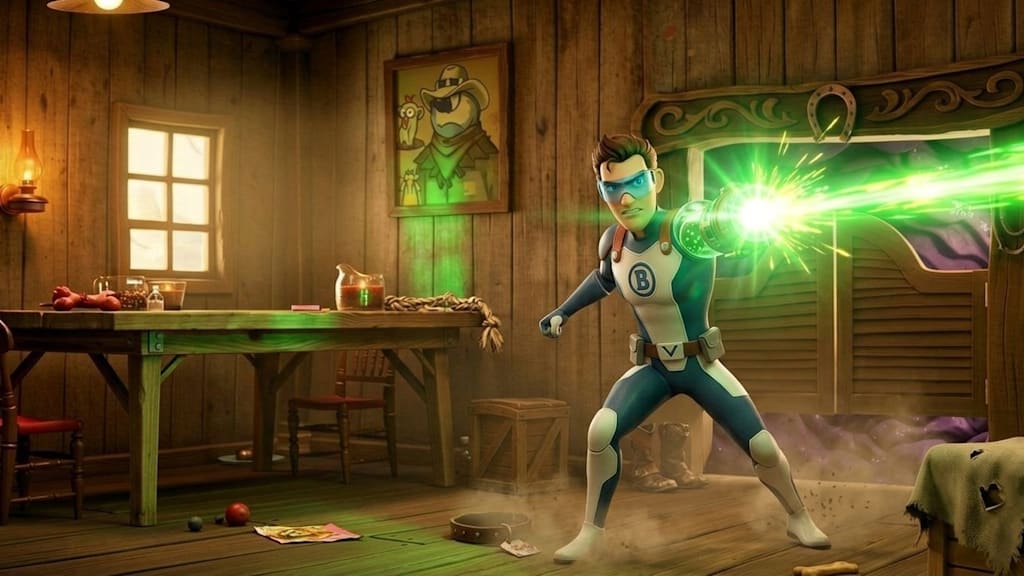
AI video has made it easier than ever to create something impressive in a few seconds.
A surreal camera move. A dramatic close-up. A fantasy creature walking through fog. A character turning toward the camera with cinematic lighting. These clips can be beautiful, surprising, and highly shareable. They are also perfectly suited to social media, where the goal is often to create a single striking moment.
But long-form storytelling is different.
A 10-second AI video can succeed on mood, novelty, and visual impact. A 10-minute animated story has to survive continuity, structure, pacing, character consistency, production planning, editing, and audience attention. The longer the piece becomes, the less impressive isolated shots matter. What matters is whether the story holds together.
That is where many AI animation projects break down.
Viral Clips Are Moments. Stories Are Systems.
Most viral AI clips are self-contained. They do not need to explain what happened before the shot, what happens after it, or why the viewer should care. A single image-to-video generation can work because the clip only has to deliver one idea.
Long-form animation has a completely different burden.
A story needs characters who remain recognizable across many scenes. Locations need to feel consistent. The tone needs to carry from one moment to the next. The audience needs to understand where they are, what is happening, and why each scene matters.
In a traditional animation pipeline, this is handled through development, storyboards, character design, layout, art direction, editing, and production management. AI does not remove those needs. It compresses and changes them.
That compression is powerful, but it also creates a trap: creators can generate visual material faster than they can organize it.
The Real Bottleneck Is Not Generation
A common assumption is that AI filmmaking will become easy once the video models improve.
Better models will help, of course. More temporal stability, better motion control, stronger prompt adherence, and more consistent characters will all matter. But model quality alone does not solve the core problem of long-form work.
The hard part is not generating one good shot.
The hard part is generating the right shot, in the right place, with the right character, in the right visual style, serving the right moment in the story.
That requires a workflow.
A creator working on a longer AI animation needs to answer practical questions constantly:
- What is this scene trying to achieve?
- Which shots are needed to tell it clearly?
- Which characters and assets appear here?
- What visual references should guide the shot?
- What has already been established in earlier scenes?
- Does this shot cut properly with the next one?
Without that structure, AI production quickly becomes a folder full of beautiful fragments.
Story Still Comes First
The irony of AI filmmaking is that the technology makes story more important, not less.
When generation becomes cheap and fast, visual novelty loses some of its value. Everyone can make a strange creature, a cinematic landscape, or a dramatic reveal. What remains difficult is building meaning over time.
Long-form storytelling depends on cause and effect. Characters make choices. Scenes change the situation. Visuals support emotion. The audience follows a thread.
That is why story development still matters, even in an AI-assisted pipeline. Before generating shots, creators need to understand the spine of the piece: the premise, the emotional arc, the scene progression, and the purpose of each moment.
For a deeper look at this, Ciaro Pro has a useful article on why story remains central in AI filmmaking: Why Story Matters.
This is not just a philosophical point. It is a production issue. The clearer the story is, the fewer wasted generations you create. The clearer the scene structure is, the easier it becomes to prompt, review, revise, and edit.
Continuity Is the Hidden Cost
Short AI clips can hide inconsistency. Long-form projects cannot.
If a character looks slightly different in one viral clip, most viewers will not care. If that character changes face shape, costume details, proportions, or personality across twenty shots, the audience notices immediately.
The same applies to locations, props, lighting, framing, and performance. A long-form piece asks the viewer to believe in a world. Inconsistency breaks that belief.
This is why concepting becomes a serious part of the AI animation workflow. Characters, environments, props, and visual references need to be developed before production begins, not improvised shot by shot.
That is also where dedicated concepting tools become useful. For example, Ciaro Pro’s concepting workspace is designed around building and managing the visual ingredients of a project before they are used in storyboards and production: Ciaro Pro Concepting.
The goal is not only to make nice images. The goal is to create reusable visual direction.
Long-Form AI Animation Needs Pre-Production
Many creators jump directly from idea to generation. That can work for experiments. It rarely works for sustained storytelling.
Long-form AI animation benefits from a production mindset:
First, define the story. Then break it into scenes. Then break scenes into shots. Then establish characters, locations, and key visual references. Then generate images and video clips with a clear purpose. Then edit, revise, and polish.
This sounds obvious, but it is where many AI projects fail. The technology encourages improvisation. Storytelling rewards structure.
A traditional animation studio would never begin final animation before knowing the characters, boards, scene flow, and visual direction. AI creators should be careful not to skip those steps simply because generation tools make it tempting.
The best results usually come when AI is treated less like a magic button and more like a production engine.
A Practical Example: Biome Brigade
One useful example is *Biome Brigade*, an AI-assisted animated project showcased by Ciaro Pro. It is not just a random sequence of AI clips. It demonstrates the more important challenge: using AI to support an actual animated episode with characters, scenes, continuity, pacing, and a finished structure.
This is the kind of example the AI animation space needs more of. Not just isolated tests. Not just “look what this model can do.” Finished pieces that show whether a workflow can carry a story from beginning to end.
That difference matters.
A single shot proves that a model can generate an image or motion. A finished episode proves that a process can support production.
Editing Is Where the Project Becomes Real
Another reason long-form AI animation is harder than clips: the edit exposes everything.
A shot that looks impressive alone may not work in sequence. The timing may be wrong. The camera movement may fight the next shot. The character action may not connect. The emotional beat may arrive too early or too late.
Long-form work is not only about generating assets. It is about assembling them into rhythm.
This is where AI filmmaking starts to resemble real filmmaking again. You need selects, revisions, pacing, transitions, sound, music, and sometimes compromises. You discover what the piece actually is in the edit.
That is also why integrated workflows matter. When writing, storyboarding, concepting, generation, and editing are disconnected across many tools, the creator spends a lot of energy moving information around instead of improving the film.
Ciaro Pro’s animation workflow is one example of how this can be approached as a connected pipeline rather than a pile of separate AI tools: [Ciaro Pro Animation](https://ciaro.pro/animation).
The Future Is Not Just Better Clips
AI video will keep improving. The clips will get sharper, longer, more controllable, and more realistic. But the creators who want to make long-form work will need more than better outputs.
They will need production literacy.
They will need to think in scenes, not only prompts. They will need to design characters before generating performances. They will need to manage continuity, build story structure, and edit with intention.
The next major leap in AI filmmaking may not come from a single model. It may come from better workflows that help creators turn AI outputs into coherent films.
That is the gap between a viral clip and a real animated story.
One is a moment.
The other is a production.
And production is still hard — even with AI.
[1]: https://help.vocal.media/hc/en-us/articles/360050836513-How-do-I-add-photos-videos-and-media-to-my-story?utm_source=chatgpt.com "How do I add photos, videos, and media to my story? - Vocal"
About the Creator
Enjoyed the story? Support the Creator.
Subscribe for free to receive all their stories in your feed.
Comments
There are no comments for this story
Be the first to respond and start the conversation.