
Why is the Zinc Growing Despite Economic Uncertainty?
The hidden metal powering infrastructure, clean energy, and industrial resilience
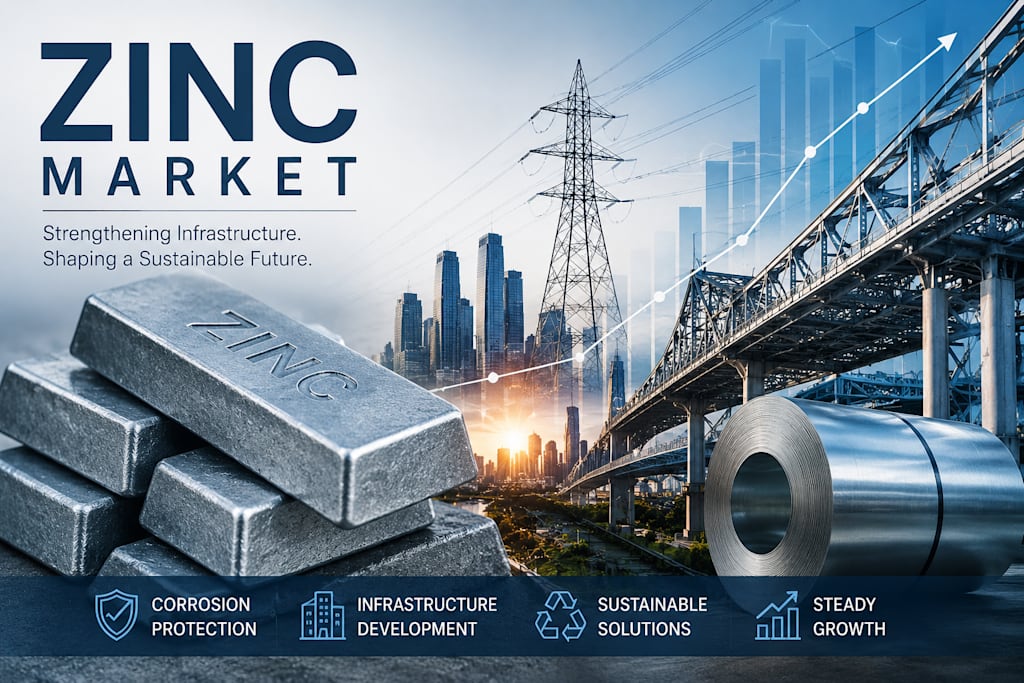
The bridge looked indestructible.
Thousands of vehicles crossed it every day without a second thought. Rain hammered its steel beams. Summer heat baked its surface. Winter storms tested its strength. Yet year after year, it remained standing, quietly performing its duty.
What most people never notice is that a thin layer of zinc often stands between steel and destruction.
While metals like lithium, copper, and nickel dominate headlines because of electric vehicles and energy storage, zinc continues to play a critical role behind the scenes. It protects infrastructure, supports industrial development, and helps extend the lifespan of some of the world's most valuable assets. In many ways, zinc is one of the most important materials that people rarely talk about.
The surprising part? The Zinc market continues to grow despite economic uncertainty, fluctuating commodity prices, and changing industrial cycles.
While that growth may appear modest compared to some emerging materials, it reflects something equally valuable: resilience.
For anyone searching questions like "Why is the zinc market growing?", "What is the future of zinc demand?", or "What is the zinc market size forecast?", the answer lies in understanding zinc's essential role in the global economy.
Zinc's Biggest Strength: Protecting Infrastructure
Every year, governments and businesses invest billions of dollars in infrastructure projects. Roads, airports, railways, power grids, commercial buildings, industrial facilities, and bridges all require materials capable of withstanding harsh environmental conditions.
Steel remains the backbone of modern infrastructure, but steel has one major weakness: corrosion.
This is where zinc becomes indispensable.
Through a process called galvanization, steel is coated with zinc to create a protective barrier against rust and environmental damage. This coating significantly extends the life of steel structures and reduces maintenance costs over time.
Galvanizing accounted for 52.37% of zinc consumption, making it the largest application segment in the market.
Think about that for a moment.
More than half of global zinc demand comes from a single purpose: protecting infrastructure that people rely on every day.
Whether it's a suspension bridge connecting cities, transmission towers carrying electricity, or structural steel supporting skyscrapers, zinc plays a silent yet essential role.
The Construction Industry Continues to Drive Demand
Walk through any growing city and you'll find cranes, construction sites, and new developments transforming the skyline.
Urbanization remains one of the strongest forces shaping global material demand. As populations grow and cities expand, the need for housing, transportation systems, and commercial buildings continues to increase.
This trend directly benefits the zinc market.
Mordor Intelligence reports that the construction sector represented 56.71% of end-user demand for zinc. The sector's dominance highlights how closely zinc consumption is linked to physical development and economic growth.
Unlike consumer products that can experience sudden demand swings, infrastructure projects often involve long planning cycles and multi-year investments. This creates a relatively stable foundation for zinc consumption.
Asia-Pacific Leads the Global Zinc Market
If there is one region shaping the future of zinc demand, it is Asia-Pacific. The region accounted for 62.86% of global zinc market volume, making it by far the largest consumer worldwide, according to Mordor Intelligence.
The reasons are easy to understand.
Rapid urbanization, industrial expansion, manufacturing growth, and large-scale infrastructure investments continue driving demand across the region. Massive construction projects require enormous quantities of galvanized steel, which in turn supports zinc consumption.
For analysts examining zinc market share trends, Asia-Pacific's dominance remains one of the most important factors influencing global demand patterns.
As emerging economies continue investing in development and modernization, the region is expected to remain a key growth engine for the zinc industry.
Why Stability Matters More Than Speed?
In today's business environment, investors and industry observers often focus on markets delivering explosive growth rates.
- But not every successful market needs double-digit expansion.
- The zinc market tells a different story.
- Its value comes from reliability rather than hype.
Unlike materials tied to short-term trends, zinc supports industries that form the foundation of modern economies. Buildings need protection. Bridges need durability. Power infrastructure needs longevity. These requirements don't disappear when economic conditions become uncertain.
This creates a level of demand resilience that many industries struggle to achieve.
As a result, the zinc market continues to demonstrate steady growth supported by long-term infrastructure needs rather than temporary market excitement.
Looking Ahead
The next time you cross a bridge, enter a skyscraper, or pass a power transmission tower, consider the invisible layer helping protect that structure from corrosion and decay.
Zinc may never receive the same attention as some of the world's most talked-about metals, but its importance is undeniable. Sometimes the strongest growth stories are not about revolutionary change.
What piece of infrastructure in your community do you think relies most heavily on zinc protection, and had you ever considered its role before reading this story?
About the Creator
efingutthomas
My expertise is custom research across industries such as aerospace & defense, agriculture, animal wellness, automation, automotive, chemicals, consumer goods, electronics, energy, finance, food & beverages, healthcare, hospitality and ICT
Enjoyed the story? Support the Creator.
Subscribe for free to receive all their stories in your feed.
Comments
There are no comments for this story
Be the first to respond and start the conversation.