
Why Grass Is Green? Not some other color like purple or whatever?
Entertaining my inner child by answering the odd, random questions I used to wonder about.

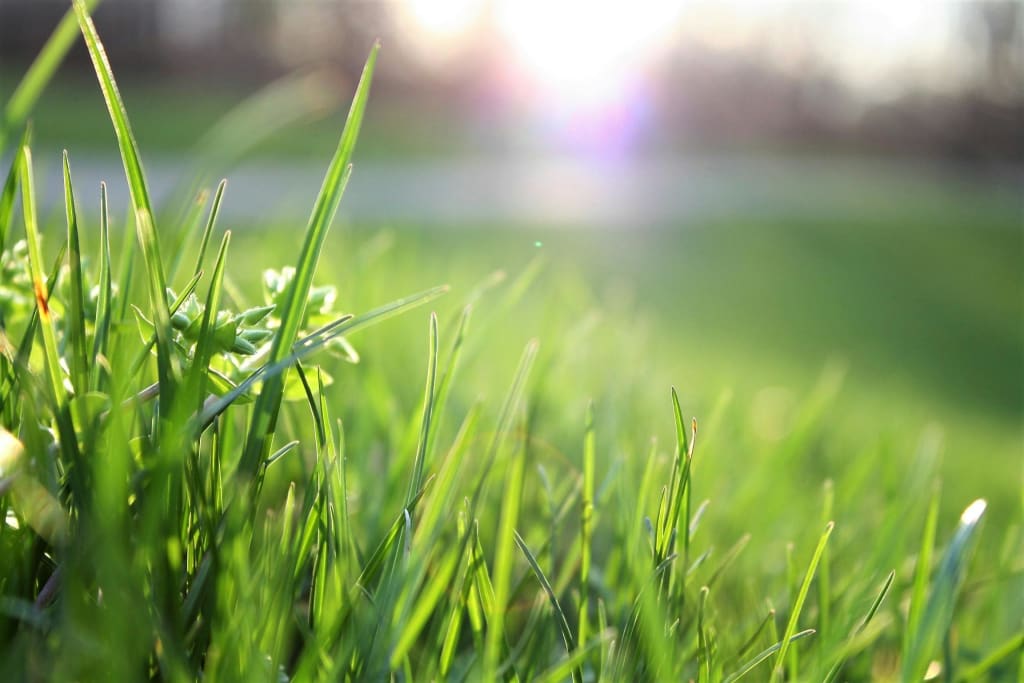
When I was a kid, I used to lie on the grass, feeling the blades tickle the back of my neck while I stared at the sky, asking questions that no one around me seemed to care about. One question that stuck with me, it was weirdly simple but oddly specific.
Why is grass green?
I mean seriously, why green? Out of all the colors in the world, who decided that the Earth's default floor mat should be green? Why not purple? Or orange? Or black like some mysterious alien planet?
At the time, it just felt like a funny thought. But recently, I decided to actually look into it to entertain that curious little voice in my head that never really went away.
So here’s what I found.
It all starts with light. Sunlight looks white to our eyes, but it’s actually made up of different colors: red, orange, yellow, green, blue, indigo, and violet. Like a rainbow hidden in plain sight. Each of those colors carries a different amount of energy. Blue and violet? High energy. Red? Lower energy.
Now, plants need sunlight to make food, and they do this through something called photosynthesis. That process is powered by a pigment called chlorophyll the green stuff inside every leaf and blade of grass.
Chlorophyll is really bad at absorbing green light. It just reflects it away. That’s why grass looks green to us. It’s literally bouncing green light off its surface and saying, “No thanks, I don’t need this.”
But why reflect green? Why not use it?
That’s what I asked next. It seems kind of wasteful, right? Turns out, red and blue light are just better for the kind of energy chlorophyll is trying to collect. Those wavelengths trigger stronger chemical reactions inside the plant. Green light? Not so useful. So evolution, being the master of “good enough,” didn’t bother making plants use it.
Over time, chlorophyll became the go-to molecule for turning sunlight into life, and it just happened to reflect green. So everything that used it, grass, trees, leaves, ended up wearing that color by default.
Could grass have been purple?
Absolutely. And in fact, in other corners of nature, it is. Some types of bacteria and algae evolved to use different pigments, ones that absorb green and reflect red or purple. They exist in weird places such as deep oceans, hot springs, even the edges of salt lakes. These organisms use something called bacteriorhodopsin, not chlorophyll, and they see the world through a very different light spectrum.
If Earth had evolved under different conditions, maybe a dimmer sun, or a thicker atmosphere, purple plants might’ve been the norm. We'd be lying on fields of violet, wondering why they weren’t green.
So why does this matter?
Because this one random question. "Why is grass green?" isn't just about color. It's about how life made choices. It’s about evolution picking something that worked, not because it was perfect, but because it was good enough to survive. It’s a quiet reminder that nature doesn’t always go with the ideal, it goes with what gets the job done.
And somehow, that makes the color green feel a little deeper, a little more earned.
So yeah, that’s the first chapter in my journey of answering my inner child’s weird questions. One down, about a million more to go.
Let’s see where curiosity takes me next.
About the Creator
Haziq
just a guy who loves reading
Enjoyed the story? Support the Creator.
Subscribe for free to receive all their stories in your feed.
Comments
There are no comments for this story
Be the first to respond and start the conversation.