
Why Europe’s Online Shopping Revolution Is Just Getting Started
New consumer habits, digital innovation, and cross-border commerce are reshaping how Europe shops through 2031.
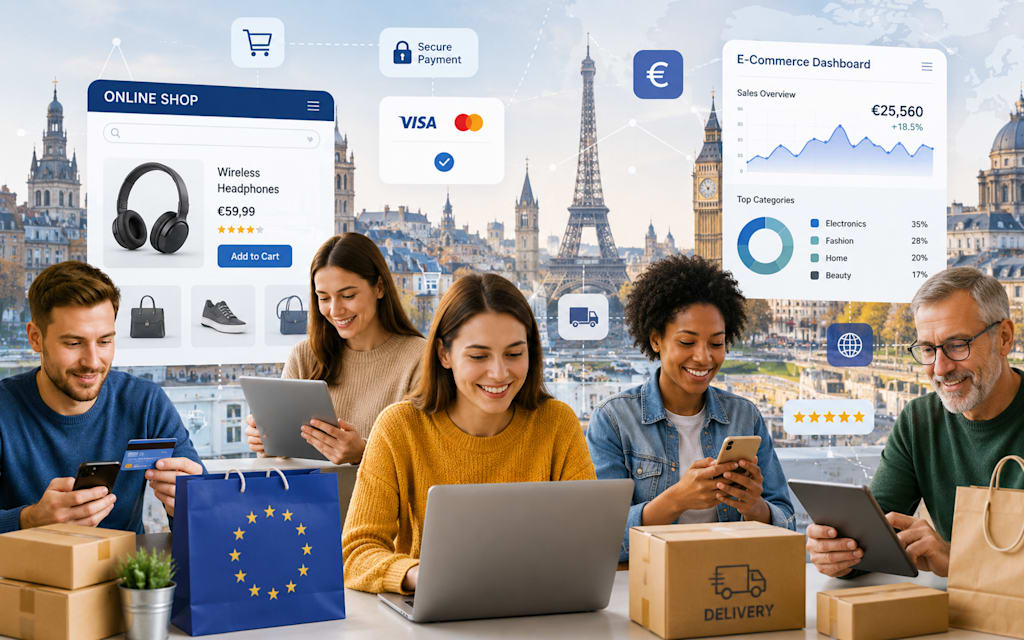
The package arrived before breakfast.
A woman in Berlin ordered a pair of running shoes late the previous evening. By morning, the tracking app had already updated three times. Hundreds of miles away, a family in Madrid compared grocery prices online while a student in Amsterdam searched for vintage fashion from a seller in another country. None of them knew each other, yet they were participating in the same transformation.
Shopping in Europe no longer revolves around a single high street, shopping district, or even a single country. Increasingly, it happens across screens, platforms, borders, and delivery networks that operate almost invisibly behind every click.
This shift is not simply about convenience. It reflects changing lifestyles, evolving consumer expectations, and a growing digital ecosystem that continues to redefine retail across the continent. The story behind the Europe e-commerce market reveals much more than online transactions—it offers a glimpse into how people live, work, and buy in a connected world.
The Digital Storefront That Never Closes
A generation ago, shopping often meant planning a trip, checking store hours, and hoping a product was in stock. Today, consumers can browse thousands of products in seconds, compare reviews instantly, and receive deliveries directly at their doorsteps.
This behavioral change continues to influence the direction of the Europe e-commerce Industry. Consumers increasingly value convenience, product variety, transparent pricing, and flexible delivery options. Businesses have responded by investing in digital storefronts, personalized recommendations, and streamlined checkout experiences.
According to Mordor Intelligence, the Europe e-commerce market size is estimated at USD 0.73 trillion in 2026, increasing from USD 0.68 trillion in 2025. Looking ahead, the market is projected to reach USD 1.07 trillion by 2031, registering a CAGR of 7.86% during 2026–2031.
Those numbers tell an important story. They reflect millions of daily purchasing decisions made by consumers who increasingly view online shopping as a normal part of life rather than an occasional alternative.
Some of the factors influencing purchasing behavior include:
Mobile-first shopping experiences
Faster delivery expectations
Secure digital payment solutions
Cross-border product availability
Personalized recommendations powered by data analytics
These developments continue to shape evolving Europe e-commerce market trends across multiple retail categories.
Beyond Convenience: Why Growth Continues Across Europe
What makes online commerce particularly fascinating is that its appeal extends far beyond speed and convenience.
Small businesses can now reach customers across multiple countries without opening physical stores. Independent creators can build audiences through digital marketplaces. Consumers gain access to products that may not be available locally. This interconnected ecosystem creates opportunities for both buyers and sellers.
The ongoing Europe e-commerce market growth is also influenced by improvements in logistics infrastructure, digital payment adoption, and increasing consumer confidence in online purchasing experiences.
As competition increases, businesses continue refining customer experiences through better product discovery, customer support, and fulfillment services. These efforts contribute to the evolving Europe e-commerce market share landscape, where companies compete not only on price but also on convenience, reliability, and customer experience.
The result is a marketplace that feels increasingly personalized. Consumers receive recommendations aligned with their interests, delivery options tailored to their schedules, and shopping experiences designed around individual preferences.
This transformation also raises important questions:
How will emerging technologies further change shopping habits?
Will cross-border commerce become even more common?
How will businesses balance personalization with privacy expectations?
What new opportunities will emerge for smaller retailers?
The answers will continue shaping the future of digital commerce throughout Europe.
Looking Toward 2031: What the Future May Hold
The future of online retail in Europe appears closely connected to broader technological and societal changes.
Artificial intelligence, enhanced logistics systems, improved digital payment methods, and evolving consumer expectations are likely to continue influencing purchasing behaviors. At the same time, retailers face the challenge of maintaining trust, delivering value, and creating meaningful customer experiences in an increasingly competitive environment.
The latest Europe e-commerce market forecast from Mordor Intelligence points toward sustained expansion through 2031, highlighting the ongoing importance of digital commerce within the region's retail ecosystem.
Yet behind every statistic lies a human story.
A parent ordering school supplies after work. A small business reaching international customers for the first time. A consumer discovering products from another country with a few taps on a smartphone.
These moments may seem ordinary, but together they represent one of the most significant shifts in modern retail.
The next chapter of the Europe e-commerce market will not be defined solely by technology or revenue figures. It will be shaped by how people continue to integrate digital shopping into everyday life—and how businesses adapt to meet those evolving expectations.
As online commerce becomes increasingly woven into daily routines, one question remains:
How do you think digital shopping will change the way Europeans buy, sell, and connect over the next decade?
About the Creator
Enjoyed the story? Support the Creator.
Subscribe for free to receive all their stories in your feed.
Comments
There are no comments for this story
Be the first to respond and start the conversation.