
Why Customer Experience Matters in the Pizza Industry
In today's competitive pizza market, customer experience is the real differentiator. Learn how service quality, delivery performance, and brand consistency drive loyalty and long-term growth.

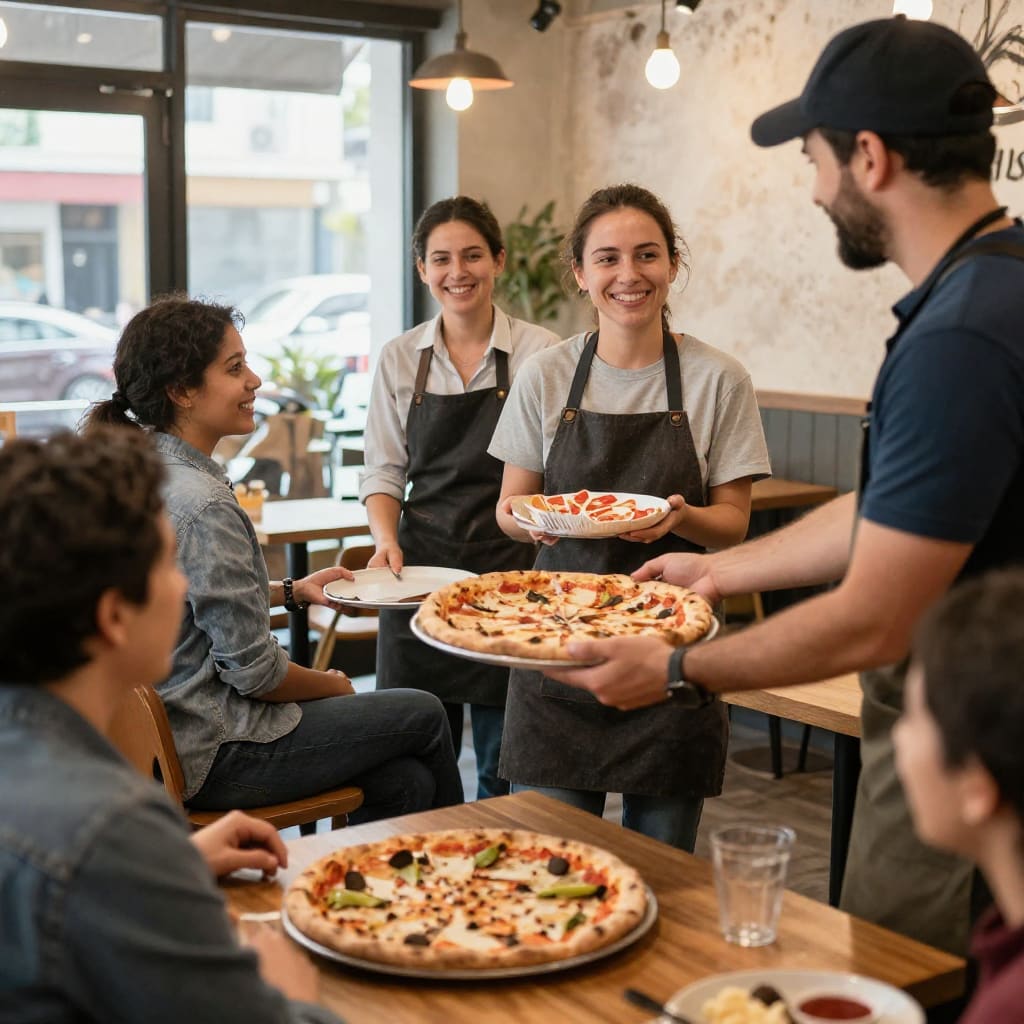
Introduction
There's a specific moment that defines whether a pizza customer becomes a regular or a one-time buyer. It's rarely about a single slice. It's about whether the whole experience — the ordering process, the wait, the arrival, the interaction with staff — added up to something that felt easy, reliable, and worth repeating.
In the pizza industry, where the product itself is rarely the differentiating factor, customer experience has quietly become the most powerful competitive advantage a business can build. The pizzerias that dominate their local market aren't always making the most innovative pies. They're delivering the most consistently satisfying experience around the pie — every time, through every channel, regardless of how busy the kitchen gets.
For pizza business owners who want to grow sustainably, understanding that distinction isn't optional. It's the foundation everything else is built on.
The Competitive Landscape Has Made Experience the Deciding Factor
Ten years ago, the pizza industry competed primarily on product and price. Today, it competes on experience. That shift happened for several interconnected reasons: the rise of digital ordering raised the bar for convenience, delivery platforms exposed customers to more options than ever, and social media gave customers a megaphone for sharing both excellent and disappointing encounters.
The result is a market where food quality is assumed, price is table stakes, and the experience around the transaction is what drives the decision to come back. A customer who had a frictionless ordering experience, received their pizza hot and on time, and felt genuinely taken care of when a small issue arose — that customer is not easily lured away by a competitor's coupon.
This is why customer experience has moved from a hospitality ideal to a measurable business strategy. The pizza businesses that are growing right now understand that every touchpoint in the customer journey is either building loyalty or eroding it.
What Customer Experience Actually Includes
Every Touchpoint Is Part of the Journey
Customer experience in the pizza industry isn't limited to the moment food is exchanged. It starts when a customer first encounters your brand — through a search result, a social media post, or a friend's recommendation — and continues long after the meal is finished.
It includes how easy it is to find your menu online. How accurate your hours are on Google. Whether your website loads quickly on a phone. How your staff answers when someone calls with a question. How the delivery driver presents themselves at the door. Whether your follow-up loyalty message feels thoughtful or spammy. All of these interactions accumulate into a single, composite impression that shapes whether that customer chooses you again.
Most pizza businesses think carefully about the food and far less carefully about everything surrounding it. That gap is where loyalty is lost.
Service Quality Is an Equal Partner to Food Quality
There's a persistent misconception in food service that food quality is the primary driver of customer satisfaction and everything else is secondary. In practice, service quality consistently rivals food quality as a driver of return visits and positive reviews.
A customer who gets a slightly imperfect pizza but is treated with genuine warmth and has their problem resolved quickly is more likely to return — and more likely to recommend the business — than a customer who got a technically perfect pizza from a staff that made them feel like an inconvenience. The food creates the occasion; the service creates the relationship.
This matters operationally because service quality is teachable and manageable in ways that talent-dependent food quality sometimes isn't. Training staff to make every interaction feel like the customer is valued — not just processed — is an investment that compounds over time into a reputation that draws people in and keeps them coming back.
Delivery Experience: Where Most Loyalty Is Won or Lost
For pizza businesses with significant delivery volume, the delivery experience is the customer experience. A customer who never visits the physical location interacts with the brand through three things: the ordering platform, the food itself, and the driver at the door. Those three moments carry enormous weight.
Delivery expectations have been shaped by the most sophisticated logistics companies in the world. Customers expect accurate time estimates, real-time tracking, and food that arrives in the condition it left the kitchen. When any of those elements fail, the disappointment isn't measured against what's reasonable for a local pizza shop — it's measured against the best delivery experience the customer has ever had.
The most customer-focused pizza businesses treat delivery as a product category, not just a fulfillment method. They package food in ways that preserve quality during transit, set realistic time estimates rather than optimistic ones, and train drivers to treat the handoff as a meaningful brand moment rather than a transaction to get through.
A deliberate approach to packaging is part of this. Operators who use custom pizza boxes with logo printing, for instance, aren't just solving a functional need — they're ensuring that the physical artifact of the delivery communicates care and brand identity at the exact moment the customer's expectations are being evaluated. It's a small detail with an outsized effect on perception.
Online Reviews Are a Report Card on Customer Experience
The connection between customer experience and online reviews is direct, consistent, and consequential. Customers don't write reviews to describe food. They write reviews to process an experience — to share something that surprised them, disappointed them, or genuinely impressed them. The emotional content of the experience is what drives the impulse to leave a review at all.
This means that the pizza businesses generating the most positive reviews aren't necessarily the ones with the best recipes. They're the ones making customers feel something positive — appreciated, impressed, surprised by the quality of service — consistently enough that it motivates public expression.
It also means that negative reviews are almost always about the experience, not just the food. A one-star review almost invariably contains a story: the driver was rude, the order was wrong and no one apologized, the estimated time was off by forty minutes. Addressing these patterns at the operational level — rather than just responding to individual reviews — is how customer experience-focused businesses improve their public reputation over time.
Restaurant reputation management is, at its core, experience management. Fix the experience and the reviews follow.
Consistency: The Quiet Driver of Long-Term Loyalty
Ask loyal pizza customers why they keep returning to a specific brand and the answer almost always includes some version of "I know what I'm getting." Not that it's the best pizza in the world — just that it's reliably what they expect.
Consistency is the foundation of trust in any service business, and the pizza industry is no exception. A customer who gets an outstanding experience on their first order and a mediocre one on their second doesn't average those experiences — they leave the second interaction with doubt. That doubt is the first step toward trying a competitor.
Building consistent customer experiences requires systemic thinking rather than individual excellence. It means standardized training, quality checkpoints, and clear service expectations that don't vary depending on who's working, how busy the kitchen is, or what platform the order came through. The businesses that get this right aren't relying on their best employees to carry the experience — they've built a system that performs even on difficult days.
Common Customer Experience Mistakes in the Pizza Industry
Even well-intentioned pizza businesses make predictable experience errors. The most damaging include:
Underestimating the phone interaction. Many customers still call, especially older demographics and customers with special requests. A distracted, rushed, or unhelpful phone interaction can cost a business before a single pizza is made.
Treating complaints as inconveniences rather than intelligence. A customer who complains is giving the business information it couldn't get any other way. Operators who dismiss or minimize complaints lose both the customer and the insight.
Inconsistent delivery time communication. Setting an arrival window and missing it without updating the customer is one of the fastest ways to destroy a first-time buyer's confidence.
Forgetting the post-purchase moment. What happens after the order is placed and delivered is often neglected entirely. A follow-up touchpoint — a loyalty offer, a satisfaction check-in, a simple thank-you — reinforces the relationship at a moment when most competitors go silent.
Letting busy periods become experience compromises. Volume is not an excuse customers accept. A Friday night rush that leads to worse service or quality sends a message that the business's operational capacity doesn't match its ambitions.
How Leading Pizza Brands Create Memorable Experiences
The pizza businesses consistently held up as examples of exceptional customer experience share a few characteristics. They treat their staff well enough that the team genuinely wants to deliver good service — not because they're instructed to, but because they're engaged in the work. They've built ordering and delivery systems that minimize friction at every step. And they approach every customer interaction with the understanding that small moments of genuine care accumulate into the kind of brand reputation that advertising can't manufacture.
They also measure experience outcomes, not just food outcomes. Tracking metrics like delivery time accuracy, review sentiment trends, complaint resolution rates, and customer return frequency gives operators a real picture of how the experience is performing — and where it needs investment.
Where Customer Experience Is Heading in the Pizza Industry
Personalization is the next frontier. As digital ordering data accumulates and loyalty platforms become more sophisticated, customers will increasingly expect brands to anticipate their preferences rather than just accommodate them. A pizza business that greets a returning customer with their usual order pre-loaded, a personalized offer, and a note acknowledging their loyalty is delivering an experience most competitors aren't capable of yet.
AI-powered chat support, smarter delivery routing, and predictive inventory management will also reshape what customers expect from the end-to-end experience. The businesses investing in these capabilities now — while continuing to deliver consistent, human-centered service — will be significantly ahead of the curve when these tools become standard.
Conclusion
The pizza industry has always been about more than pizza. It's about the experience of choosing, ordering, receiving, and enjoying — and every part of that journey is an opportunity to either strengthen or weaken the relationship with the customer.
The operators growing the fastest right now understand that food quality earns the first order, but customer experience earns every order after that. Building the systems, training the teams, and cultivating the mindset that treats every customer interaction as a loyalty-building opportunity isn't a marketing strategy — it's a business philosophy. And for pizza businesses serious about long-term growth, it may be the most important investment they make.
About the Creator
Jack Root
Jack Root delivers innovative IT & software solutions — from web & app development to ERP & SAP training — empowering businesses to grow.
Enjoyed the story? Support the Creator.
Subscribe for free to receive all their stories in your feed.
Comments
There are no comments for this story
Be the first to respond and start the conversation.