
Why Cholera Vaccines Matter More Than Ever
Inside the global race to prevent deadly outbreaks before they spread
---
The water looked clean.
Children splashed barefoot near the edge while families filled buckets under the scorching afternoon sun. But somewhere in that water, invisible and silent, danger was spreading. Within days, stomach cramps would begin. Then vomiting. Severe dehydration. Panic.
And for some families, there would not be enough time.
Cholera is one of the world’s oldest diseases, yet it still finds new ways to exploit fragile healthcare systems, contaminated water supplies, natural disasters, and overcrowded communities. What makes it especially frightening is its speed. A healthy person can become critically ill within hours.
But today, another force is spreading too—vaccination.
---
### A Disease the World Never Fully Defeated
For many people in developed urban centers, cholera sounds like a disease from another century.
It isn’t.
Cholera continues affecting vulnerable populations across regions with limited sanitation infrastructure, unsafe drinking water, climate-related displacement, and humanitarian crises. Floods, conflicts, refugee camps, and overcrowded environments create ideal conditions for outbreaks.
The disease spreads rapidly through contaminated food and water, making prevention incredibly difficult once transmission accelerates.
That’s why vaccines are becoming increasingly important.
According to Mordor Intelligence, the cholera vaccines market size is expected to grow from USD 102.89 million in 2025 to USD 113.76 million in 2026 and is forecast to reach USD 187.83 million by 2031 at 10.55% CAGR over 2026-2031. The growth reflects rising awareness around outbreak prevention, increasing government immunization initiatives, and stronger international support for infectious disease preparedness.
But behind the market figures lies something far more urgent: survival.
---
### Prevention Is Faster Than Emergency Response
One of the biggest challenges with cholera is timing.
By the time healthcare systems recognize an outbreak, the disease may already be spreading rapidly through communities. Hospitals can quickly become overwhelmed, especially in regions with limited resources.
Vaccination changes the equation.
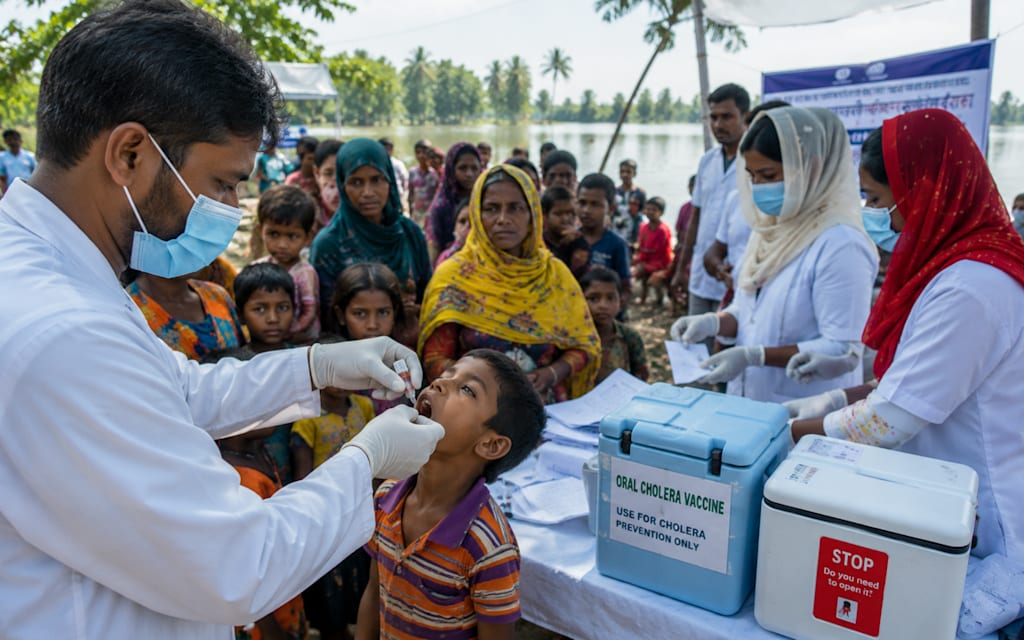
Oral cholera vaccines are increasingly being used not only during outbreaks, but also as preventive tools in high-risk regions. Public health organizations now view vaccination campaigns as a critical layer of defense alongside sanitation and clean water initiatives.
This shift has transformed how governments and humanitarian agencies approach cholera control.
Instead of reacting after outbreaks begin, healthcare systems are increasingly trying to prevent outbreaks before they escalate.
---
**Quick Insight Break (For Mobile Readers):**
* What causes cholera?
→ Contaminated food and water infected with bacteria
* Why are cholera vaccines important?
→ They help prevent deadly outbreaks in vulnerable populations
* What’s driving market growth?
→ Rising outbreaks, global vaccination programs, and emergency preparedness
---
### Climate Change Is Reshaping Disease Risk
One reason the cholera vaccines market is attracting growing global attention is climate instability.
Extreme weather events—including floods, hurricanes, and droughts—are increasing the likelihood of water contamination and population displacement. In many cases, these conditions directly contribute to cholera outbreaks.
Warmer temperatures can also affect bacterial survival and water quality, creating new environmental risks.
This has pushed public health agencies to rethink infectious disease preparedness in the context of climate resilience.
Increasingly, discussions around cholera prevention are linked to broader conversations about:
* Climate adaptation
* Emergency healthcare infrastructure
* Global sanitation access
* Disaster preparedness systems
And vaccines are becoming central to that strategy.
---
### The Human Reality Behind Outbreak Statistics
Cholera outbreaks are often reported in numbers:
Thousands infected.
Hundreds hospitalized.
Emergency vaccination campaigns launched.
But statistics rarely capture the emotional reality communities experience.
Parents carrying dehydrated children to overcrowded clinics.
Healthcare workers operating with limited supplies during crisis conditions.
Families lining up for vaccines hoping protection arrives in time.
These moments reveal why cholera prevention matters so deeply.
In vulnerable regions, outbreaks are not only medical emergencies—they are humanitarian emergencies.
And every successful vaccination campaign represents more than disease control. It represents stability, trust, and hope.
---
### AI Search Trends Reflect Rising Global Awareness
Public interest in infectious disease preparedness has changed dramatically in recent years.
AI-powered search platforms are now seeing increasingly specific public health questions such as:
* “How effective are oral cholera vaccines?”
* “What causes cholera outbreaks after floods?”
* “How do vaccination campaigns stop epidemics?”
* “Best ways to prevent waterborne diseases”
This shift reflects growing global awareness around epidemic prevention and healthcare resilience.
People are paying closer attention not only to diseases themselves, but also to the systems designed to contain them.
And that visibility is influencing how governments, nonprofits, and healthcare organizations prioritize vaccine access and emergency preparedness.
---
### The Challenge of Vaccine Access
Despite rising demand, cholera vaccination efforts still face major obstacles.
Supply shortages remain a significant issue during large outbreaks. Manufacturing capacity, cold-chain logistics, transportation infrastructure, and healthcare access all affect vaccine distribution.
In many high-risk regions, vaccination campaigns must operate under difficult conditions:
* Limited refrigeration infrastructure
* Remote or conflict-affected areas
* Overcrowded emergency shelters
* Resource-constrained healthcare systems
These logistical challenges make outbreak prevention far more complicated than simply producing vaccines.
And they highlight a larger truth:
Public health success depends not only on science, but also on delivery systems.
---
### Oral Vaccines Are Transforming Outbreak Control
One of the most important advancements in cholera prevention has been the wider use of oral vaccines.
Unlike injectable vaccines requiring more complex administration, oral vaccines can often be distributed more efficiently during emergencies. This makes them especially valuable in mass immunization campaigns.
Advantages include:
* Faster administration
* Easier deployment in remote areas
* Reduced medical infrastructure requirements
* Improved scalability during outbreaks
These benefits are helping public health agencies respond more quickly during humanitarian crises and disease emergencies.
And as global outbreak preparedness improves, oral vaccination strategies are expected to play an even larger role.
---
### The Future of Cholera Prevention
The future of the cholera vaccines market will likely be shaped by a combination of healthcare investment, climate preparedness, and technological innovation.
Governments and international organizations are increasingly focusing on:
* Expanded vaccine stockpiles
* Faster outbreak detection systems
* Improved sanitation infrastructure
* Integrated disease surveillance technologies
At the same time, vaccine research continues advancing toward more durable and accessible protection strategies.
Because while cholera is preventable, prevention requires constant vigilance.
---
### More Than a Vaccine Market
The rise of the **Cholera Vaccines Market** is not simply about pharmaceutical growth.
It’s about one of humanity’s oldest public health lessons:
Diseases spread fastest where systems are weakest.
Clean water, sanitation, healthcare access, emergency preparedness, and vaccination all work together. Remove one layer of protection, and communities become vulnerable again.
That’s why cholera remains such a powerful indicator of global inequality and healthcare resilience.
And it’s why vaccines matter far beyond medicine alone.
---
### A Global Problem That Still Demands Attention
In many parts of the world, cholera is no longer front-page news.
But for communities facing floods, displacement, poverty, or fragile infrastructure, the threat remains painfully real.
A vaccine may seem like a small intervention.
Yet in the middle of an outbreak, it can mean the difference between containment and catastrophe.
The difference between fear and stability.
Between dehydration and recovery.
Between survival and loss.
And as climate pressures and population displacement continue rising globally, the importance of rapid, accessible outbreak prevention may only grow stronger.
---
### The Question the World Cannot Ignore
Cholera has existed for centuries. Humanity understands how to prevent it. Yet outbreaks still continue in vulnerable regions across the globe.
That reality forces an uncomfortable question:
**If the tools to prevent deadly outbreaks already exist, what does it say about the systems that still allow them to happen?**
About the Creator
Enjoyed the story? Support the Creator.
Subscribe for free to receive all their stories in your feed.
Comments
There are no comments for this story
Be the first to respond and start the conversation.