
Why Blood Safety Is Becoming a Multi-Billion Dollar Industry
The global blood bags market is expanding as healthcare systems prioritize safer transfusion technologies

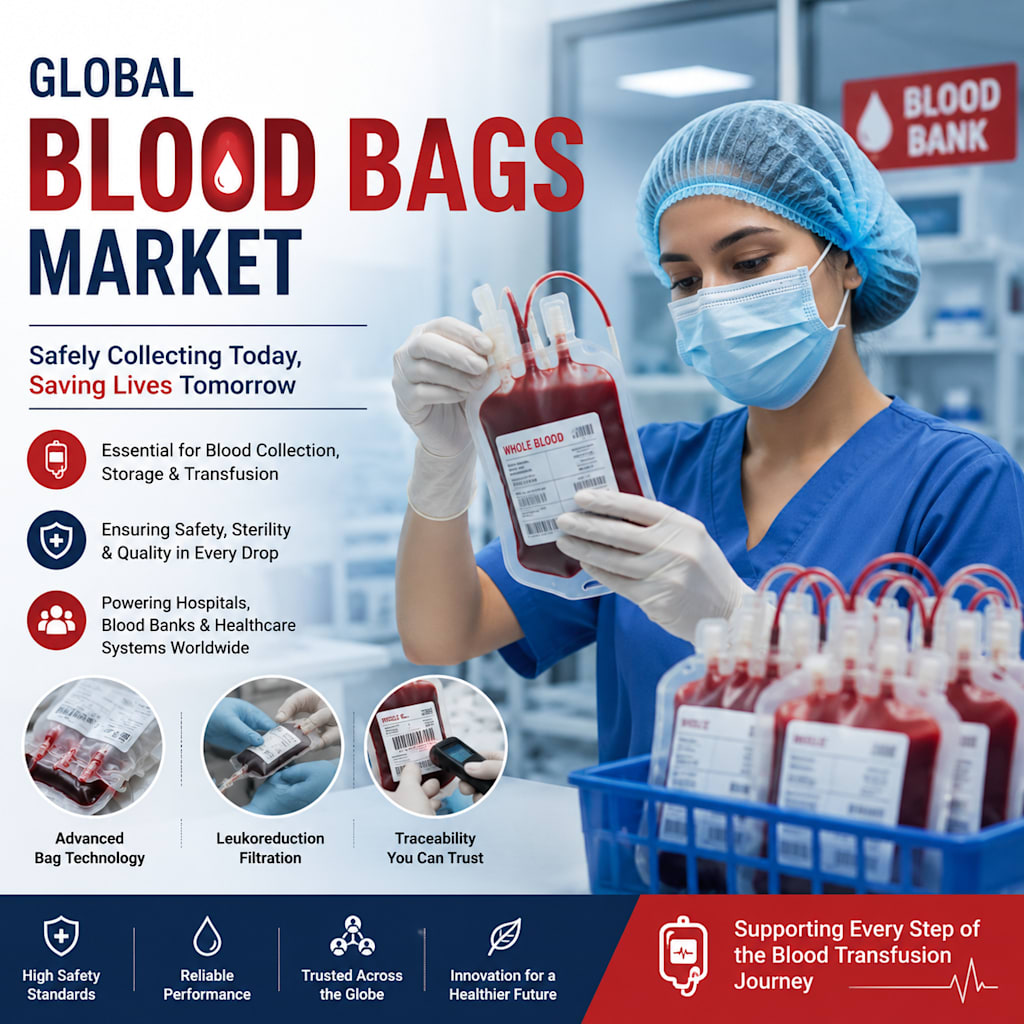
Blood donation systems might not usually grab headlines but this essential area forms one of the cornerstones of modern medicine. After all, every emergency surgery, trauma treatment, cancer therapy and intensive care case requires one critical factor – safe blood storage and transfusion systems.
At the core of the modern medical system lie the blood bags.
Simple plastic bags in appearance, these vital medical tools play a critical role in storing, collection, processing and transportation of blood in a safe and secure manner. As the hospital infrastructures grow around the globe and demand for blood transfusions increase, the blood bags market is set for an era of rapid evolution.
What started off as a routine hospital commodity is rapidly becoming a regulated and technologically advanced segment of the healthcare sector.
An industry with robust long-term growth
Valued at approximately USD 335.7 million in 2025 the global blood bags market is estimated to grow to almost USD 645.1 million by 2034.
This suggests a stable compounded annual growth rate of 7.30% between 2026 and 2034.
The market’s growth is being influenced by a number of key trends within the healthcare sector. They include:
- Increasing volume of blood donations around the globe
- A surge in the numbers of surgical procedures across the world
- The expanding systems for trauma and emergency care
- Growth in chronic disease management
- Modernizing blood banks and infrastructures
While there may have been earlier challenges, today the demands on medical systems and a rapidly aging population are making safe blood storage a necessity.
Why Blood Bags are Essential in Modern Healthcare
Blood bags are sterile, specially designed container to store human blood and blood products.
They are used in:
- Hospitals
- Blood Banks
- Emergency Services
- Military Medical Systems
- Mobile donation units
Modern blood bags serve more than just storage; they are designed to enable advanced blood processing. In modern medicine doctors don't rely on whole blood, instead they have been designed to hold separated blood components such as:
- Red blood cells
- Plasma
- Platelets
The benefits are that treatments can be optimized, and a single donation could save multiple lives.
With the global trend towards component therapy on the rise, there is an ever increasing demand for high-value multi-bag systems.
An Expanding World Need for Blood Transfusions
The biggest growth factor of the blood bags market is the growing demand for blood transfusions worldwide.
Global figures show that millions of blood units are collected annually for use in surgeries, trauma, cancer treatment and maternal care.
The main reasons for this increased demand are:
Surgical Procedures are on the rise
More surgeries are being carried out across the globe as a result of improving access to medical care and a growing population.
Emergencies and Trauma care
Road accidents, natural disasters and emergencies are still increasing the global demand for blood.
Chronic Disease Treatment
Treatments of kidney disease, blood disorders, cancer and cardiovascular disease often require the use of blood.
Developing countries now have improved access to medical care.
This demand for safe blood storage and collection is why the blood bag will always remain an indispensable medical commodity.
Technology Revolutionizes the Blood Bags Market
The industry is no longer just about plastic bags. Blood bag manufacturers are investing heavily in the latest technology, enhancing the safety, traceability and preservation quality of the blood collected. Some of the more significant innovations include:
DEHP and PVC free blood bags
Growing concerns about health and environment have prompted governments and health agencies in Europe and North America to implement stringent regulations to encourage the use of these materials in a bid to make them DEHP free. They are gradually being replaced with alternative plasticizers.
Integrated Leukoreduction systems
These modern blood bags feature an integrated filter which remove white blood cells from blood before storage. This reduces transfusion reaction and ensures quality.
RFID and digital tracking
With an advancement in barcodes andRFID enabled blood bags the blood is now able to be tracked from donor to the patient, ensuring safety and reducing errors through its monitored storage.
Smart blood storage monitoring
The latest technological leap that is in the experimental phase includes IOT enabled temperature monitors that can keep track of the stored blood in real time, increasing efficiency in cold chain management.
Multi-Component Blood Bags Gain Popularity
Though single blood bags constitute a majority share in the market they are more or less suitable for only basic blood collection. Healthcare professionals are increasingly moving towards double, triple and even quadruple bag systems which enable separation of the blood into a multitude of components in one go, improving efficiency and ensuring better utilization. Among all the variants triple blood bags are forecast to grow substantially due to increase in the component therapy applications worldwide. As the transfusion medicine grows more complex, hospitals are looking forward to more specialized, higher-value blood bag systems.
Emerging Economies Drive the Blood Bags Market
While the North American market currently leads due to a better established infrastructure for healthcare, the emerging economies are the growth drivers.
Asia Pacific leading the charge
China and India are continuously expanding their hospital networks, blood banking system and promoting the voluntary blood donation camps. A lot of governments in the Asia-Pacific region have begun to invest in improving the modern medical systems, blood donation initiatives and medical infrastructures which includes hospitals. They are increasingly demanding certified blood bags systems.
The growth story across Latin America and Africa is also promising
International organizations, and governments have taken the responsibility of improving the medical care across Africa and Latin America with improved blood transfusion services.
The Market for Blood Bags is Heavily Regulated
Since patient safety is of paramount importance, the blood bags market is highly regulated. Companies have to comply with a number of critical regulations pertaining to:
- Sterility
- Biocompatibility
- Material Safety
- Blood Preservation
- Manufacturing quality control
These standards present a high barrier to entry; which explains why large multinational companies have long dominated the market. However, the stringent regulations are driving the industry toward increased safety and more advanced technologies.
Challenges plaguing the Industry
Even with strong growth, the blood bags industry isn't free of problems.
Risks in the supply chain
Due to the nature of medical grade raw materials which must be obtained from very few manufacturers, the risks in blood bag supply are quite high.
Counterfeit Products
In many low income markets counterfeit blood bags are a real problem and a threat to patient safety.
Lack of proper infrastructure
Some poor regions still face difficulties in obtaining a stable and reliable electricity supply, transporting the blood or storing it properly in cold chains.
Innovation driven by Competition
The blood bag industry is very competitive, and leading manufacturers are investing in innovative products. The focus is on DEHP-free systems, filtration technology, advanced blood collection and processing, tracing, tracking and regional expansion. Partnerships between hospital groups and manufacturers are now playing a greater role.
The Future is Clear
It is inevitable that in the future the industry will be guided by modernizing health systems, regulations and medical technology. In the next decade the focus is on using 'smart' traceable materials and on a wider use of component therapy to allow for improved efficiency. Increased involvement of digital technology in blood banking is an expected outcome, ensuring blood safety and blood transfusion efficiency remain at the fore front of medical practice globally. The demand for higher value and advanced blood bag systems is expected to remain robust through 2034 and beyond.
About the Creator
Robert
Senior Market Researcher at IMARC Group, specializing in global market analysis, industry trends, and data-driven insights across diverse sectors.
Enjoyed the story? Support the Creator.
Subscribe for free to receive all their stories in your feed.
Comments
There are no comments for this story
Be the first to respond and start the conversation.