
Why Billionaires Are Building Underground Bunkers
From nuclear-war fears and geopolitical instability to pandemics and social disruption, luxury bunkers have become a symbol of how some of the world's wealthiest people are preparing for an uncertain future.
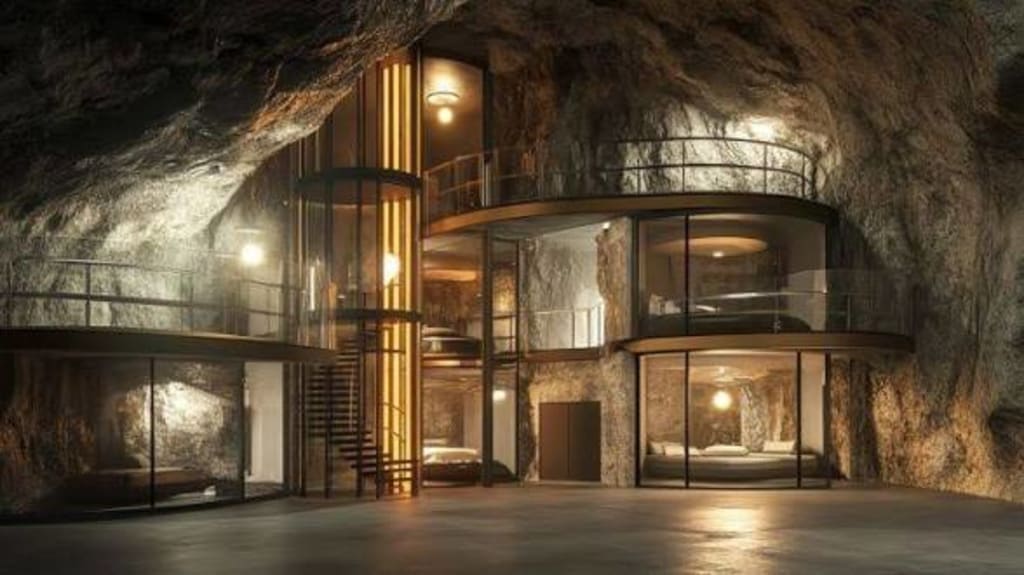
The idea of a billionaire hiding underground while the world faces a catastrophe sounds like the plot of a science-fiction movie. Yet luxury survival shelters are real, and a growing industry has emerged around wealthy clients who want a private place to retreat during an extreme crisis.
These modern bunkers are very different from the basic Cold War shelters of the past. Some are designed as underground residences, with bedrooms, kitchens, entertainment spaces, medical facilities, independent power systems and long-term food and water supplies. Reports have described projects costing millions of dollars and offering amenities that resemble luxury homes rather than traditional emergency shelters.
But why would extremely wealthy people spend enormous amounts of money preparing for disasters that may never happen?
The answer is partly about risk—and partly about psychology.
A New Kind of Wealth
For billionaires, wealth can buy protection from many everyday risks. They can purchase private security, remote properties, aircraft, medical care and sophisticated insurance.
A bunker represents another level of protection: the ability to create a controlled environment when normal systems may fail.
Modern bunker companies market shelters to wealthy individuals, family offices and other high-net-worth clients. Some companies describe their projects as fortified residences or private survival estates rather than conventional bunkers.
The attraction is obvious. If electricity fails, an independent energy system could provide backup power. If supply chains collapse, stored food could reduce dependence on outside deliveries. If a natural disaster makes a city unsafe, a carefully selected underground facility could offer protection.
Of course, no bunker can guarantee survival in every imaginable catastrophe.
The Nuclear Threat Has Not Disappeared
One of the oldest reasons for building underground shelters is nuclear conflict.
During the Cold War, governments constructed enormous underground facilities designed to protect military personnel and political leaders from nuclear attacks. Private citizens also built fallout shelters.
Today, geopolitical tensions have renewed interest in nuclear preparedness among some wealthy individuals.
A properly engineered underground structure can provide substantial physical shielding from certain hazards, but the effectiveness of any shelter depends on its design, location, ventilation, emergency systems and the nature of the disaster.
The important point is that wealthy bunker buyers are not necessarily preparing for one specific event. They are often preparing for a collection of possibilities.
The "Everything Goes Wrong" Scenario
Survival experts and bunker companies frequently discuss a broad range of potential threats: war, pandemics, natural disasters, cyberattacks, civil disorder and prolonged infrastructure failures.
Author Douglas Rushkoff has written extensively about conversations he had with wealthy technology executives who were interested in preparing for what they broadly imagined as a catastrophic breakdown of society.
This reflects an unusual way of thinking about risk.
Most people plan for individual emergencies—a medical problem, a house fire, a storm or a temporary financial crisis.
The ultra-rich can afford to plan for several scenarios simultaneously.
They can purchase remote land, install independent power systems and build secure structures designed to remain operational even if normal infrastructure becomes unreliable.
Why Go Underground?
Underground construction offers several practical advantages.
Soil and rock can provide substantial protection from explosions, extreme weather and radiation. Underground environments can also offer stable temperatures compared with the surface.
For a wealthy client, the objective is not necessarily to live underground permanently.
The bunker may function as a backup location—a place that remains unused for years but is available if an emergency occurs.
This is similar to buying insurance. The buyer hopes never to need it.
Luxury Has Entered the Bunker Business
The most surprising part of the modern bunker market is the level of comfort being offered.
Some high-end shelters have been marketed with private bedrooms, swimming pools, gyms, cinemas, bars and other luxury facilities. Older reporting on the industry has described shelters that extend over enormous underground areas and include sophisticated power, water and food systems.
This creates an interesting contradiction.
A traditional bunker is designed around survival and necessity.
A billionaire bunker can be designed around survival without sacrificing luxury.
The difference is essentially the same as between camping and a five-star hotel—except the hotel happens to be underground.
Remote Properties Are Another Strategy
Not every wealthy person interested in disaster preparedness chooses a bunker.
Some are investing in remote properties where they believe they can become more self-sufficient.
A recent Financial Times report described an extensive ranch project in Argentina being developed as a potential refuge from catastrophic scenarios, with solar-powered homes, agricultural plans, an airstrip and other infrastructure. The project reflects growing interest among some wealthy technology figures in geographically remote locations.
New Zealand, Hawaii and other remote locations have also attracted attention in discussions about wealthy people's disaster preparations.
The basic idea is simple: distance itself can be a form of security.
The Psychological Side of Bunker Culture
Money is not the only explanation.
People who have achieved extraordinary wealth may also have a different perception of risk. Technology entrepreneurs, investors and business leaders often spend their careers thinking about unlikely events that could dramatically change the future.
That mindset can encourage extreme contingency planning.
There is also a psychological attraction to control.
A bunker allows its owner to control many variables: location, food supplies, electricity, communications and security.
But there is an obvious limitation.
No individual can completely control society.
A catastrophic event affecting the wider population could create problems that money alone cannot solve.
The Biggest Problem: What Happens Outside?
This may be the most difficult question facing billionaire survival plans.
Suppose a bunker successfully protects its occupants during a major crisis.
What happens when they eventually leave?
If supply chains have collapsed, who produces food? Who maintains electricity networks? Who repairs roads? Who provides medical services? Who operates water systems?
Modern civilization depends on millions of interconnected workers.
A bunker can protect individuals from some immediate dangers, but it cannot easily recreate an entire functioning society.
That is why some experts argue that resilience is ultimately a collective problem rather than an individual one.
Are Bunkers Actually Worth the Money?
For a billionaire, spending several million dollars on a shelter represents a much smaller financial sacrifice than it would for an ordinary household.
Whether it is a rational investment depends entirely on the risks being considered.
For certain disasters—such as severe storms, explosions or radioactive fallout—an appropriately designed underground shelter may provide meaningful protection.
For other scenarios, such as prolonged global economic collapse, its usefulness becomes much harder to predict.
Food, water, maintenance, medical care, security and social stability remain challenges even behind thick concrete walls.
A Symbol of Extreme Inequality
There is also a social dimension to the billionaire-bunker trend.
For some observers, luxury survival shelters represent an extraordinary form of inequality. While most people worry about ordinary household expenses and emergency savings, the ultra-rich can spend millions preparing for civilization-scale disasters.
Critics argue that this highlights a deeper question: should the wealthiest people focus on escaping disasters, or on reducing the risks that threaten society in the first place?
Supporters of private preparedness would answer that individuals have every right to protect themselves and their families.
The debate is unlikely to disappear.
Conclusion
Billionaire bunkers are not simply underground rooms filled with canned food. The modern survival industry has evolved into a sophisticated market offering secure residences, independent infrastructure and luxury amenities to people concerned about extreme uncertainty.
The motivations vary. Some buyers may fear war or geopolitical instability. Others may worry about pandemics, climate-related disasters, cyberattacks or social disruption.
But perhaps the most interesting question is not why billionaires are building bunkers.
It is what the trend says about the future.
When some of the world's wealthiest people spend millions preparing for the possibility that normal society could fail, it reveals a remarkable level of concern about the fragility of modern civilization.
About the Creator
Enjoyed the story? Support the Creator.
Subscribe for free to receive all their stories in your feed.
Comments
There are no comments for this story
Be the first to respond and start the conversation.