
Why Are Label Printers Becoming Essential for Modern Businesses?
Explore how modern label printers improve accuracy, streamline operations, and support efficient inventory, shipping, and product labelling across industries.

Introduction
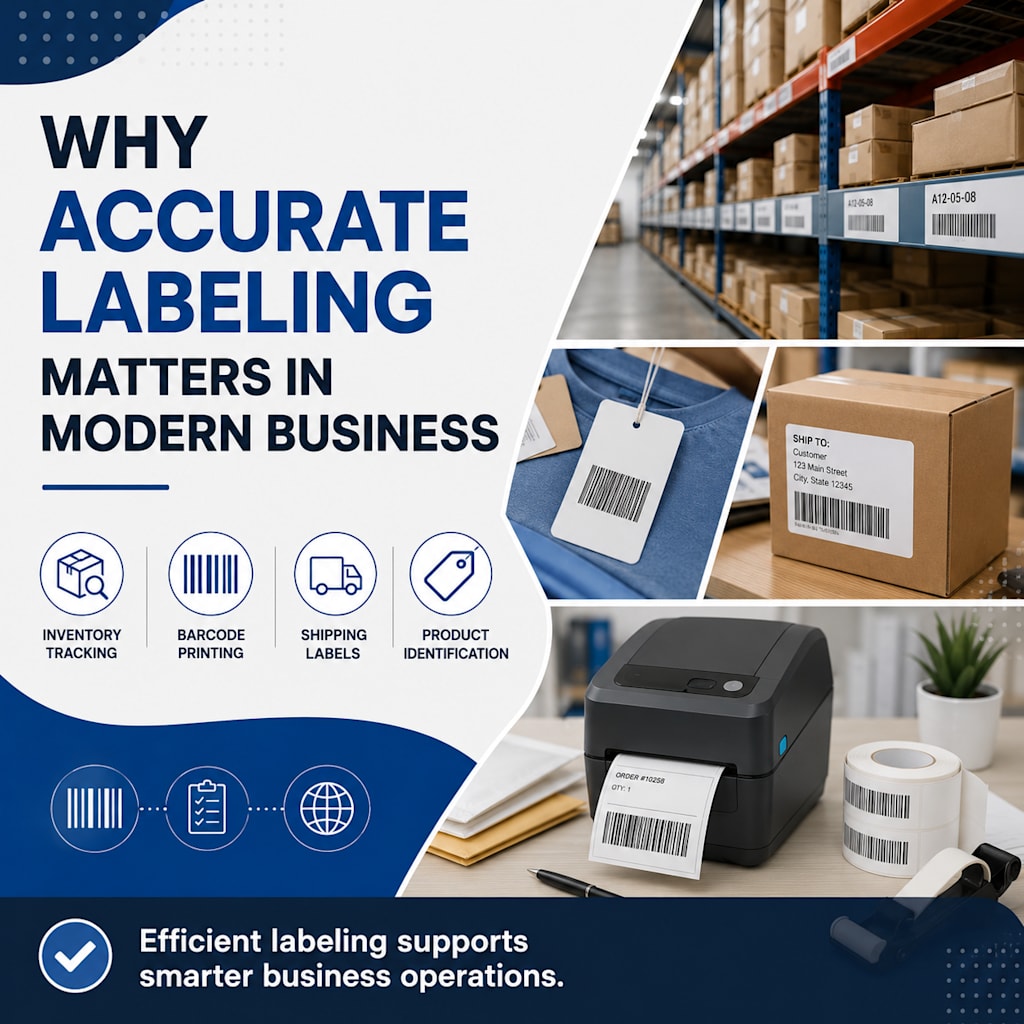
Walk into a warehouse, retail store, hospital, or eCommerce fulfillment center, and you'll quickly notice one thing they all have in common: labels are everywhere.
From product identification and barcode labels to shipping documentation and inventory tracking, accurate labeling has become a fundamental part of modern business operations. As supply chains grow more complex and customer expectations continue to rise, businesses need reliable ways to identify, track, and manage products throughout their lifecycle.
This is where label printers play a crucial role. They help organizations produce clear, consistent, and durable labels on demand, reducing errors while improving efficiency across multiple departments.
Whether you're a small online seller shipping a handful of orders each day or a warehouse manager overseeing thousands of products, understanding how label printing technology works can help you make better operational decisions. In this guide, we'll explore the different types of label printers, their applications, key benefits, and important factors to consider before investing in a solution.
What Is a Label Printer and How Does It Work?
A label printer is a specialized printing device designed to produce labels, tags, barcodes, and identification stickers. Unlike standard office printers, label printers are built specifically for printing on adhesive-backed materials and specialty label stock.
Most business-grade label printers use thermal printing technology rather than ink or toner. Thermal printing relies on heat to create images and text, making it a cost-effective and efficient method for high-volume labeling.
The process generally involves:
* Feeding label media through the printer
* Applying heat through a printhead
* Creating text, graphics, or barcodes
* Producing labels ready for immediate application
Depending on the printing technology used, labels can be created either directly on heat-sensitive media or through a ribbon transfer process.
Understanding these differences is essential when selecting the right solution.
Direct Thermal vs. Thermal Transfer Printing
Two primary technologies dominate the label printing market: direct thermal and thermal transfer printing.
Direct Thermal Printing
Direct thermal printer creates images by applying heat directly to specially coated label material.
The heat activates the label surface, producing text and graphics without requiring ink, toner, or ribbons.
Advantages
* Lower operating costs
* Fewer consumables
* Simpler maintenance
* Faster setup
Limitations
* Labels may fade over time
* Sensitive to heat, sunlight, and abrasion
* Less suitable for long-term storage
Direct thermal printing is commonly used for:
* Shipping labels
* Receipt labels
* Temporary inventory tags
* Logistics labels
Thermal Transfer Printing
A thermal transfer label printer uses heat to transfer ink from a ribbon onto the label surface.
Rather than printing directly on the label material, the ribbon creates a highly durable image that resists environmental damage.
Advantages
* Excellent durability
* Long-lasting print quality
* Resistance to chemicals and moisture
* Suitable for harsh environments
Limitations
* Requires ribbon replacement
* Slightly higher operating costs
* More consumable management
This method is frequently used for long-term identification requirements where label longevity is critical.
The Benefits of Using a Thermal Label Printer
The popularity of the thermal label printer continues to grow because it offers a practical balance between speed, reliability, and operating costs.
Improved Accuracy
Manual handwriting can introduce mistakes that lead to shipping errors, inventory discrepancies, or compliance issues.
Printed labels provide:
* Consistent formatting
* Clear readability
* Accurate barcode generation
* Reduced human error
Faster Operations
Labels can be printed on demand within seconds, helping employees complete tasks more efficiently.
This is especially beneficial in:
* Warehouses
* Retail stores
* Distribution centers
* Manufacturing facilities
Lower Maintenance
Unlike traditional printers, thermal systems typically contain fewer moving parts and require less maintenance.
This reduces downtime and improves operational continuity.
Better Barcode Quality
Barcode scanners depend on clear, precise printing.
Thermal printing produces sharp barcode labels that improve scan accuracy and reduce operational delays.
Cost Efficiency
For organizations producing large quantities of labels, thermal technology can significantly reduce ongoing printing expenses compared to conventional printing methods.
When Should Businesses Choose a Thermal Transfer Label Printer?
A thermal transfer label printer is often the preferred choice when label durability matters more than short-term cost savings.
Businesses should consider thermal transfer technology when labels must remain readable for months or years.
Ideal Use Cases
Asset Tracking
Organizations often need equipment labels that remain intact throughout the asset's lifecycle.
Examples include:
* Computers
* Medical devices
* Manufacturing equipment
* Tools
Industrial Environments
Factories and warehouses expose labels to:
* Dust
* Moisture
* Heat
* Chemicals
Thermal transfer printing offers greater resistance under these conditions.
Compliance and Safety Labels
Many industries require labels that remain legible for regulatory purposes.
Examples include:
* Chemical identification labels
* Safety warnings
* Inspection tags
* Product certification labels
Outdoor Applications
When labels are exposed to sunlight, weather, or temperature fluctuations, thermal transfer technology generally delivers longer-lasting results.
Why Shipping Label Printers Are in High Demand
The growth of eCommerce has dramatically increased the need for efficient shipping processes.
A shipping label printer has become an essential tool for online retailers, fulfillment centers, and logistics providers.
Consumers now expect:
* Faster delivery times
* Accurate tracking
* Reliable order fulfillment
Meeting these expectations requires efficient label generation.
Benefits for Online Sellers
A dedicated shipping label printer can help businesses:
* Process orders faster
* Reduce manual entry errors
* Improve package tracking accuracy
* Streamline fulfillment workflows
Benefits for Logistics Providers
Logistics operations depend heavily on accurate labeling to ensure packages move correctly through transportation networks.
Clear labels improve:
* Sorting efficiency
* Tracking visibility
* Delivery accuracy
* Customer satisfaction
As online shopping continues to expand globally, demand for shipping label printer solutions is expected to remain strong.
Common Applications of Label Printing Technology
Label printers support a wide range of industries and business functions.
Product Labeling
Retailers and manufacturers use labels to display:
* Product names
* Pricing information
* SKU numbers
* Product identification data
Barcode Printing
Barcode labels enable quick scanning and data collection.
They improve accuracy while reducing manual input requirements.
Shipping and Logistics
Logistics labels help organizations track products throughout transportation and delivery processes.
Inventory Management
Warehouse labeling supports efficient inventory tracking and stock control.
Employees can quickly identify products and locations using scannable labels.
Asset Tracking
Organizations use durable labels to monitor physical assets across departments and facilities.
Healthcare Labeling
Hospitals and healthcare facilities rely on labeling systems for:
* Patient identification
* Laboratory samples
* Medication tracking
* Equipment management
Accurate labeling contributes directly to patient safety and regulatory compliance.
Practical Buying Considerations
Selecting the right printer requires evaluating operational needs rather than simply comparing prices.
Print Resolution
Higher resolution improves readability for:
* Small text
* Detailed graphics
* High-density barcodes
Common resolutions include:
* 203 dpi
* 300 dpi
* 600 dpi
Print Speed
Organizations with high-volume requirements should prioritize faster print speeds to maximize productivity.
Connectivity Options
Modern printers may support:
* USB
* Ethernet
* Wi-Fi
* Bluetooth
* Serial connections
The best choice depends on existing workflows and infrastructure.
Media Compatibility
Consider the types of labels required:
* Paper labels
* Synthetic labels
* Tags
* Wristbands
* Specialty materials
Durability Requirements
Determine whether labels must withstand:
* Moisture
* Sunlight
* Chemicals
* Temperature changes
* Physical handling
This often influences the choice between direct thermal and thermal transfer technology.
Expected Print Volume
Businesses printing hundreds or thousands of labels daily may require more robust industrial-grade equipment than occasional users.
Real-World Examples of Businesses That Benefit from Label Printing
Small eCommerce Stores
Online sellers use shipping labels and barcode labels to improve order accuracy and speed up fulfillment.
Retail Chains
Retail businesses rely on retail labeling systems for pricing updates, promotions, and inventory management.
Warehouses
Warehouse labeling helps workers locate products quickly while improving inventory accuracy.
Healthcare Facilities
Hospitals use labels to identify patients, medications, and laboratory specimens safely.
Manufacturing Companies
Manufacturers utilize product identification labels and asset tracking systems throughout production and distribution.
Common Mistakes to Avoid When Buying a Label Printer
Many businesses purchase printers based solely on initial cost and later discover limitations that affect productivity.
Avoid these common mistakes:
Ignoring Future Growth
Choose a solution that can accommodate increasing print volumes.
Selecting the Wrong Technology
Using direct thermal labels for long-term applications may lead to fading and unreadable information.
Overlooking Connectivity Needs
Ensure the printer integrates with existing software and hardware systems.
Underestimating Label Durability Requirements
Environmental conditions significantly affect label performance.
Focusing Only on Purchase Price
Long-term operating costs, maintenance, and consumables often have a greater impact on total ownership expenses.
Frequently Asked Questions
1. What is the difference between direct thermal and thermal transfer printing?
Direct thermal printing uses heat-sensitive labels without ribbons, while thermal transfer printing uses a ribbon to create more durable images.
2. How long do thermal labels last?
Direct thermal labels may last several months under normal conditions, while thermal transfer labels can remain readable for years depending on the environment.
3. Is a shipping label printer necessary for small online businesses?
Not always, but businesses processing regular orders often benefit from faster workflows and improved accuracy.
4. Can thermal printers print barcodes?
Yes. Thermal printers are widely used for barcode labels because they produce sharp, highly scannable images.
5. Which industries use label printers most frequently?
Retail, warehousing, logistics, manufacturing, healthcare, and eCommerce are among the most common users.
6. Are thermal label printers expensive to maintain?
Generally no. Thermal printers often require less maintenance than traditional ink-based printing systems.
7. What should I consider first when choosing a label printer?
Start by evaluating label durability requirements, print volume, and the intended application.
Conclusion
Label printers have evolved from simple identification tools into essential components of modern business operations. Whether supporting inventory tracking in a warehouse, managing product identification in retail environments, or streamlining fulfillment processes for online sellers, effective labeling helps organizations improve accuracy and efficiency.
The right solution depends on how labels will be used. A thermal label printer offers speed, simplicity, and cost-effective performance for many everyday applications. Meanwhile, a thermal transfer label printer provides superior durability when labels must withstand demanding environments. For growing online businesses, a dedicated shipping label printer can significantly improve order processing and logistics efficiency.
By understanding your operational requirements, expected print volumes, durability needs, and workflow challenges, you can select a label printing solution that supports both current and future business goals.
About the Creator
Will Smith
Hey, I’m Will Smith — a London-based blogger, traveller, & digital marketing expert. I’ve led multiple eCommerce projects. Managing marketing at POS Central UK, a branded POS hardware products supplier & service provider. poscentral.co.uk
Enjoyed the story? Support the Creator.
Subscribe for free to receive all their stories in your feed.
Comments
There are no comments for this story
Be the first to respond and start the conversation.