
Why Are Britain's Buildings Getting Smarter?
The Hidden Shift Transforming the UK's Workplaces, Hospitals, and Public Spaces
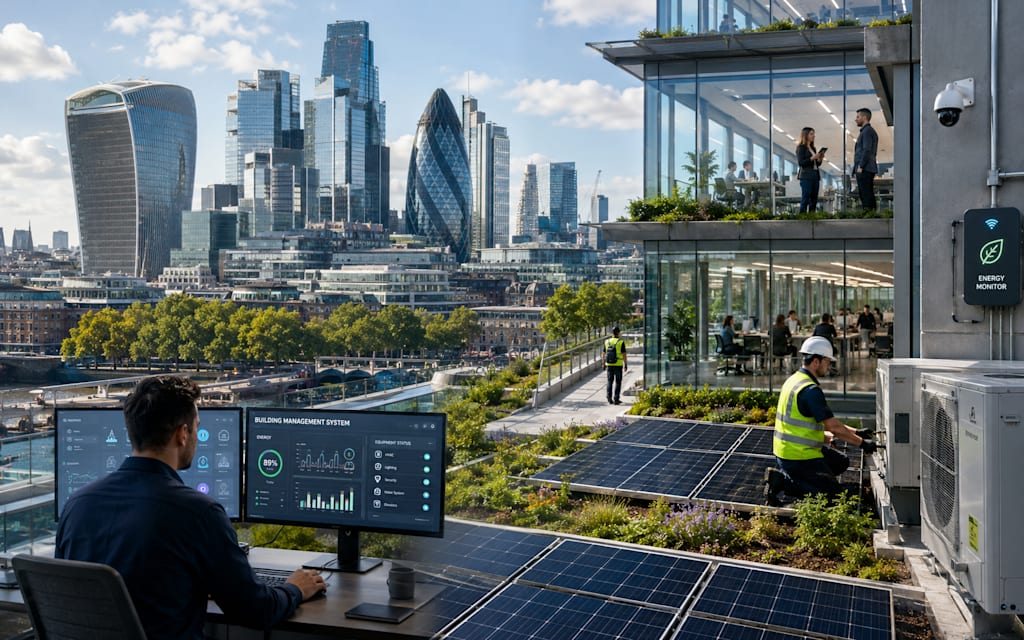
Have you ever walked into an office where everything simply works? The lights adjust automatically, the air feels comfortable, the elevators run smoothly, and maintenance issues seem to disappear before anyone notices them.
Behind that seamless experience is a growing industry that rarely gets public attention but affects millions of people every day. Across the UK, organizations are rethinking how buildings are managed, maintained, and optimized. From corporate offices and hospitals to universities and transportation hubs, facility management has become an essential part of keeping modern life running efficiently.
According to Mordor Intelligence, the United Kingdom facility management market was valued at USD 81.09 billion in 2025. The market is estimated to grow from USD 83.29 billion in 2026 to USD 95.24 billion by 2031, reflecting a CAGR of 2.71% during the forecast period (2026-2031). These figures highlight how organizations continue investing in services that improve operational efficiency, workplace experiences, and asset performance.
For anyone asking, "What is driving the future of building management in the UK?" or "How is the facility management industry evolving?" the answer lies in a combination of technology, sustainability, and changing workplace expectations.
The New Role of Facility Management in Everyday Life
Facility management was once viewed primarily as a support function focused on cleaning, maintenance, and repairs. Today, its responsibilities extend much further.
Modern facility teams help organizations improve energy efficiency, ensure regulatory compliance, enhance employee experiences, and maintain business continuity. As buildings become more connected through sensors, automation, and data analytics, facility management professionals are increasingly responsible for turning information into actionable improvements.
One of the most discussed United Kingdom facility management market trends is the growing use of smart building technologies. Digital monitoring systems can track equipment performance in real time, helping organizations identify potential problems before they result in costly disruptions.
This evolution is influencing the broader United Kingdom facility management Industry, where service providers are expected to deliver both operational excellence and strategic value.
For businesses across the UK, the goal is no longer simply maintaining buildings. It is creating environments that are productive, sustainable, and resilient.
Key factors shaping the industry include:
* Increased adoption of smart building solutions
* Greater focus on workplace experience
* Rising demand for energy-efficient operations
* Growing emphasis on compliance and safety standards
* Expansion of data-driven maintenance strategies
These developments continue to support long-term United Kingdom facility management market growth, as organizations seek ways to maximize the value of their physical assets.
Why Market Growth Reflects More Than Building Maintenance
When people hear the term "facility management," they often think about physical infrastructure. However, the industry's impact reaches far beyond walls, equipment, and utilities.
A well-managed facility can improve employee satisfaction, support sustainability goals, reduce operational costs, and strengthen organizational performance. These outcomes are becoming increasingly important as businesses adapt to changing economic and workplace conditions.
The latest United Kingdom facility management market size figures illustrate the scale of this opportunity. With the market expected to increase from USD 83.29 billion in 2026 to USD 95.24 billion by 2031, organizations are continuing to recognize the value of professional facility management services.
Another important consideration is the evolving competitive landscape. Companies increasingly evaluate service providers based on innovation, digital capabilities, and measurable performance outcomes. As a result, discussions surrounding United Kingdom facility management market share often focus on organizations that can successfully combine technology, operational expertise, and customer-centric solutions.
For decision-makers researching the UK facility management market forecast, the projected CAGR of 2.71% suggests steady and sustained demand rather than short-term fluctuations. This reflects the essential nature of facility services across multiple sectors, including healthcare, education, commercial real estate, manufacturing, and public infrastructure.
The future may bring smarter buildings, more automation, and increasingly sophisticated workplace technologies, but one principle remains unchanged: people depend on well-managed environments to live, work, learn, and collaborate effectively.
As digital transformation continues across the UK, facility management is becoming less visible yet more important than ever. The systems operating behind the scenes are helping organizations create safer, more efficient, and more sustainable spaces for the future.
The next time you enter a building where everything runs smoothly, take a moment to consider the invisible network of people, technology, and processes making it possible. It may be one of the most important industries you rarely think about.
What facility management innovation do you think will have the biggest impact on UK workplaces over the next decade—smart buildings, sustainability initiatives, or AI-driven operations?
About the Creator
Enjoyed the story? Support the Creator.
Subscribe for free to receive all their stories in your feed.
Comments
There are no comments for this story
Be the first to respond and start the conversation.