
Why Agricultural Fumigants Are Becoming Essential for Global Food Security
Rising pest threats, food demand, and storage challenges are driving a quiet transformation in modern agriculture

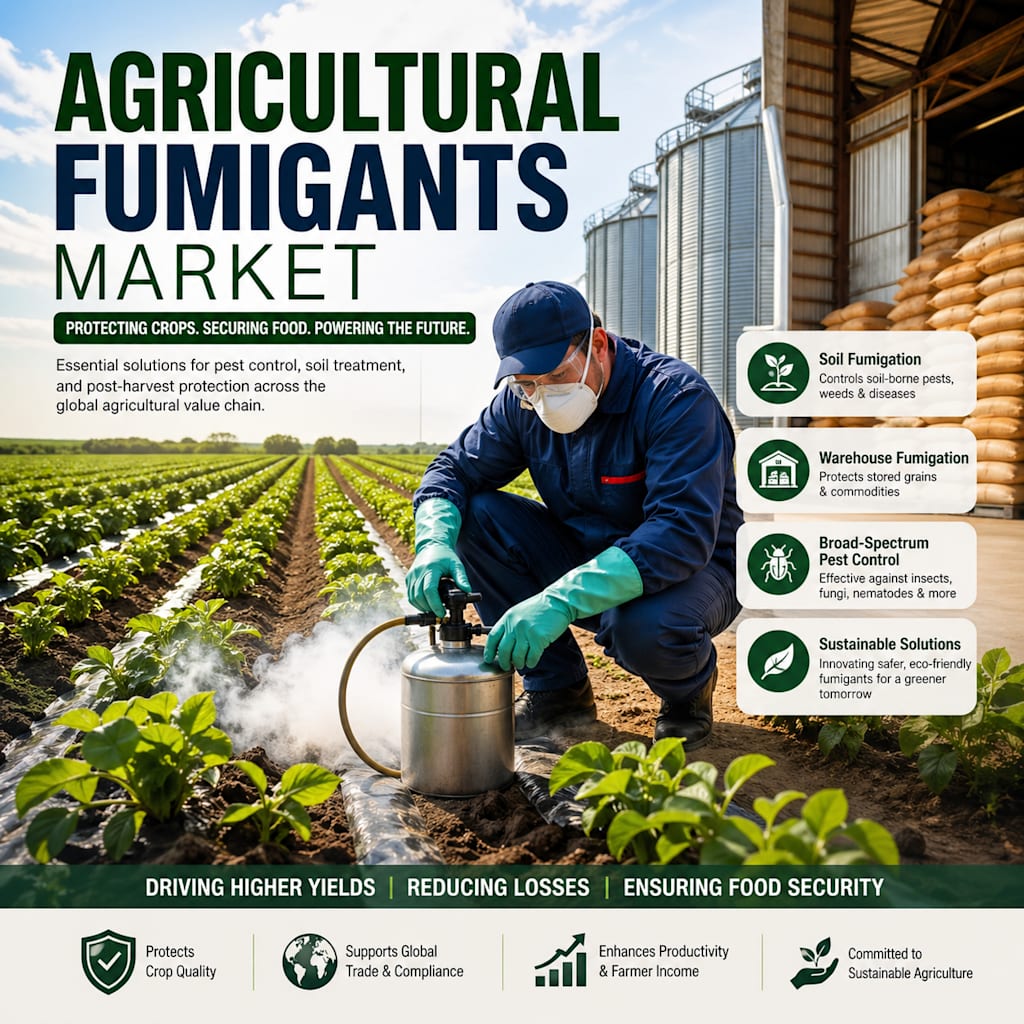
Feeding the world has never been easy․ And today‚ it's becoming more complex than ever․
From the growth of the world population to climate change‚ farmers are consistently challenged to protect crops both in the field and after harvest․ Although fertilizers and irrigation receive a lot of attention‚ agricultural fumigants could be a promising‚ quiet solution․ This is a directory of agricultural fumigants (pesticides)․
These chemicals‚ and to an increasing extent bio-based pesticides‚ are used to kill‚ repel‚ or control pests‚ fungi‚ or other plant pathogens that threaten the food before planting‚ during storage‚ and during food preparation․
A Market Poised to Match Global Food Demand
The global market for agricultural fumigants was roughly estimated at USD 2․47 billion in 2024 and USD 3․36 billion in 2033‚ with a projected compound annual growth rate of 3․4%․
This appears to be a small increase but it is meaningful because of the increasing demand for food‚ and food security has become a major issue in society․
Currently‚ fumigants are used in everything from bulk storage grain facilities to high value crops‚ reducing post-harvest loss and increasing efficiency in agriculture․
Why Crop Protection Is More Important Than Ever
By today‚ agriculture is still suffering losses from plant pests and diseases attacking crops․
Worldwide‚ 20% to 40% of all crops are lost to pests each year․ Plant diseases are responsible for hundreds of billions of dollars a year in economic losses․
This is where fumigants come into play․
They are widely used to:
- Prevent insects in stored grains․
- Eliminate soil-borne pathogens before planting
- Prevent contamination during transportation and storage
- Comply with international standards for food safety
Without assistance from pest control‚ much of the world's crop would never reach the dinner table․
The Increasing Importance of Post-Harvest Protection
Perhaps the most important usage of fumigants is in post-harvest fumigation of commodities․
Once harvested‚ crops are often held in warehouses and silos or loaded into shipping containers for long periods before being shipped‚ leaving them vulnerable to insects and fungi․
Elimination of the hidden infestation in a fumigated field of stored products helps preserve their quality and usefulness․
Because international trade in agricultural products is global and highly regulated‚ commercial fumigation has become necessary to comply with strict international phytosanitary standards․
Technology Is Transforming Customary Fumigation
As with many agricultural sectors‚ fumigation is also adopting new technologies․
Recent improvements to fumigation include increased efficacy‚ improved safety and reduced environmental impact․ These include:
- Precision application systems help reduce chemical inputs․
- Surveillance systems using sensors for real-time pest detection
- Controlled-release fumigants are more effective
- AI-based pest management technologies
Such innovations could help farmers and agribusinesses increase agricultural productivity with less environmental impact․
The Trend Towards Sustainable and Bio-Based Alternatives
One of the key trends in the market for agricultural fumigants is the shift toward sustainability․
Some customary fumigants‚ including the chemical-based products‚ have been banned or restricted due to their environmental hazards‚ and have been replaced by:
- Bio-based fumigants derived from natural products
- Low-toxicity chemical alternatives
- Environmentally safer soil treatment solutions
Governments and regulatory agencies worldwide are working to encourage this trend by placing restrictions on pesticide use and residue levels in food․
In response‚ businesses have invested heavily in developing environmentally sustainable practices that meet their organizational needs․
Asia-Pacific Population Growth Outpaces World
The Asia-Pacific region is the most prominent regional market for agricultural fumigants‚ accounting for more than 40% of the global share․
This dominance can be attributed to several factors:
- Rapid population growth creates higher food demand
- China and India produce food on a massive global scale․
- Concerns about food security developed
- Grain storage and export facilities expanded
Yet‚ other regions‚ including North America and Europe‚ play important roles as sites for innovation and regulatory development of AI technologies․
The Role of Large-Scale Storage and Global Trade
Modern agriculture now involves not only growing food‚ but also storing and transporting it as efficiently as possible․
In modern global commerce‚ such crops are often shipped long distances‚ and thus storage conditions are more important․
Fumigants are widely used in:
- Warehouses
- Silos
- Shipping containers
- Bulk storage facilities
The penetrative nature and ability to kill hidden pests makes them an important factor in safe transport over longer distances․
Challenges Facing the Industry
The agricultural fumigant market does not come without its challenges․
Some chemical fumigants have been limited by environmental concerns‚ restrictions‚ and regulations‚ and there is a trend towards reducing the amount of chemical exposure for both workers and consumers․
Another potential challenge is developing solutions that are sustainable and can be widely applied to different crops․
However‚ it must be noted that these issues are leading to the development of safer and more efficient alternatives․
Tight‚ innovation-led‚ high margin‚ competitive industry
The market is competitive and populated by global players as well as companies looking to better their offerings․
Industry leaders are focusing on:
- Developing eco-friendly fumigants
- Expanding operations into developing agricultural markets
- Investments in research and development
- Forming planned partnerships
This competition will help drive improvements and refinements to relevant fumigation technologies․
Looking Ahead: The Future of Crop Protection
As the world population continues to grow‚ the question of food security will remain a topic for policymakers․
It is critical that agricultural fumigants continue to play a role in meeting these challenges‚ including in preventing spoilage and increasing quality․
Possible future developments include:
- Sustainable and bio-based fumigation alternatives
- Smart farming integration
- Reduced environmental impact
- Improved safety standards
Predicted to reach USD 3․3 billion by 2033‚ advanced crop protection programs are expected to become an integral part of agriculture․
Final Thoughts
While agricultural fumigants may not be the most obvious aspect of farming‚ their effects can be seen․
Whether it is protecting grains in storage or the movement of food around the world‚ these solutions can help balance food supply with demand․
As farming changes‚ fumigants are likely to remain an important part of the solution to sustainably feed the increasing population and help prevent crop loss․
About the Creator
Robert
Senior Market Researcher at IMARC Group, specializing in global market analysis, industry trends, and data-driven insights across diverse sectors.
Enjoyed the story? Support the Creator.
Subscribe for free to receive all their stories in your feed.
Comments
There are no comments for this story
Be the first to respond and start the conversation.