
Why a Quick Goodbye Takes Twenty Minutes
What happens between putting on your coat and leaving?
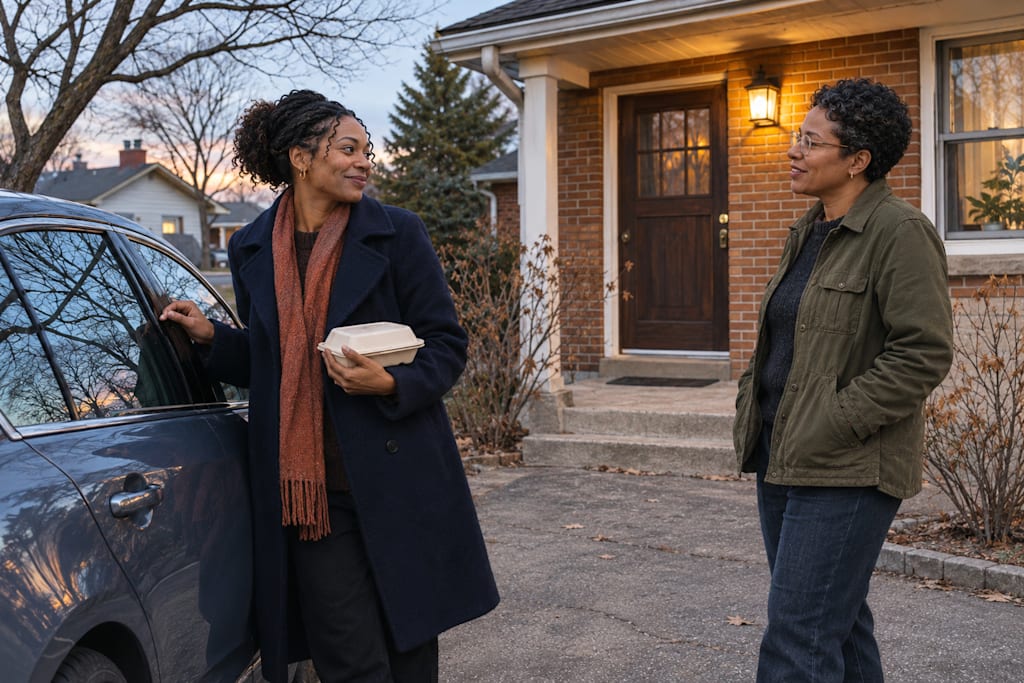
Someone says, “I should get going.” They stand up, put on their coat, and look for their keys. Then the host asks if they want to take some food home. By the time someone finds a matching lid, the person in the coat is telling a story nobody has heard before. The front door is open just enough to let the cold in. Everybody is still inside.
I find this funny because saying goodbye should be the easiest part of a visit. We already know what to say. We said it ten minutes ago. The first person to stand up may even be the last one out because the person they came with is still sitting down. While one guest looks for a missing glove and another asks if anyone needs a ride, somebody starts a whole new conversation.
The things we waited to say
Some conversations have to wait until you get to the door. You want to ask how someone’s appointment went, but the children are at the table, and the other guests can hear. When you walk them out, it is just the two of you. You can finally ask, “How did it go?” They stop looking for their keys long enough to tell you. A moment ago, you were about to say goodbye. Now you are standing beside the car catching up.
Sometimes you remember something at the last minute. A guest opens the car door, then turns to ask, “Oh, before I forget, did I tell you who I ran into?” You say no, and they close the door again. It never came up during the visit, and now you both want to hear how the story ends.
I like that a goodbye can give people a little more time together. I also think a few extra minutes can feel different depending on whose coat is on. A guest might be enjoying the conversation. The host might be enjoying it too, even as they think about loading the dishwasher and getting a child to bed half an hour late.
When it is time to go
Sometimes a long goodbye is simply a habit. A guest says they should leave, and the host offers another cup of tea, even though the milk is already back in the fridge. The guest accepts. They may take the offer to mean the host wants them to stay. The host may take the guest’s yes to mean they are in no hurry to go. By the time they finish their tea, another fifteen minutes have gone by. I can see how easily that happens when everyone is trying to be polite.
Sometimes you really do want the person to stay. They make you laugh, or you hardly ever get an evening together and it feels as though they only just arrived. I like the honesty of saying, “Do you have time to sit for a little longer?” If they do, you can both sit down again. Nobody has to finish a good conversation standing up in a coat.
There is also something kind about saying, “I am glad you came. Let me walk you out.” As a guest, you can say, “I had a lovely time. I am going to head home now.” Most of us know how it feels to enjoy an evening and still look forward to taking our shoes off in our own house.
My favourite goodbyes give us time to say how glad we are that we got to see each other. Sometimes that means a quick hug at the door. Sometimes you leave with a slice of cake and a promise to finish the story next time.
What usually happens between saying you are leaving and walking out, and what kind of goodbye do you like best?
About the Creator
Enjoyed the story? Support the Creator.
Subscribe for free to receive all their stories in your feed.
Comments
There are no comments for this story
Be the first to respond and start the conversation.