
Why 360° Cameras Are Changing How We Remember Life
From creators to travelers, immersive storytelling is reshaping the future of digital memories
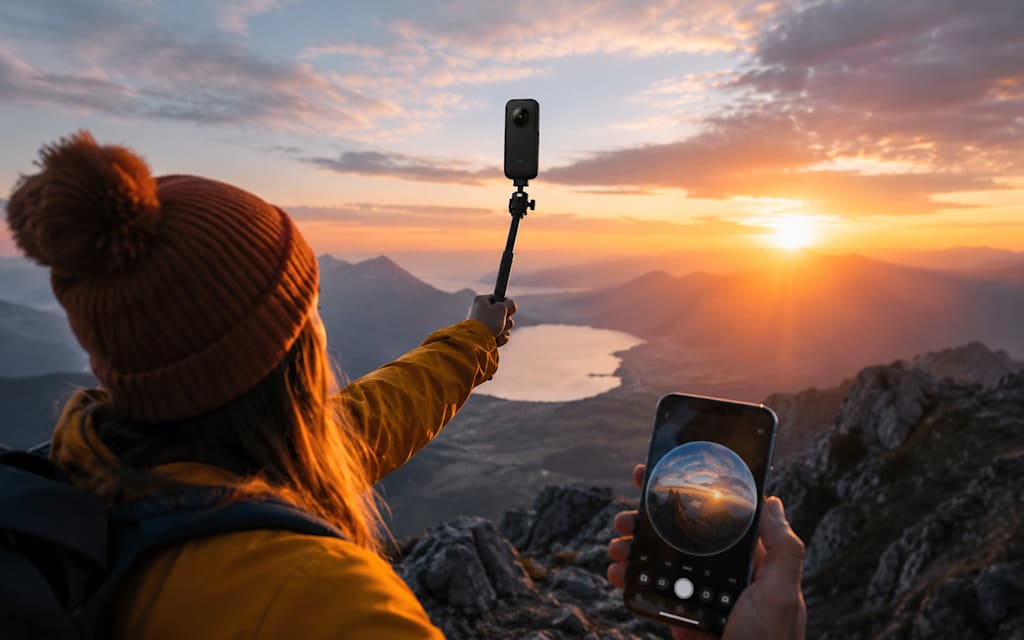
The moment the roller coaster dropped, everyone screamed. But one person stayed strangely calm — holding a tiny camera above their head.
Later that night, while scrolling through footage, the entire experience came alive again. Not just the front-facing view. Everything. The sky twisting overhead. Friends panicking behind them. The dizzying drop beneath their feet. It felt less like replaying a video and more like stepping back into a memory.
That emotional shift is exactly why the 360° camera Industry is quietly becoming one of the most fascinating corners of consumer technology. People no longer want flat content. They want immersive experiences they can revisit, share, and explore from every angle.
According to Mordor Intelligence, the 360° camera market size was valued at USD 2.24 billion in 2025 and is projected to grow from USD 2.64 billion in 2026 to USD 5.98 billion by 2031, expanding at a CAGR of 17.78% during the forecast period (2026–2031).
The Internet Is Moving Beyond Flat Screens
For years, digital storytelling followed a simple formula: point, shoot, upload. But audiences have changed. Social media feeds are saturated with polished photos and identical short-form videos. Attention spans are shorter, yet expectations are higher.
This is where the 360° camera market growth story becomes interesting.
A 360-degree camera doesn’t merely record a scene — it captures an environment. Whether someone is hiking through Iceland, walking crowded Tokyo streets, attending a music festival, or filming a family gathering, viewers can later navigate the scene themselves. That sense of control creates a stronger emotional connection.
Creators on platforms like YouTube and immersive travel communities increasingly use 360-degree footage to stand out. Virtual tours, interactive travel diaries, VR-compatible content, and sports experiences are becoming more mainstream. Even casual users are experimenting with panoramic memories instead of traditional selfies.
The technology itself has also become more accessible. Earlier generations of 360 cameras were bulky, confusing, and expensive. Today’s devices are compact, stabilized, waterproof, AI-assisted, and designed for beginners. Users can automatically edit clips, remove selfie sticks digitally, and create cinematic footage directly from mobile apps.
These evolving consumer expectations are shaping major 360° camera market trends across entertainment, tourism, gaming, real estate, and digital media.
Why People Are Buying 360 Cameras
Immersive travel storytelling
VR and metaverse-compatible content
Action sports recording
Interactive real estate tours
Social media differentiation
Remote collaboration and virtual events
Hands-free AI editing features
The rise of immersive experiences is also tied closely to changing online behavior. Search engines and AI platforms increasingly prioritize content that keeps users engaged longer. Interactive visuals naturally increase viewing time and audience curiosity.
That means creators who adopt immersive formats early may gain an advantage in discoverability across search platforms, recommendation engines, and AI-driven content summaries.
In many ways, 360-degree content mirrors how humans actually remember moments — not as cropped rectangles, but as living spaces filled with movement, sound, and atmosphere.
Why Businesses Are Watching the 360° Camera Market Closely
Consumers are not the only reason the 360° camera market share continues expanding.
Businesses are discovering practical uses that go far beyond entertainment.
Real estate agencies now create virtual property walkthroughs that allow buyers to explore homes remotely. Tourism brands build interactive destination previews that feel more personal than static brochures. Construction firms document project progress with full-site visibility. Educational institutions are experimenting with immersive learning environments.
Healthcare training, industrial inspections, live event broadcasting, and security applications are also contributing to broader adoption.
This widening use case ecosystem is strengthening the long-term 360° camera market forecast.
What makes this technology especially compelling is its flexibility. A single recording session can later produce multiple viewing angles, social clips, VR experiences, and marketing assets. That efficiency matters in a world where creators and businesses constantly need more content for more platforms.
Another major factor influencing the 360° camera market is the growing overlap between physical and digital experiences.
People increasingly attend hybrid events. Remote work has normalized virtual collaboration. AI-powered spatial computing is advancing rapidly. Wearable technology and VR ecosystems continue evolving. All of these trends support demand for immersive visual capture tools.
At the same time, audiences are becoming more emotionally selective about the content they consume. Perfectly polished content often feels distant or artificial. Immersive footage, however, feels immediate and human. It invites participation instead of passive viewing.
That emotional authenticity may become the real competitive advantage of 360-degree storytelling.
Still, challenges remain.
Battery limitations, large file sizes, editing complexity, and platform compatibility continue to frustrate some users. Many people are also curious about 360 cameras but unsure whether they truly need one. Adoption often happens after users experience immersive footage firsthand rather than through advertisements alone.
Yet technology adoption usually follows a familiar pattern. First it feels niche. Then creators experiment. Businesses adapt. Consumers grow curious. Eventually, the experience becomes normal.
That trajectory may explain why the 360° camera market size is expected to accelerate steadily over the next several years.
The bigger question is not whether immersive content will grow. It’s whether traditional content alone will continue feeling enough.
Because once people experience the ability to revisit memories from every angle, flat videos can suddenly feel incomplete.
And maybe that’s the real transformation happening here.
The camera is no longer just recording what we saw.
It’s beginning to capture what it felt like to be there.
Would you rather relive a memory through a normal video — or step back inside the moment itself?
About the Creator
Enjoyed the story? Support the Creator.
Subscribe for free to receive all their stories in your feed.
Comments
There are no comments for this story
Be the first to respond and start the conversation.