
Which Is Better for T-Shirts: DTF or Plastisol Printing?
Simple insights to help you decide which printing style delivers better value, durability and design quality

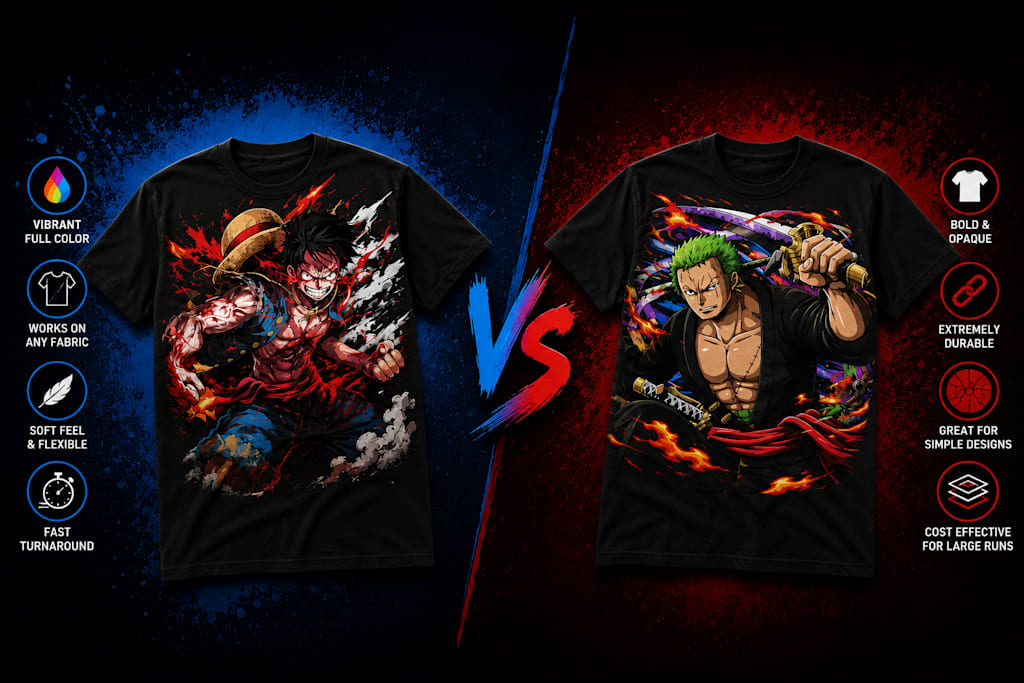
When it comes to custom T-shirt printing, the debate between DTF and plastisol isn’t just technical—it’s practical. The “better” option depends on what you actually need speed, durability, detail, or flexibility. Instead of starting with definitions, let’s flip the usual approach and begin with the real-world outcome.
If your goal is quick, full-color designs with minimal setup, DTF printing usually wins. If you care more about long-lasting prints and bulk production efficiency, plastisol still holds its ground. Everything else comes down to how you plan to use it.
What Makes One “Better” Than the Other?
Before choosing, think about what matters most in your workflow:
- Are you printing small batches or large orders?
- Do your designs have complex colors or simple graphics?
- Are you optimizing for speed or durability?
These questions matter more than the printing method itself.
A Quick Look at DTF Printing
Let’s address a common question: what is DTF printing?
DTF (Direct-to-Film) printing is a process where designs are printed onto a special film, then transferred onto fabric using heat and adhesive powder. It’s become popular because it removes many of the setup headaches found in traditional printing.
Why people prefer DTF:
- Works on cotton, polyester, blends, and more
- No need for screens or heavy setup
- Great for detailed, multi-color artwork
- Ideal for print-on-demand and small businesses
DTF shines when flexibility matters. You can print one shirt or one hundred without changing much in your process.
Where Plastisol Printing Still Dominates
Plastisol ink is the backbone of traditional screen printing. It’s thick, durable, and trusted by professionals for decades.
If you’ve ever looked into how to make screen print transfers, you’ve already touched the plastisol world. Transfers are created using plastisol ink and then heat-pressed onto garments later.
Why plastisol still matters:
- Extremely durable prints that last through many washes
- Cost-effective for bulk production
- Strong, vibrant colors on simple designs
- Preferred for large-scale printing operations
For businesses handling big orders, plastisol is often the more economical and reliable choice.
The Real Comparison (No Fluff)
Instead of overcomplicating things, here’s how they stack up in real use:
1. Setup & Ease of Use
DTF is much easier to start with. No screens, no complex prep.
Plastisol requires setup time, especially for multi-color prints.
2. Print Quality
DTF handles gradients and fine details better.
Plastisol delivers bold, solid designs with a classic feel.
3. Durability
Plastisol wins here—it’s built to last.
DTF is durable too, but may not match plastisol over time.
4. Cost Efficiency
DTF is better for small runs.
Plastisol becomes cheaper as volume increases.
5. Fabric Compatibility
DTF works on almost anything.
Plastisol works best on cotton and certain blends.
A Different Way to Decide
Instead of asking “Which is better?”, ask:
- Am I printing for profit at scale? → Plastisol
- Am I printing custom designs on demand? → DTF
- Do I need a fast turnaround without setup? → DTF
- Do I want long-term durability for bulk orders? → Plastisol
That’s the real decision framework.
Where Beginners Usually Go Wrong
Many people jump into printing by choosing a method based on hype rather than need. DTF is trending right now, but that doesn’t mean it’s always the right choice.
Beginners often overlook:
- Production volume
- Equipment costs over time
- Customer expectations (soft feel vs durability)
Learning from reliable sources like Screen Print Direct can help you avoid these mistakes, especially when exploring both DTF supplies and traditional screen printing materials.
Emerging Trends You Should Know
The T-shirt printing space is evolving fast, and a few trends are shaping decisions:
- Print-on-demand business models (low inventory, fast fulfillment)
- Custom streetwear brands focusing on detailed artwork
- Eco-friendly printing options are gaining attention
- Hybrid workflows (using both DTF and plastisol together)
These trends are why DTF is growing rapidly—but plastisol isn’t going anywhere.
So, Which Is Actually Better?
Here’s the honest answer:
- DTF is better for flexibility, speed, and design freedom.
- Plastisol is better for durability, consistency, and bulk production.
There’s no universal winner—only the right tool for the job.
Many successful print shops don’t choose one. They use both.
Final Thoughts
If you’re just starting, DTF can feel easier and more accessible. It lets you experiment, create, and sell without heavy investment. But as you scale, plastisol becomes hard to ignore for its reliability and cost efficiency.
Instead of following trends, focus on your goals. The “best” method is the one that fits your workflow, your budget, and your customers’ expectations.
About the Creator
Deborah Larson
Deborah Larson is a professional writer and lifelong learner who shares her knowledge, insights and creative thoughts through her blog.
Enjoyed the story? Support the Creator.
Subscribe for free to receive all their stories in your feed.
Comments
There are no comments for this story
Be the first to respond and start the conversation.