
When Technology Breaks at the Worst Possible Moment
The Takeaway for Anyone Who Depends on Their Tech

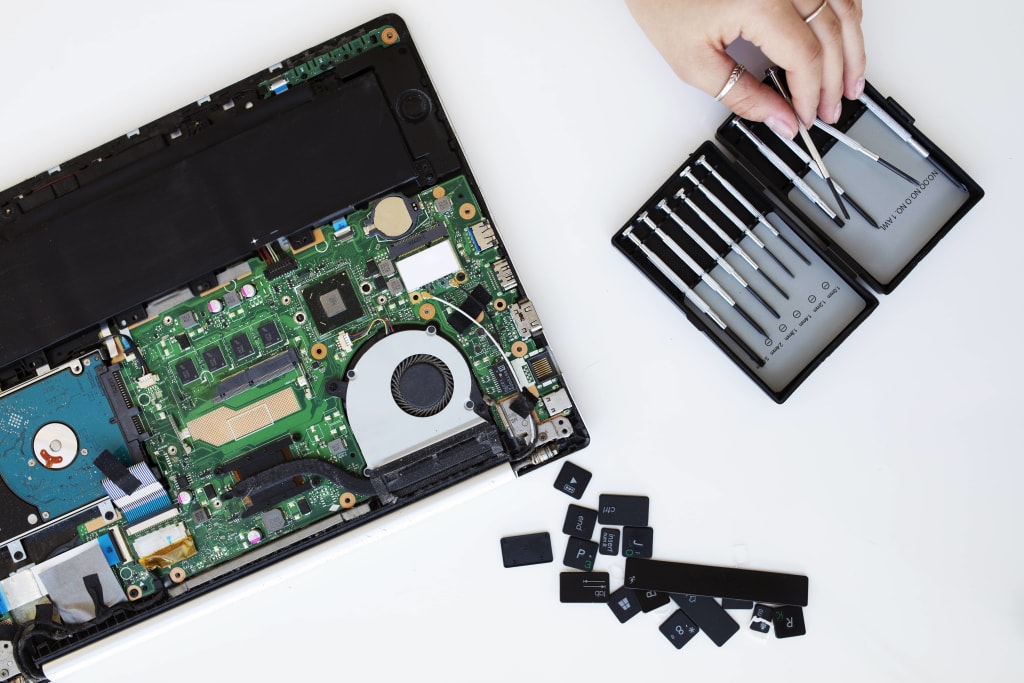
Every day we use devices without a thought. Opening a laptop is, in many ways, just like opening a door. We expect the device to work. We expect the screen to light up and the apps to load seamlessly while we go through our day as intended. Most days unfold just like that. Until one day, the machine decides otherwise.
In my case, the decision came at the time of a project review no warning and no flickering. One moment it worked fine, the next moment, it froze, made a gentle clicking sound, and shut off. I instinctively tried all the normal fixes; forced restart, plug and unplug, and even patience. Nothing worked. Just like that a day that was planned fell into a frantic mess.
It's astonishing how one irresponsible device can frustrate a person. Not only was work disrupted, but also a mental flow that carries an individual through a day's tasks. You lose your momentum, then even the simplest tasks drag on while your momentum is interrupted. We then realize how connected our productivity is to the little glowing rectangle in front of us.
That morning motivated me to explore reason why these breakdowns happen and why they never fail to happen at the exact moment you are relying on your device to work for you.
The Silent Wear That Builds Up
Devices don't fail out of no where. There are always signs, even if they are tiny signs but consistantly appear. A system is running hotter than it should. A fan sounds like a mini jet engine. Booting slow. Mysterious lags. Apps that close on their own. These little things all creep up in the background. You ignored them because the device is still "working well enough."
"Working well enough" is usually the point before a device fails. Some of this comes with what environments we are working in. Most people don't clean vents. Most people don't check ports. Most people don't update drivers until the system is begging to be updated. A laptop is on a couch, a bed, or a blanket so heat gets trapped and the system degrades over time. Phones absorb shock from dozens of tiny drops long before the big crack shows up.
By the time the system fails these signs and symptoms have already established a home.
The Hidden Cost of Downtime
What amazed me the most about my laptop wasn't so much that the device itself failed, but rather everything that followed. The calls that became delayed. The notes that suddenly became inaccessible. The files that were stuck inside a machine that simply refused to turn on. I truly felt someone had pulled the batteries of my entire workflow out of the socket.
That is when you realize that the true cost of down time isn't so much just the repair itself. It is everything that comes with it. The stalled tasks. The tasks that have shifted priorities. The overall pause to your thinking in general. Even a small hiccup can lead to a much larger snowball effect that is lost focus that could Take hours of your precious time.
This is something I have heard from others as well. People who do creative work, People running small businesses. People managing remote teams. Everyone has a story of the One Device Failure That Took Out Their Entire Week.
The Turning Point
Later that evening, I went into TechFix with my laptop, not because I was making plans for a major repair, but because I needed to see if someone could just tell me if the laptop was dead. The visit was not exciting or dramatic in any way, no sales pitch, and at the end of the visit, no upsell. Just someone opening the machine with the dust that had built up and explaining how heat had slowly gotten the internal components out of the comfort zone.
It was the most straightforward explanation and it made sense. Devices fail like a human being fails. Not in one big step, but little steps over months while ignoring signs of necessity.
That brief assessment changed my observation of tech. It wasn’t repair. It was understanding.
TechFix played more of a story role rather than a service role. That experience wasn’t about buying anything. It was about making sense of connecting each small symptom to a much larger failure.
What I Learned About Device Reliability
Most people assume their tech is fine until it’s not. This mental belief creates more problems than the devices created. What I learned from a single day of not having use of my tech changed my overall use of my tools:
Small maintenance matters.
Not in any dramatic way, but in a quiet, preventive way, so you don’t lose a whole morning to a frozen screen again.
Heat is a slow killer.
Dust's airflow. Airflow keeps parts alive. When airflow fails, all the parts will fail.
Backup use was not optional.
The moment you lose access to a device, is the same moment you regret not securing a file.
Small problems are early warning signs.
A blink, a pause, a freeze. These little blips are signals for action. And most of the damage is preventable.
Not by expensive cleaning, but awareness.
A little cleaning. A little better habit. A little better care. And yes, checking in with someone else who has a better sense of hardware than you do, every once in a while.
A Different Way to Think About Tech
We tend to think of our devices as gadgets, but really they are more like work partners. When they are working fine, we work fast. When they start bucking, everything slows down. The more we understand them, the less likely we are to suffer a shock failure that disrupts a perfectly good morning.
The point is not to be an advocate for the repair expert. The point is to be aware. You don't need to memorize specs. You don't need to learn how to open a laptop. You just need to be aware of the conditions when the device behaves in ways it has not behaved before record.
Technology stories usually begin the same way. Someone looses access during what could be the worst time. Somebody else discovers something that they have been negligently avoiding. Some others just hope the device only has to make it through one more day.
But technology stories that run these events differently than if someone treated their technology like something that could be maintained instead of something that would always function well until it suddenly didn't.
That little toggle is a time-saver as well as less stressful and, sometimes, a project-saver as well.
Final Thought
When my laptop broke in the middle of that meeting, I thought, "It is a disaster." It maybe was a disaster, but looking back, it also forced me to understand how fragile our electronic lives are. The breakdown wasn't the end of anything, it was the beginning of a better solution to manage the tools our lives depend on day to day.
If you’ve ever had a device stop when you depended on it most, you know the feeling. If you’ve not yet compounded that experience, the best time to think is before it happens. A little awareness goes a long way.
About the Creator
Techfix
TechFix offers professional IT consulting in Dubai. Our expert consultants provide strategic IT planning, cloud consulting, cybersecurity, and technology advisory services to help businesses grow efficiently and securely.
Enjoyed the story? Support the Creator.
Subscribe for free to receive all their stories in your feed.
Comments
There are no comments for this story
Be the first to respond and start the conversation.