
When a one star review won't go away: how removal really works
Most businesses ask the wrong question about Trustpilot. Here is what actually moves a review off the page, and what quietly sabotages the attempt

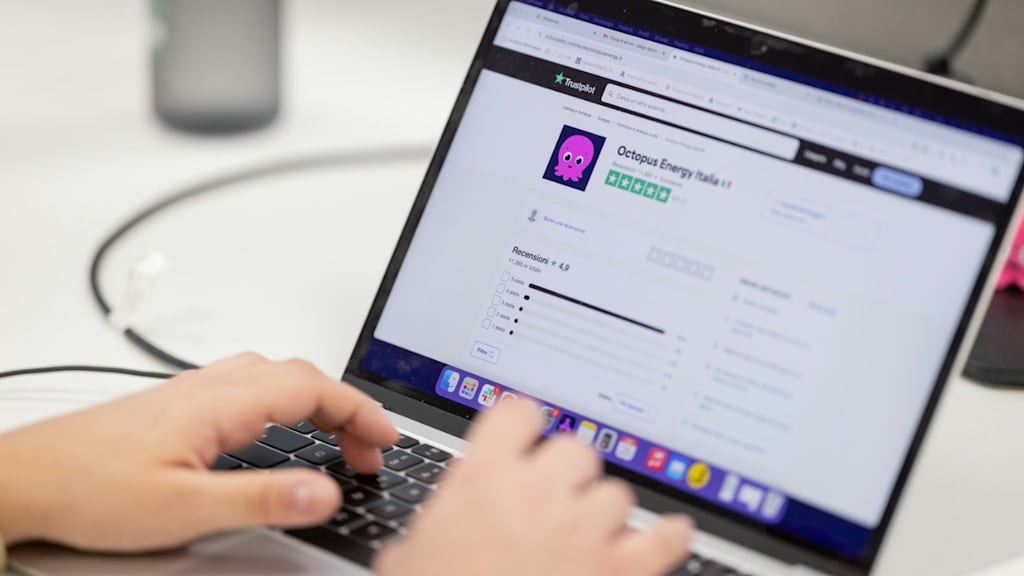
Picture the moment. You open your business profile and there it is. A single star, a few angry lines, sitting near the top of your page for everyone to read. Your first instinct is simple and very human: make it disappear. So you start hunting for the button that deletes it. The trouble is that the button you are imagining does not exist, at least not in the way you expect. Understanding why is the first real step toward protecting your reputation instead of fighting a battle you were always going to lose.
The line between an opinion and a violation
A platform like Trustpilot does not remove a review simply because it stings. A one star rating can sit on your profile for years if it follows the rules. This is the distinction that trips up almost everyone. There is a difference between a negative opinion that is merely unflattering and a review that breaks the guidelines, and only the second kind is a candidate for removal. When a company asks for a takedown using the argument that the review is damaging, the request usually fails, because damage is not a policy breach. Disappointment is allowed. Lying about a transaction, publishing someone's phone number, or hurling abuse is not.
What flagging actually does
Reporting a review (often called flagging) is not a delete command. It is a request for review. When you flag something, you are telling the platform that you believe a specific rule has been broken, and a process then takes a closer look. The reason you choose matters enormously. Many businesses just hit report with no context and no category that genuinely fits, and the outcome is predictable: the review stays. A flag without a clear, accurate reason is little more than noise in the system.
The categories that carry real weight
Some reasons hold up far better than others under scrutiny. One of the strongest is the inability to verify the experience. If a scathing review appears and you cannot find any trace of that customer anywhere (no order in your store system, no payment record, no support ticket, nothing at all), you can ask the platform to request proof from the author. If the reviewer cannot show a genuine relationship with your business, the review may come down.
Other categories tend to trigger faster action. Personal data is a clear one: phone numbers, addresses, emails, full names of staff, or financial details usually get attention quickly. Abusive language, threats, slurs, and personal attacks fall under moderation too. So does spam, meaning reviews stuffed with links, promotions, repeated text, or content that reads as machine generated. None of these survive a careful look very often.
Evidence is the part everyone gets wrong
Here is where most reports fall apart. Saying that a review is fake is not evidence. You have to show why you believe it is fake, and the more specific you are, the stronger your case becomes. There is also a subtle point that very few companies grasp: the platform is not deciding who is right. It is deciding whether the review follows the rules. That single fact changes your entire approach. Trying to prove the customer was mistaken is mostly wasted effort. Proving that a guideline was broken is what actually counts.
A move worth making while you wait
A review can take days to assess. During that window, everyone visiting your page keeps seeing the comment. A calm, professional public reply protects you in the meantime. It signals to every future reader that you take feedback seriously, and it costs you nothing while the case is evaluated. Silence, by contrast, lets the review speak entirely on its own terms.
When the review stays up
Sometimes you do everything correctly and the platform still keeps the review live. This is common, and it is not the end of the story. At that point your goal shifts from removal to management. You respond, you add context, you show a real willingness to fix the problem, and you keep earning legitimate positive reviews. Over time, a single isolated negative loses most of its sting. It becomes one quiet voice among many.
The shortcuts that backfire
There is a tempting set of tactics that always ends badly. Buying positive reviews, creating fake profiles, asking employees to pose as customers, or pressuring people to delete their comments can trigger penalties far worse than the original complaint. These platforms are built to detect exactly this kind of behavior. A manipulated profile is a much bigger problem than one unhappy customer, and the damage is a great deal harder to undo.
The quieter truth about reputation
If this whole topic came down to a single sentence, it would be this: do not try to remove a review because it is negative, try to remove it only when there is a real basis inside the rules. Learn to flag properly, bring genuine proof, use the tools your business account gives you, and accept that online reputation is built far more by good management than by deletion. The best defense against a bad review was never hiding it. It is having dozens, or hundreds, of satisfied customers who speak for you long after that one angry voice has faded into the background.
About the Creator
Enjoyed the story? Support the Creator.
Subscribe for free to receive all their stories in your feed.
Comments
There are no comments for this story
Be the first to respond and start the conversation.