
What Would This Photograph Sound Like?
Imagine a photograph of a corner café just after rain. This is a hypothetical scene: amber light spills through the window, an empty chair faces the street, and a bicycle leans against the wall.

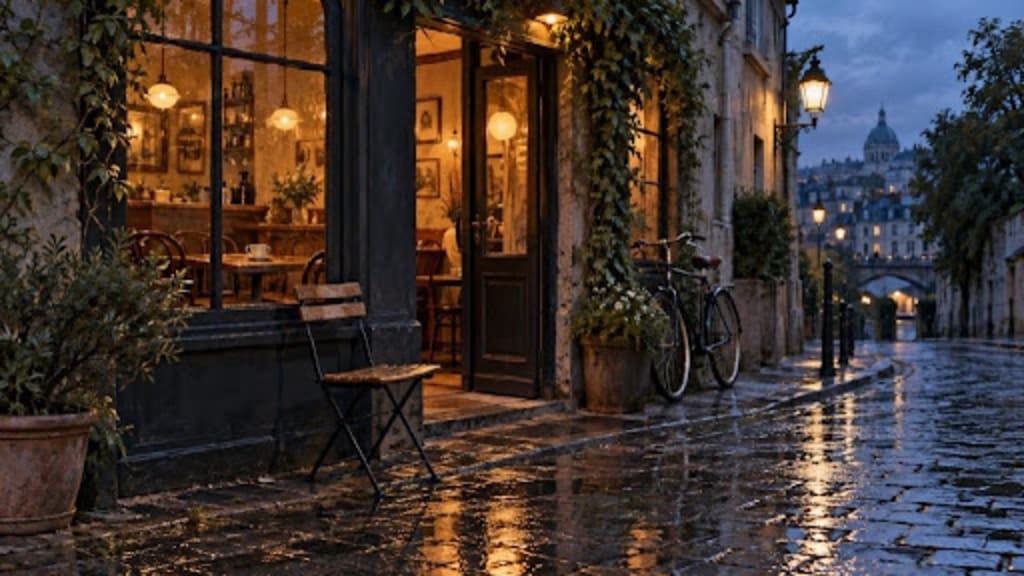
Imagine a photograph of a corner café just after rain. This is a hypothetical scene: amber light spills through the window, an empty chair faces the street, and a bicycle leans against the wall. The pavement reflects the doorway. Someone has left a cup on the table inside.
What would its soundtrack be?
A soft guitar might make the café feel welcoming. A sparse piano could turn the empty chair into an absence. A light, persistent rhythm might suggest that someone is about to arrive. The photograph stays the same, but each musical choice invites a different story.
For photographers and visual storytellers, that possibility is useful. A soundtrack can give a portfolio introduction, an exhibition preview, or a single-image post a sense of time. Before generating one, however, it helps to decide what should happen during that time. Is the viewer settling into the scene, remembering it, or waiting for something to change?
Pictures have inspired music for a long time
There is a familiar historical example. In its 2021 article “Modest Mussorgsky at Carnegie Hall,” Carnegie Hall describes how an exhibition of Viktor Hartmann’s watercolors, drawings, and designs inspired Mussorgsky’s Pictures at an Exhibition. The composer created a cycle of piano pieces connected by a recurring passage suggesting a walk through the exhibition.
That connection offers a useful starting point: an image can suggest a musical interpretation. A composer can respond to its subject, imagine movement beyond its edges, or give it an emotional setting. None of those choices requires the picture to contain a hidden, uniquely correct score.
AI gives visual creators another way to explore that relationship. The interesting question is what musical decisions the image helps you make.
Describe the scene before naming the genre
Return to the café. “Relaxing jazz” is a possible direction, but it leaves much of the photograph unexplored. Start with four observations instead.
Subject: The empty chair catches the eye. Decide whether it means a welcome seat, a missing person, or a brief pause in an ordinary day.
Space: The café interior feels close; the wet street extends beyond it. A small arrangement may support intimacy, while a more spacious sound can suggest distance.
Movement: The picture is still, but you might imagine rain dripping from an awning or a cyclist returning. A gentle pulse can suggest movement without turning the scene into a chase.
Emotional direction: Decide whether the feeling should remain steady or gradually change. “Quiet at first, then cautiously hopeful” gives the music somewhere to go.
These observations form a creative brief. They also help explain a revision: if the soundtrack makes the café feel crowded, ask for fewer simultaneous instruments and more space between phrases.
Color can contribute to this discussion, with care. A 2013 UC Berkeley report, “Bach to the blues, our emotions match music to colors,” described research in which participants in the United States and Mexico associated classical music selections with colors in ways related to emotion. The findings concerned those listening experiments; they did not establish a universal formula for scoring photographs.
The amber window therefore does not prescribe a major key, and the blue pavement does not demand sadness. Treat those associations as possibilities to explore alongside the subject and story.
Three musical readings of the same café
The following prompts are illustrative starting points, not accounts of tested outputs. When trying these directions in Creatune.ai, keep the photograph fixed while choosing a different interpretation.
A place to come inside
Create an instrumental soundtrack for a small corner café after rain. Focus on the warmth inside the window and the invitation of the empty chair. Use soft acoustic guitar, rounded bass, and gentle brushed percussion at an unhurried pace. Let a simple melody emerge gradually. Keep the arrangement intimate, with a calm, settled ending.
Here, warmth comes from several decisions working together: a restrained ensemble, a relaxed pace, and an ending that feels at home. If the result becomes sentimental, simplify the melody or reduce the requested emotional emphasis.
A place someone has left
Create an instrumental soundtrack for the same rainy café, this time centered on the empty chair and the cup left behind. Use sparse piano phrases, a quiet sustained texture, and generous pauses. Keep the mood reflective and understated. Avoid a dramatic swell; let the ending remain gently unsettled.
This version makes absence the subject. It does not need thunder, sobbing strings, or a tragic backstory. Leaving room around a musical phrase may be enough to keep the viewer looking at the chair.
A place where something might begin
Create an instrumental soundtrack for a café street as the rain clears. Suggest someone approaching from outside the frame. Use a light rhythmic pulse, short plucked phrases, and a gradual opening of the arrangement. Build curiosity into cautious optimism without a large cinematic climax. Finish with a small, clear musical gesture.
The third direction gives the photograph an imagined future. A modest increase in energy can support anticipation while preserving the scale of an everyday street corner.
These prompts also show why a genre label alone can be limiting. All three describe musical behavior, including what the arrangement should do over time.
Three possible musical readings of the same scene. Conceptual illustration created with AI.
Turn the brief into something you can hear
Once the interpretation is clear, Creatune AI offers a practical way to explore it. On the Image to Music page, upload your photograph and enter the musical direction. The tool combines a visual reference with written instructions to generate an instrumental soundtrack.
Use an image you own or have permission to upload. Begin with the interpretation that best fits its intended presentation. If the café photograph belongs to a series about neighborhood gathering places, the welcoming version is a sensible starting point; the lonely version may tell an unintended story.
After generating a version in Creatune.ai, listen to it alongside the photograph. A prompt expresses a request, so check how the generated arrangement actually develops. If it becomes too busy, revise that part of the brief rather than adding more unrelated adjectives.
Image to Music produces audio. It does not automatically assemble the photograph and soundtrack into a video or slideshow, and the generation model determines the track’s duration. For a timed presentation, combine the downloaded music and image in an editor, then choose an excerpt with a suitable entrance and ending.
Give the photograph the final say
Watch the intended presentation once without music, then with it. Notice what happens to your attention. Does the chair become more significant? Does the soundtrack encourage you to explore the window and reflections, or does it overwhelm those details?
Check the opening and ending separately. An abrupt first beat may feel too forceful for this quiet scene. A large final flourish may imply a resolution that the photograph never offered. Try a different excerpt before assuming another generation is necessary.
Ask one other viewer what story the combined image and music suggests, without telling them which interpretation you intended. Their answer can reveal whether your choices are legible.
For this café, a useful final decision might be to let a simple guitar phrase settle as the warm doorway holds the frame. The chair can remain empty. The music has given the viewer a reason to imagine sitting down.
About the Creator
Enjoyed the story? Support the Creator.
Subscribe for free to receive all their stories in your feed.
Comments
There are no comments for this story
Be the first to respond and start the conversation.