
What to Know Before Buying an Oval Lab-Grown Diamond Ring
Walk past any jewelry showcase and the oval stone tends to stop people mid-step.

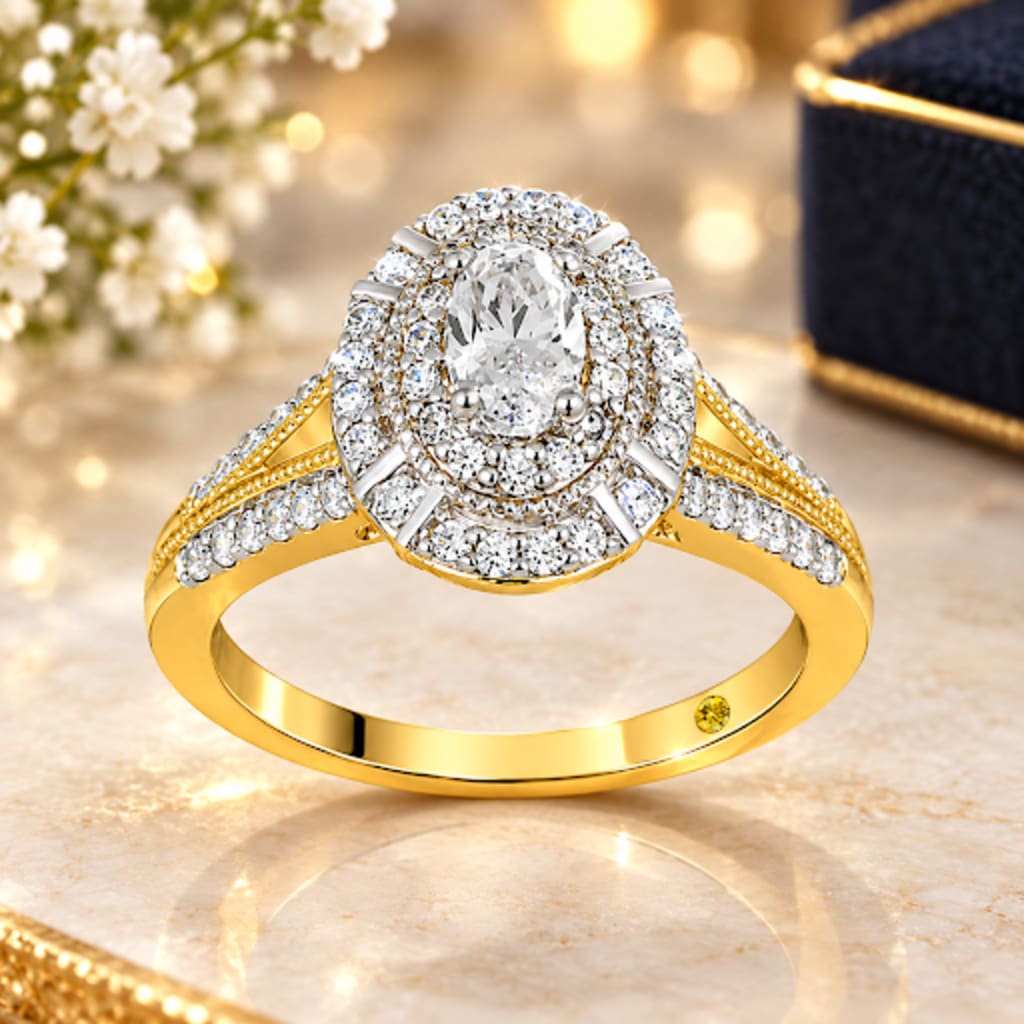
Walk past any jewelry showcase and the oval stone tends to stop people mid-step. It has the sparkle of a round brilliant, but its elongated outline gives it a softer, more modern personality. That mix is why the oval has become one of the most requested shapes for couples who want something classic without feeling predictable.
The shape also makes practical sense. An oval spreads its weight over a longer surface, so it often looks larger face up than a round diamond of the same carat weight. If you want a strong visual presence without paying for a much bigger stone, it's one of the smartest places to start.
Lab-grown diamonds are real diamonds with the same carbon crystal structure as mined ones. The difference is mainly price. The savings can go toward a larger center stone, a finer setting, or the honeymoon.
How an Oval Looks on the Hand
An oval sits lengthwise along the finger, which creates a lengthening effect. Many wearers love this, especially those with shorter or smaller fingers. The curved edges also mean there are no sharp corners to snag on sweaters or hair, which makes the ring comfortable for daily wear.
Ovals are also flexible. They work in the traditional north-south direction and in east-west settings, where the stone lies sideways across the finger for a more fashion-forward feel. Both can look striking, so try each if you can.
Proportions That Matter Most
Two ovals with the same carat weight can look very different, so proportions deserve as much attention as the 4Cs.
Length-to-width ratio. This compares how long the stone is with how wide it is. Most buyers like ratios between about 1.30 and 1.50. Near 1.30, the stone looks fuller and rounder. Closer to 1.50, it looks slimmer and more elegant. Neither is wrong, so compare a few side by side and notice which outline you keep coming back to.
The bow tie effect. Many ovals show a darker band across the center that resembles a bow tie. It comes from how light travels through the shape and is natural. A mild bow tie is often barely visible, while a strong one can distract the eye. Look at the stone in video or in person under different lighting before you commit.
Color and Clarity
Ovals can show color slightly more than some other shapes, especially at the pointed ends. Many shoppers choose a near-colorless grade and pair it with white gold or platinum for a crisp look. With yellow or rose gold, you can often drop a grade and still get a bright stone.
For clarity, the large open facets make inclusions easier to spot than in heavily faceted shapes, so aim for a grade that looks clean to the naked eye. Always read the grading report rather than relying on the letter grades alone.
Choosing the Right Setting
The setting changes the personality of the ring, so think about how you live and what you wear every day.
Solitaire: keeps the focus on the stone and pairs easily with any wedding band.
Halo: surrounds the center with small diamonds that add sparkle and make the stone look larger.
Hidden halo: adds a subtle ring of diamonds beneath the stone, visible only from the side.
Three-stone: side diamonds traditionally represent the past, present, and future.
Pavé or vintage: tiny diamonds along the band add shimmer, while vintage styles bring milgrain detail and intricate patterns.
Pay close attention to the prongs. The pointed tips of an oval are its most exposed spots, so a good setting protects them, usually with six prongs or V-shaped guards.
Metal Choices
White gold gives a bright, cool look that lets a colorless stone stand out. Yellow gold feels warm and traditional, and rose gold has a softer, romantic glow. Platinum is durable and naturally white.
Karat matters too. 10K gold is harder and more budget-friendly, 14K is the most popular balance of color and strength, and 18K has a richer tone and higher gold content. If you work with your hands, 14K is a reliable middle ground.
Setting a Realistic Budget
Lab-grown diamonds give you more room to work with, but a budget keeps the search focused. Here's a simple order to follow:
Decide on a total amount, including the setting.
Choose a carat range that suits the wearer's hand size and lifestyle.
Put cut quality and proportions ahead of everything else.
Pick color and clarity grades that look good to the eye rather than chasing the highest letter.
Select the setting and metal, then check what comes included with the purchase.
Cut quality drives sparkle, so spend there first. Color and clarity are the best places to save without hurting how the ring looks in everyday light.
What to Look for in a Jeweler
Whoever you buy from, look for independent certification such as IGI, which gives you a clear record of what you're buying. Ask about free returns, resizing, and warranty coverage for prongs and settings. Some jewelers, such as La Joya Jewelry, also include a care plan, free shipping, and custom design options. If you're comparing sellers, these extras can matter as much as the sticker price. When you're ready to start shopping for an oval lab-grown diamond engagement ring, compare these terms across a few jewelers before you decide.
Caring for Your Oval Diamond Ring
A little routine care keeps the ring looking new. Soak it in warm water with a few drops of mild dish soap, brush gently with a soft toothbrush, rinse, and pat dry with a lint-free cloth. Do this every few weeks, since lotion and daily life leave a film that dulls sparkle.
Take the ring off for workouts, cleaning, swimming, and heavy hands-on work, and store it in a soft pouch away from other jewelry. Have a jeweler check the prongs once or twice a year so a loose setting never turns into a lost stone. Cared for this way, the ring can last for decades.
Ready to Find Your Oval?
An oval blends timeless romance with modern value. It looks bigger for its weight, flatters the hand, and works with nearly every setting and metal. Take your time comparing proportions, choose a setting that fits your daily routine, and buy from a jeweler that stands behind the ring after you say yes. Browse the collection, compare a few shapes side by side, and find the ring that feels made for the two of you.
About the Creator
Enjoyed the story? Support the Creator.
Subscribe for free to receive all their stories in your feed.
Comments
There are no comments for this story
Be the first to respond and start the conversation.