
What’s Google AI Mode?
And Should You Bother With It?

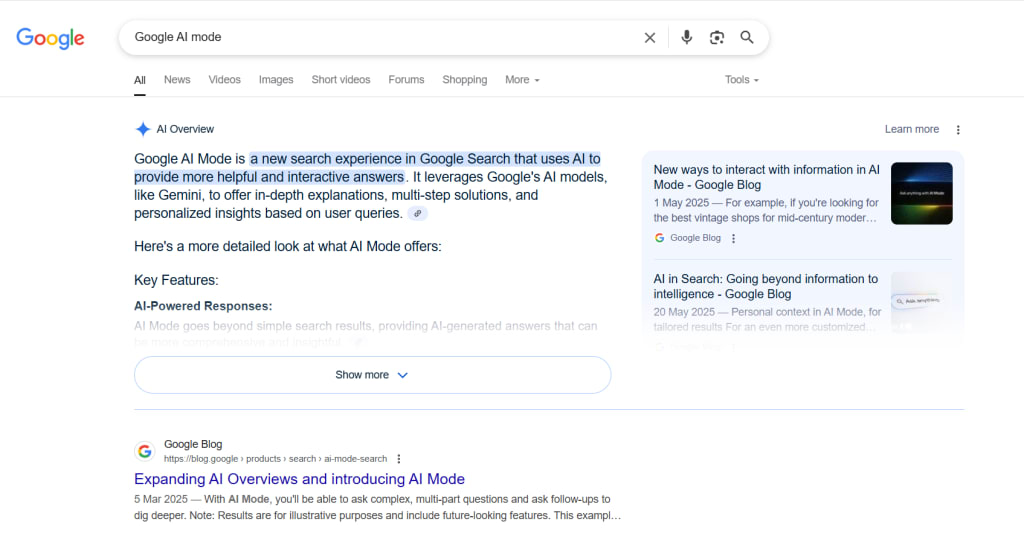
Google’s testing something new. It’s called AI Mode, and it’s got people talking about what search might look like next. Right now, it’s only open to folks in the U.S., and only if you're on the waitlist or paying for Google One Premium. You can try it at google.com/aimode, but let’s be real, Aussies are left out for now.
Still, it’s worth having a look at what it does and whether it’s a threat or a tool, depending on which side of the screen you're on.
What is It Exactly?
Once you’re in, you’ll see a menu with a big “Ask AI Mode” button. It’s pretty much Google dressed up like ChatGPT. You type in a question, and it answers, usually with spot-on info. It doesn’t stop at just text either. You’ll see links to pages, YouTube videos, and even some extra suggestions that point you in the right direction.
But there's a catch. You’ve got to speak English. Toss it a question in Hindi or Japanese and you'll hit a dead end.
How Does It Change Your Search Habits?
Google AI Mode doesn’t just copy-paste search results. It tries to “get” what you’re asking. It will give you an accurate answer if it knows it. If it doesn’t, it’ll offer decent links or videos. It’s like Google’s being more honest instead of making things up, which some other tools still do.
There’s also been a bit of chat about how these AI answers appear in Google Search Console. Turns out, AI Overview links are tracked as one listing. That could throw off traffic stats for site owners trying to figure out where people are clicking.
It Gives Answers Just For You, But That’s Not Always Great News
A significant draw for users is the sense of personalisation it provides. You get something helpful when you ask a specific question. But there’s a flip side.
If Google AI Mode is giving people what they need straight from the search bar, fewer people might bother clicking through to actual websites. And that’s a problem for bloggers, news outlets, and content creators. Their traffic could drop.
On the bright side? The people who do click are probably more interested, which could lead to better engagement. You might lose volume, but not quality.
The upsides and downsides
For everyday users:
- Fast answers.
- Mostly accurate.
- Links to real sources, like videos or websites.
- Helps avoid dodgy or made-up info.
For site owners:
- Could lose casual visitors.
- Might get more serious readers.
- Pushes you to write deeper, original content that AI can’t just summarise.
Conclusion
I spent some time playing with it, and for regular searchers, it’s a good tool. You ask something, it gives you a decent reply without wasting time.
But if your job depends on people reading your blog or clicking your links, this might shake things up. Less traffic, more pressure to create unique content that stands out.
So, while it’s helpful, it does raise questions. Will people still visit websites? Or will they be happy getting what they need from a single AI response?
Either way, search isn’t staying the same, and it’s probably worth keeping an eye on this if you're in Australia waiting for the rollout.
About the Creator
Shivani Singh
I'm a Technical Content Writer at Infinity Soft Systems with over 5 years of experience. I specialise in creating clear, engaging content on topics like software development, emerging technologies, and digital transformation.
Enjoyed the story? Support the Creator.
Subscribe for free to receive all their stories in your feed.
Comments
There are no comments for this story
Be the first to respond and start the conversation.