
What Nobody Tells You Before You
Go Solar in Britain

I didn’t grow up thinking much about solar panels.
Like most people in the UK, electricity was just something that came through the wall when you needed it. You paid the bill, complained about it, and moved on.
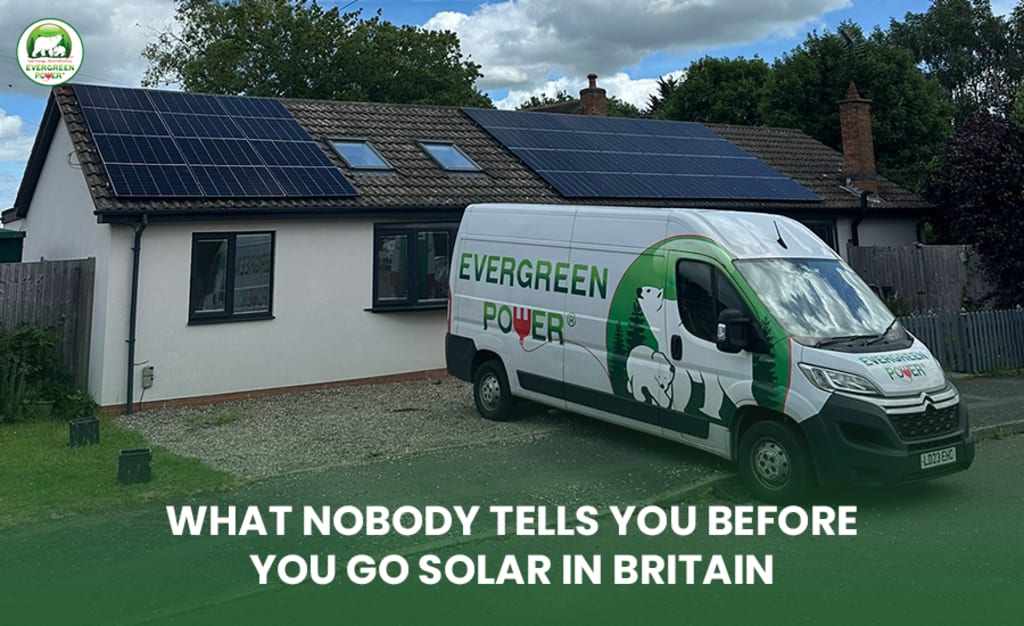
But over the past few years, especially with energy prices going up, I started noticing something different — more and more rooftops around me were changing. First a few houses on the street. Then half the street. Now it’s hard to walk through any neighbourhood without seeing solar panels UK quietly sitting on roofs.
That’s when I started asking a simple question: is this actually worth it, or just another trend?
The answer is not as simple as ads make it look.
Solar doesn’t need perfect sunshine (and that surprised me)
The first thing I learned is probably the biggest misconception.
You don’t actually need bright sunshine for solar panels to work. They run on daylight, not heat.
That means even on those typical grey British mornings where the sky looks completely washed out, the panels are still producing electricity. Not at full power, of course, but they’re still working quietly in the background.
Once I understood that, it made a lot more sense why solar is growing even in countries that don’t exactly have tropical weather.
The real game-changer isn’t the panels
If I had to sum up everything in one lesson, it would be this: the panels are only half the story.
The real difference comes from what happens to the electricity you don’t use immediately.
Most homes generate power during the day when nobody is at home. That energy either gets exported back to the grid or wasted in a way that doesn’t really feel satisfying when you see your evening bill.
This is where batteries change everything.
A battery stores that extra daytime energy and lets you use it later in the evening — when the kettle is on, the lights are on, and the house is actually using power.
That simple shift changes how “solar” feels in daily life. It stops being theoretical savings and starts becoming something you actually notice.
Timing matters more than people think
One thing that surprised me is how much electricity tariffs affect everything.
A lot of people focus only on panels and ignore how they use electricity.
But in reality, energy pricing changes depending on the time of day. If you can store or shift your usage to cheaper hours, your savings increase without changing anything on your roof.
Two houses can install the same solar system and still end up with very different bills — simply because of how they manage energy.
That part is often missing from the sales conversation.
It’s not a quick win — and that’s okay
Another thing nobody really says clearly is that solar is not an instant money-saving machine.
You don’t install panels and suddenly erase your bill the next month.
It takes time.
But the interesting part is that the system keeps working long after it pays for itself. Panels are designed to last decades, so once you reach that break-even point, the electricity you generate feels more and more like a bonus.
It’s less about quick savings and more about long-term stability.
The installer matters more than the equipment
Before looking into solar, I assumed the panels were the most important part.
But most modern panels are actually quite similar in quality.
What really matters is the installation.
A good installer will look at your roof properly, explain limitations honestly, and design a system based on your actual usage — not just try to sell the biggest package possible.
That difference can decide whether the system performs well for years or just “okay”.
Small things you only notice later
There are also a few small details that people don’t talk about much:
Birds sometimes try to nest under panels unless protection mesh is installed.
Black panels tend to look better on most rooftops.
And even roofs that aren’t perfectly south-facing can still work surprisingly well depending on usage patterns.
These things don’t sound important at first, but they become part of real-life experience later.
Final thought
Solar in Britain isn’t really about chasing perfect sunlight.It’s about reducing dependence on an energy system that keeps getting more expensive and less predictable.Once you look at it that way, the decision feels less like a technical upgrade and more like a long-term shift in how a home manages its own energy.
And that, for most people, is where the real value starts to make sense.
About the Creator
Evergreen power
We specialize in Solar panels UK and other renewable energy solutions
Enjoyed the story? Support the Creator.
Subscribe for free to receive all their stories in your feed.
Comments
There are no comments for this story
Be the first to respond and start the conversation.