
What Are the Best Ground Surfaces for Operating a Mobile Boat Lift?
Key Ground Surface Types and Engineering Requirements for Safe Marine Lifting Operations
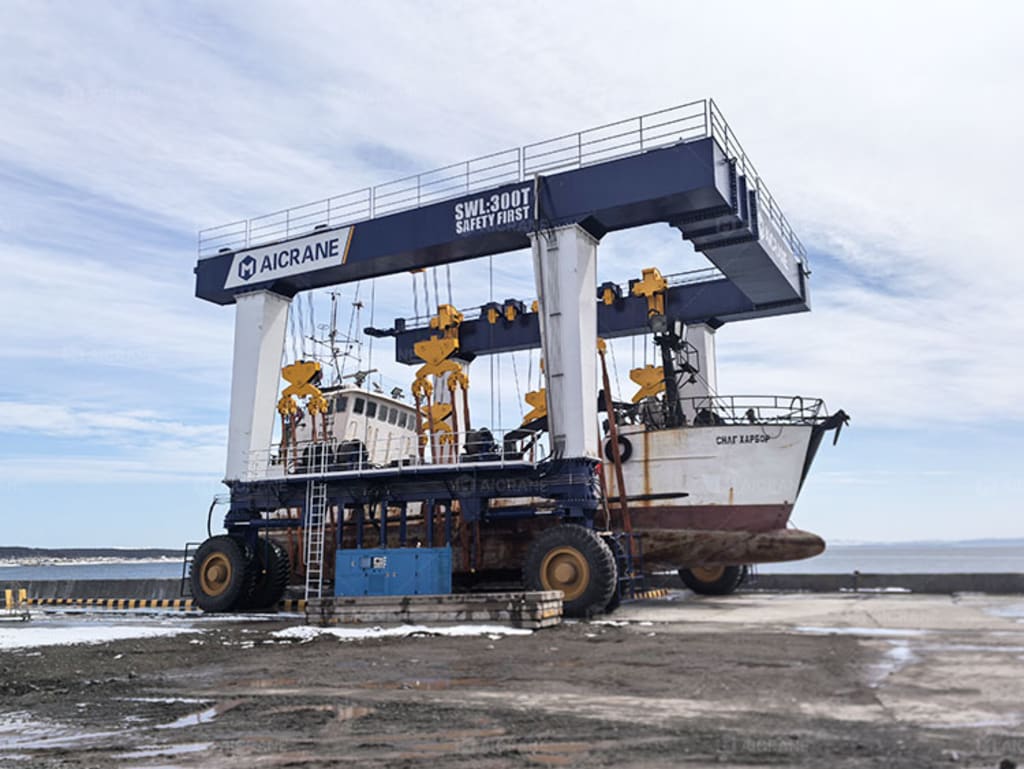
A mobile boat lift—often referred to as a mobile boat hoist or travel lift—is a critical piece of equipment in shipyards, marinas, and waterfront maintenance facilities. It is designed to safely lift, move, and transport boats of various sizes in and out of the water. While much attention is usually given to lifting capacity, structural design, and control systems, one of the most overlooked but essential factors in safe operation is the ground surface condition.
The ground beneath a mobile boat lift directly affects stability, maneuverability, load distribution, and long-term safety. Choosing or preparing the right surface is not just a construction detail—it is a core operational requirement.
In this article, we will explore the best ground surfaces for operating a mobile boat lift, what makes a surface suitable, and what risks come with poor ground conditions.
Why Ground Surface Matters for Mobile Boat Lifts
A mobile boat lift can carry loads ranging from 10 tons to over 1000 tons depending on configuration. This massive weight is transferred directly to the ground through multiple wheels or tires.
Unlike fixed cranes, mobile boat lifts must:
- Move while carrying heavy loads
- Operate near water (often in corrosive, unstable environments)
- Travel across varying terrain (dry dock, yard, slipway)
Because of this, the ground must provide:
- High load-bearing capacity
- Stability under dynamic movement
- Resistance to deformation or rutting
- Good drainage and environmental durability
A weak or poorly prepared surface can lead to uneven sinking, tilting, or even catastrophic structural failure.
1. Reinforced Concrete Pavement (Best Overall Choice)
Why it is ideal
Reinforced concrete is widely considered the best and most reliable surface for mobile boat lift operations. It is commonly used in modern shipyards and large marina facilities.
Key advantages include:
- Extremely high load-bearing capacity
- Excellent durability under repeated heavy wheel loads
- Resistance to water and chemical exposure
- Minimal deformation under stress
Design considerations
For mobile boat lift operations, concrete is not just poured—it is engineered:
- Thickness typically ranges from 200 mm to 500 mm or more
- Reinforced with steel rebar or mesh
- Often includes surface hardening treatments
- Designed with load dispersion zones where the lift travels
Limitations
- High initial construction cost
- Requires precise engineering and curing time
- Cracking must be monitored and maintained over time
Despite the cost, reinforced concrete remains the most widely recommended foundation for long-term, high-frequency operations.
2. Asphalt Surfaces (Moderate Use, Lower Capacity)
Asphalt is sometimes used in smaller marinas or temporary boat handling areas.
Advantages
- Lower installation cost compared to concrete
- Faster construction time
- Smoother surface for mobility in light-duty operations
Limitations
However, asphalt is generally not ideal for heavy-duty mobile boat lifts, because:
- It softens under heat
- It deforms under high point loads
- It can develop rutting from repeated wheel passes
- Water exposure accelerates degradation
For lighter mobile lifts or occasional use, asphalt may be acceptable, but it is not recommended for high-capacity systems.
3. Compact Gravel with Stabilization Layers (Temporary or Budget Option)
In some smaller yards or temporary shipyard setups, compacted gravel is used as a base surface.
Structure
A proper gravel foundation usually includes:
- Compacted crushed stone base
- Geotextile fabric layer for soil separation
- Surface leveling layer with fine aggregate
- Drainage design underneath
Advantages
- Low cost
- Easy to install or modify
- Good drainage characteristics
- Suitable for temporary operations
Major limitations
- Poor long-term stability under heavy loads
- Requires constant maintenance and re-compaction
- Risk of uneven settlement
- Not suitable for large-capacity mobile boat lifts
This option is typically only used for small boats or emergency setups.
4. Steel Plate Tracks or Embedded Rail Systems (High-End Solution)
Some advanced shipyards install steel track systems or reinforced embedded rails specifically designed for mobile boat lifts.
How it works
Instead of relying solely on surface strength, the load is distributed through:
- Embedded steel beams
- Reinforced concrete foundation below
- Load-spreading base plates
Advantages
- Extremely high load capacity
- Very smooth and controlled movement
- Ideal for precision positioning of large vessels
- Long service life with proper maintenance
Limitations
- Very expensive installation
- Requires precise engineering and alignment
- Corrosion protection is necessary in marine environments
This solution is typically used in large commercial shipyards or naval facilities.
5. Stabilized Soil with Deep Foundation Reinforcement
In some cases, especially in coastal or reclaimed land areas, soil stabilization is used to prepare the ground before installing a surface.
Methods used
- Deep soil compaction
- Cement or lime stabilization
- Pile foundation systems
- Geogrid reinforcement layers
Advantages
- Enables construction on weak ground
- Improves long-term settlement control
- Can support heavy-duty concrete slabs above
Limitations
- Requires geotechnical expertise
- Higher engineering complexity
- Construction time is longer
This is not a surface itself but a foundation improvement method used before installing concrete or other surfaces.
Key Factors That Determine the Best Surface Choice
Selecting the best ground surface for a mobile boat lift is not a one-size-fits-all decision. Several critical factors must be considered:
1. Load Capacity Requirements
Heavier lifts (100 ton boat lifts and above) require reinforced concrete or rail systems, while smaller lifts may operate safely on simpler surfaces.
2. Frequency of Use
Daily operations → reinforced concrete or steel track systems
Occasional use → asphalt or stabilized gravel may suffice
3. Environmental Conditions
Marine environments introduce challenges such as:
- Saltwater corrosion
- High humidity
- Flooding or tidal changes
These factors strongly favor concrete with protective coatings.
4. Soil Conditions
Soft or reclaimed soil requires deep reinforcement before any surface is installed.
5. Budget and Lifecycle Cost
While gravel or asphalt may seem cheaper initially, long-term maintenance costs can exceed the investment in concrete.
Common Ground-Related Problems in Boat Lift Operations
When the ground surface is not properly designed, several serious issues can occur:
Uneven Settlement
One side of the lift may sink more than the other, causing dangerous tilting during lifting.
Wheel Overloading
Weak areas can concentrate loads on specific wheels, leading to mechanical failure.
Surface Cracking and Deformation
Especially in asphalt or poorly reinforced concrete.
Reduced Operational Precision
Poor surfaces make it difficult to align boats accurately during lifting or launching.
Best Practice Recommendations
To ensure safe and efficient operation of a mobile boat lift, industry best practices include:
- Always conduct a geotechnical soil study before construction
- Design ground surfaces specifically for dynamic wheel loads, not static loads
- Use reinforced concrete with proper drainage systems
- Regularly inspect for cracks, settlement, or surface wear
- Avoid mixing surface types in the same operational path
- Ensure surface flatness tolerances are strictly maintained
Conclusion
The performance and safety of a mobile boat lift depend heavily on the ground surface beneath it. Among all available options, reinforced concrete remains the most reliable and widely used solution, offering the strength, durability, and stability required for heavy marine lifting operations.
While asphalt and gravel may serve in limited or temporary situations, they cannot match the structural integrity needed for high-capacity, long-term use. Advanced solutions like steel track systems or soil stabilization further enhance performance in demanding environments.
Ultimately, the best ground surface is one that is carefully engineered for the specific load, environment, and operational intensity of the boat lift system. Investing in proper ground preparation is not just a construction decision—it is a long-term safety and productivity guarantee for any marine operation.
About the Creator
Aicrane01
Welcome to the Aicrane Blog, your practical guide to lifting solutions. Discover articles covering overhead cranes, gantry cranes, winches, steel structures, boat lifts, and more.
Website: https://steelmillcranes.com/
Enjoyed the story? Support the Creator.
Subscribe for free to receive all their stories in your feed.
Comments
There are no comments for this story
Be the first to respond and start the conversation.