
Wendell Berry Dies at 92: Celebrated Kentucky Author, Farmer and Environmentalist Leaves a Lasting Legacy
The influential American writer spent decades defending rural communities, sustainable farming and a simpler relationship between people and the natural world.

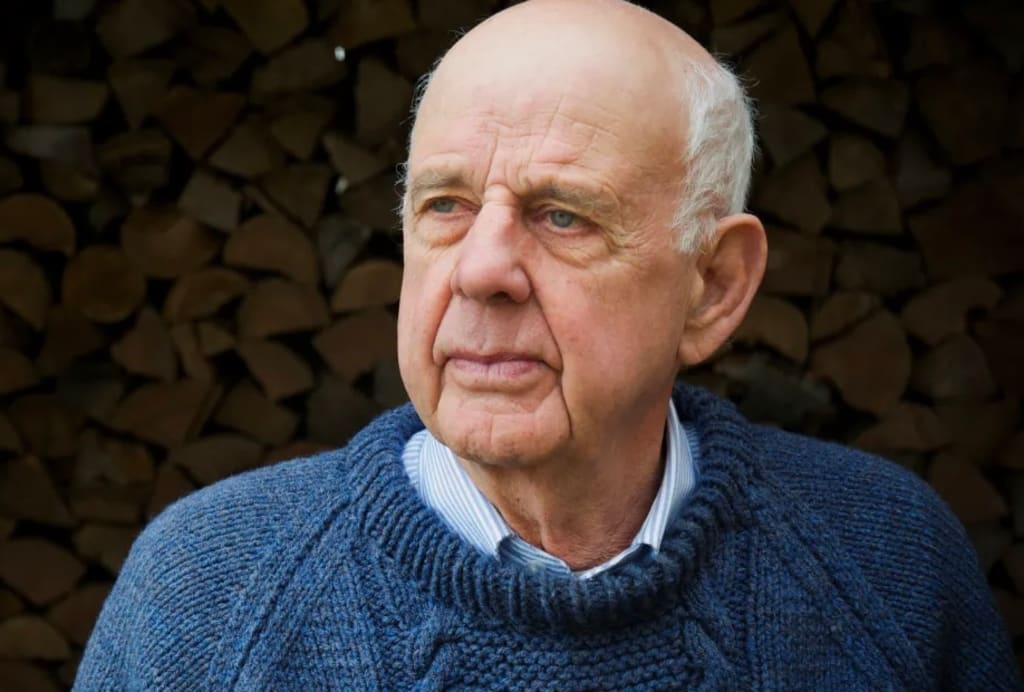
The literary world is mourning the death of Wendell Berry, one of America's most influential writers on farming, community and humanity's relationship with the natural world.
Berry, the celebrated Kentucky author, poet, farmer and environmental advocate, died on August 31, 2026, at his home in Port Royal, Kentucky. He was 92 years old. His daughter, Mary Berry, confirmed his death, bringing an end to a literary career that stretched across more than six decades.
For generations of readers, Berry was far more than a novelist or poet. His writing offered an alternative vision of what a meaningful life could look like—one built around family, useful work, strong communities and respect for the land.
A Writer Deeply Connected to Kentucky
Few American writers were as closely associated with a particular place as Wendell Berry was with rural Kentucky.
Born in Henry County in 1934, Berry grew up during the Great Depression in a family closely connected to farming. His father practiced law, while the family maintained strong ties to his grandfather's farm.
Those childhood experiences would eventually become central to his writing.
Berry watched the traditional farming culture around him change as industrial agriculture, mechanization, cheap energy and consumer culture transformed rural America. Instead of treating those changes simply as economic progress, he questioned what communities might be losing in the process.
That tension between an older rural world and modern industrial society became one of the defining themes of his career.
More Than 40 Books Across Poetry, Fiction and Essays
Berry became an extraordinarily productive writer, publishing more than 40 books during his lifetime.
His works included novels such as Nathan Coulter and A Place on Earth, along with the poetry collection A Timbered Choir: The Sabbath Poems 1979–1997. Much of his fiction took place in the imagined rural Kentucky community of Port William.
But some of his greatest influence came through nonfiction.
His 1977 book The Unsettling of America became an important critique of industrial agriculture and the increasing separation between people, food and the land that produces it.
Berry argued that farming could not be understood only as an industry. For him, agriculture was connected to culture, family, local knowledge, responsibility and the long-term health of the soil.
Those ideas eventually became increasingly relevant as public conversations about sustainable agriculture, local food systems and environmental responsibility grew.
His Influence Reached Far Beyond Literature
Berry's impact extended well beyond novelists and poets.
Food writer Michael Pollan, author of The Omnivore's Dilemma, has frequently acknowledged Berry's influence, particularly his idea that the simple act of eating connects people directly to agriculture.
Chef and food activist Alice Waters was another admirer of Berry's work and wrote the introduction to his essay The Pleasures of Eating.
Through readers such as Pollan and Waters, Berry's ideas reached people who might never have encountered traditional agrarian literature.
His work helped encourage a larger discussion about where food comes from, how farms operate, what industrial agriculture does to the environment and why local communities matter.
Wendell Berry Did Not Simply Write About Simple Living
One reason Berry's philosophy carried so much weight was that he attempted to live according to many of the principles he defended.
After spending time outside Kentucky—including studying at Stanford and living in New York—he returned to his home state and eventually settled at Lanes Landing in Henry County.
Berry and his wife, Tanya, lived on a hillside farm and deliberately avoided many technologies that had become normal parts of modern American life.
For decades they lived without computers, television or telephones.
In 2005, however, they installed solar power at their property. The decision reflected Berry's support for cleaner forms of energy and his opposition to Kentucky's dependence on coal.
His lifestyle was not intended simply as nostalgia.
Berry believed technological progress should be questioned rather than automatically accepted. He repeatedly asked whether new systems actually strengthened families, communities and the environment—or merely increased consumption and dependence.
An Environmental Activist Willing to Protest
Berry's concerns about the environment eventually pushed him beyond writing and into public activism.
His relationship with the University of Kentucky, where he had studied and later taught, became strained after the university accepted millions of dollars connected to coal-industry donors for a basketball residence hall.
Berry objected strongly because he believed the arrangement conflicted with the environmental responsibilities that institutions should uphold.
In 2011, he also participated in a sit-in at the Kentucky governor's office protesting strip mining.
These actions reflected a consistent theme throughout his life: Berry was willing to challenge institutions when he believed economic interests were being placed above communities or the environment.
A Critic of Modern Ideas About Success
Much of Berry's writing challenged common assumptions about what makes a society successful.
Modern culture often associates progress with faster technology, greater consumption, economic expansion and increased personal convenience.
Berry questioned whether those things automatically produced better lives.
Instead, he focused on the value of knowing one's neighbors, understanding where food comes from, caring for a particular piece of land and performing work that has visible meaning.
His thinking was influenced by writers including Henry David Thoreau as well as Kentucky and Southern literary figures such as Robert Penn Warren and John Crowe Ransom.
Yet Berry developed a voice that was unmistakably his own.
His criticism could be sharp, but his work repeatedly returned to very ordinary human experiences—love, birth, family, labor, aging, nature and death.
Honors for a Remarkable Literary Career
Although Berry never received a Pulitzer Prize or National Book Award, he earned significant recognition throughout his career.
His honors included the National Humanities Medal, presented during the Barack Obama administration, membership in the American Academy of Arts and Letters and a lifetime achievement award from the National Book Critics Circle in 2016.
His influence, however, cannot easily be measured by awards.
Berry helped generations of readers reconsider ideas that modern society often takes for granted: that bigger farms are necessarily better, that technological advancement always represents progress, or that human beings can prosper indefinitely while remaining disconnected from the natural systems supporting them.
Wendell Berry's Legacy
Wendell Berry leaves behind a body of work that feels particularly relevant in an era increasingly concerned with climate change, industrial food production, disappearing rural communities and the consequences of constant consumption.
He spent much of his life arguing that people cannot separate themselves from the places that sustain them.
For Berry, caring for land was not simply an environmental issue. It was connected to economics, culture, morality, family and community.
That message reached writers, farmers, environmentalists, chefs and ordinary readers around the world.
Wendell Berry may have spent most of his life rooted in a small corner of Kentucky, but the questions he asked were universal.
What do people truly need to live well? What is lost when communities disappear? How much technological progress is actually progress? And what responsibilities do human beings have toward the land that makes their lives possible?
Berry spent more than six decades exploring those questions.
His death at 92 closes an extraordinary chapter in American literature, but the conversation he started about land, community, work and the meaning of a good life is likely to continue for generations.
About the Creator
parwinder singh
🎬 Movie & Entertainment Writer sharing reviews, ending explanations, story breakdowns, plot twists and hidden details from Bollywood, Hollywood, South Indian cinema, Korean dramas and OTT releases.
Enjoyed the story? Support the Creator.
Subscribe for free to receive all their stories in your feed.
Comments
There are no comments for this story
Be the first to respond and start the conversation.