
Von der Leyen’s State of the Union: A Test of Strategic Autonomy Amidst Rising Threats
As European Commission President Ursula von der Leyen prepares to deliver her 2026 State of the European Union (SOTEU) address, she faces a continent under siege. With Russian drone incursions becoming routine and geopolitical tensions mounting, her speech will likely serve less as a celebration of achievements and more as a urgent call for unified action on defense, security, and strategic autonomy.

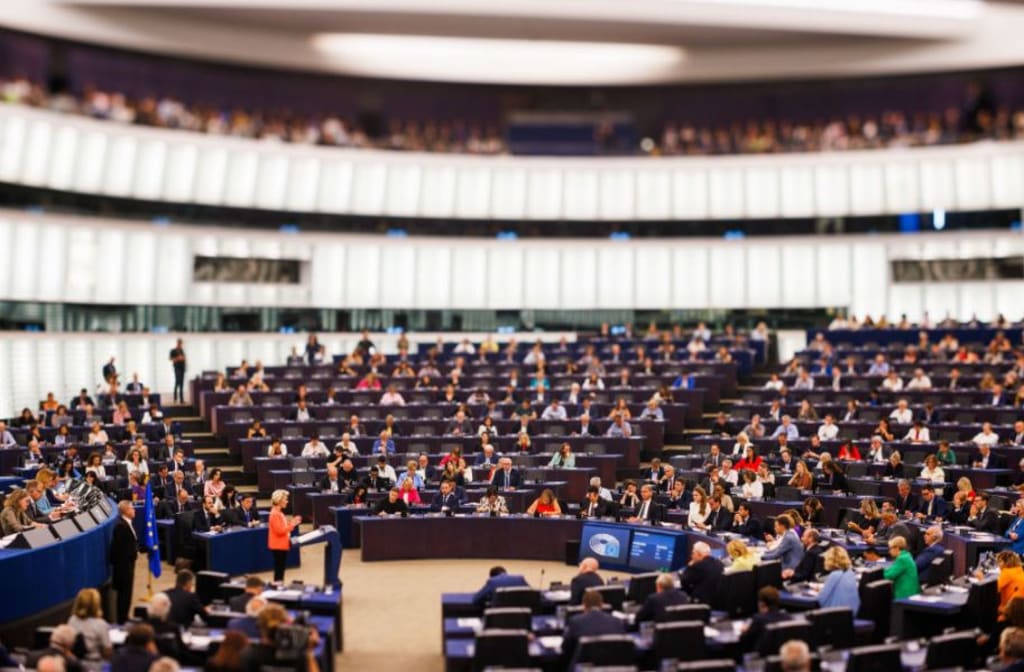
Last year, von der Leyen opened her SOTEU with a stark warning: Europe was fighting for its security, values, and ability to determine its own destiny. Twelve months later, that fight has intensified. The address comes in the shadow of the recent Leipzig drone incident, which prompted Germany to shut down a Russian consulate in Bonn and accelerate plans for a protective drone shield. Similar violations in Poland, the Baltic States, and Romania have transformed the abstract threat of Russian aggression into a tangible, daily reality for EU citizens.
The Unfinished Business of Defense
Defense was the centerpiece of von der Leyen’s 2025 pitch, where she unveiled ambitious initiatives like the "European Drone Wall" stretching from the Baltic to the Black Sea. A year on, the implementation of these projects reveals both progress and persistent fragmentation.
While the original "Drone Wall" concept faced criticism for its feasibility, it has evolved into the broader "Eastern Flank Watch," a flagship project designed to monitor air, land, and maritime threats along the EU’s eastern border. Thirteen countries are now set to receive EU funding to develop this initiative, marking a significant step toward integrated border security. However, as Latvian MEP Mārtiņš Staķis noted, a critical gap remains between political ambition and actual capability. "What is still not clear is how the ambition the Commission has put behind them will be matched with the funding and the capabilities that are actually needed," he stated.
The Commission is also expected to present the long-awaited EU Security Strategy, developed over the past several months to provide a cohesive framework for these disparate efforts. Additionally, proposals to boost the powers of Frontex, the EU’s border and coast guard agency, are likely to feature prominently, signaling a shift toward a more militarized approach to border protection.
The Frozen Assets Impasse
One of the most politically explosive issues von der Leyen must address is the fate of Russia’s frozen assets. Last year, she proposed a bold "Reparations Loan" scheme to use these immobilized funds to finance Ukraine’s reconstruction. The plan stalled due to fierce resistance from member states, particularly Belgium, where the majority of the assets are held, citing legal and financial stability concerns.
Instead, EU leaders settled on a €90 billion loan facility for Ukraine, of which only €12 billion has been disbursed to date. With the war dragging on and Ukraine’s financial needs growing, von der Leyen is expected to renew pressure on capitals to find a legally sound mechanism to unlock these resources. Failure to do so risks undermining Europe’s credibility as a reliable partner to Kyiv.
Israel and the Limits of Unity
Von der Leyen’s 2025 speech also marked a sharp turn in EU policy toward Israel, proposing sanctions on extremist ministers and violent settlers, as well as a partial suspension of the EU-Israel Association Agreement. While the Commission can approve trade suspensions by qualified majority, sanctions require unanimity, a hurdle that proved insurmountable due to opposition from key capitals like Germany and Italy.
With Israeli elections scheduled for October 27, the window for decisive EU action is narrowing. Diplomats report little appetite among member states for new measures ahead of the vote, leaving von der Leyen in a difficult position. She must balance the moral imperative to address human rights violations with the political reality of a divided Council. Her SOTEU address may therefore focus on reinforcing existing frameworks rather than announcing new punitive measures, acknowledging the limits of Brussels’ power when national interests diverge.
Domestic Priorities: AI, Climate, and Migration
Beyond geopolitics, von der Leyen is expected to outline priorities on domestic issues that resonate deeply with European voters. These include:
Artificial Intelligence: Establishing clearer regulatory frameworks to ensure safety and competitiveness.
Child Safety: Proposing a ban on social media usage for children, reflecting growing concern over mental health and online exploitation.
Migration: Continuing efforts to reform the EU’s asylum system and strengthen external borders.
Climate: Reaffirming commitments to the Green Deal despite pushback from industrial sectors and some member states.
The 2026 State of the Union will be a critical test of von der Leyen’s leadership and the EU’s capacity for strategic coherence. The "Eastern Flank Watch" and other defense initiatives show that Europe is moving toward greater integration in security matters, but the pace remains slow compared to the urgency of the threat. Similarly, the inability to agree on using Russian assets or taking a unified stand on Israel highlights the enduring tension between national sovereignty and collective action.
As von der Leyen takes the podium in Strasbourg, her message will likely be one of resolve tempered by realism. Europe is no longer just a normative power; it is a geopolitical actor in a dangerous world. Whether it can translate that recognition into effective policy will define not just her presidency, but the future of the European project itself.
About the Creator
Mark Lim
Hi I am mark an automotive student and a car, tech and food enthusiast ! Im gonna try and post daily & hope you enjoy what I write and do share my page with people you know. I would gladly appreciate it! Cheers
Enjoyed the story? Support the Creator.
Subscribe for free to receive all their stories in your feed.
Comments
There are no comments for this story
Be the first to respond and start the conversation.