
Vietnam and EFTA Seal Historic Free Trade Agreement, Forging a New Path Amid Global Trade Turbulence
In a calculated move to insulate their economies from the shockwaves of US protectionism, Vietnam and the European Free Trade Association have finalized a landmark deal, capping over a decade of negotiations and signaling a broader global shift toward strategic trade diversification.

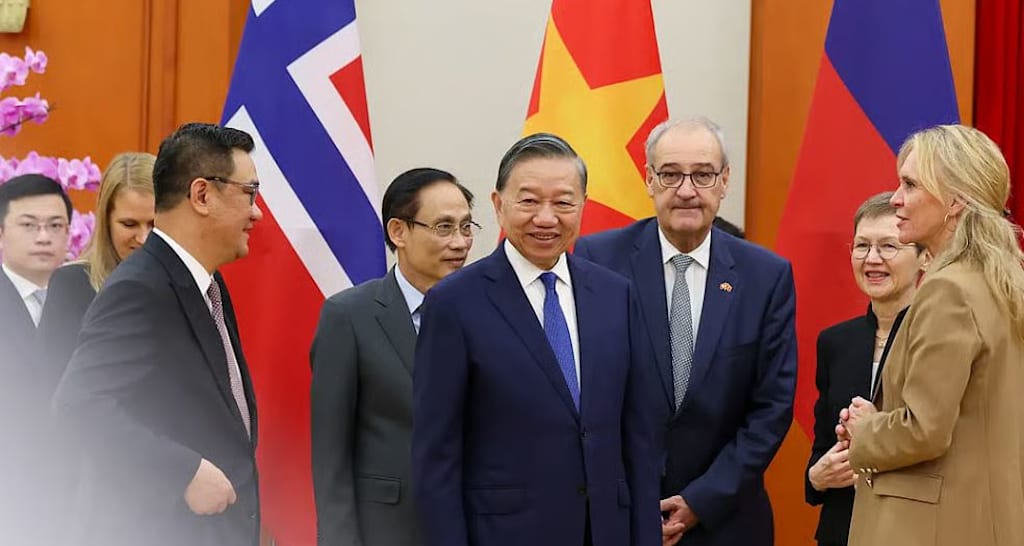
Vietnam and four European nations outside the European Union have signed a comprehensive free trade agreement (FTA) in Hanoi, marking a significant milestone in their efforts to diversify markets and fortify their economies against the disruptive impact of escalating US tariffs.
The landmark deal, inked on Sunday in the presence of Vietnam’s top leader, To Lam, and high-ranking representatives from the European Free Trade Association (EFTA), establishes a new framework for economic cooperation between Southeast Asia’s fastest-growing economy and the bloc comprising Iceland, Liechtenstein, Norway, and Switzerland.
A Strategic Pivot Toward Autonomy
The agreement comes at a critical juncture in global commerce. A recent, aggressive tariff blitz by the United States under President Donald Trump has left Vietnam grappling with hefty new taxes on its exports to Washington, despite ongoing bilateral negotiations. In response, Hanoi has aggressively pursued a "China Plus One" and "US-alternative" strategy, seeking to embed itself more deeply into resilient, rules-based global value chains.
According to a government statement, the agreement underscores the parties’ shared resolve to “reinforce the rules-based trading system amid continued volatility in the global economy.” For Vietnam, the pact is a vital tool to “diversify its import and export markets” and accelerate its transition from a low-cost assembly hub to a center for higher-value-added manufacturing and innovation.
Experts view the deal as a textbook example of modern economic statecraft. “As the US increasingly exerts trade pressure on both emerging markets and European countries, this agreement is a joint effort to turn economic integration into greater strategic autonomy,” noted Do Dinh Lam Khang, a history and politics scholar. “It is about developing alternative commercial relationships rather than relying exclusively on their largest, most volatile partners.”
A Decade in the Making
The path to this signing was long and arduous. Formal free trade talks between Vietnam and EFTA officially began in 2012. However, the negotiations hit a wall and stalled completely in 2018, reflecting the complex balancing act required to align the regulatory standards of a developing Southeast Asian nation with those of highly advanced, wealthy European economies.
Momentum was finally reignited in September of last year when both parties relaunched negotiations with renewed urgency, culminating in a finalized agreement in July of this year. The swift conclusion following the relaunch highlights the acute geopolitical and economic pressures currently reshaping global trade alliances.
Unlocking Economic Synergies
The newly minted agreement is comprehensive, covering not only the elimination or reduction of customs duties on a wide array of industrial, fish, and agricultural products, but also establishing robust frameworks for trade in services, intellectual property rights, trade remedies, and sustainable development.
While bilateral trade between EFTA and Vietnam reached 4.8 billion euros last year, a modest figure compared to Vietnam’s trade with the EU or the US, it represents a relationship with immense, untapped potential. Currently, EFTA’s top exports to Vietnam include high-value electrical and mechanical machinery, pharmaceutical products, and fish. In return, Vietnam’s manufacturing powerhouse exports machinery, footwear, and apparel to the four European nations.
By dismantling tariff barriers, the FTA is expected to dramatically increase the flow of EFTA’s advanced machinery and pharmaceuticals into Vietnam, directly supporting Hanoi’s industrial upgrading. Conversely, Vietnamese goods will gain preferential, duty-free access to the affluent consumer markets of Switzerland, Norway, Iceland, and Liechtenstein.
The Rise of Middle-Power Alliances
The EFTA bloc, originally created in 1960 as a counterpart to the European Economic Community (the precursor to the EU), has long maintained close ties with Europe while fiercely guarding its sovereignty outside the EU’s political structure. By securing this deal, EFTA nations are similarly diversifying their own economic portfolios, reducing their overreliance on the broader EU market and the transatlantic trade corridor.
For Vietnam, the agreement is a resounding diplomatic and economic victory. It validates Hanoi’s proactive, multi-directional foreign policy and proves that the country remains a highly attractive destination for high-quality foreign investment, even as global trade headwinds intensify.
As the world fragments into competing economic blocs, the Vietnam-EFTA free trade agreement stands as a powerful testament to the resilience of middle-power diplomacy. It demonstrates that when faced with the disruptive forces of unilateral protectionism, nations can and will rewrite the rules of engagement to secure their own economic sovereignty and sustainable growth.
About the Creator
Mark Lim
Hi I am mark an automotive student and a car, tech and food enthusiast ! Im gonna try and post daily & hope you enjoy what I write and do share my page with people you know. I would gladly appreciate it! Cheers
Enjoyed the story? Support the Creator.
Subscribe for free to receive all their stories in your feed.
Comments
There are no comments for this story
Be the first to respond and start the conversation.