
United States Home Appliance Market Set for Major Expansion
Insights into the evolving US Home Appliance shaping modern household living and consumer demand trends
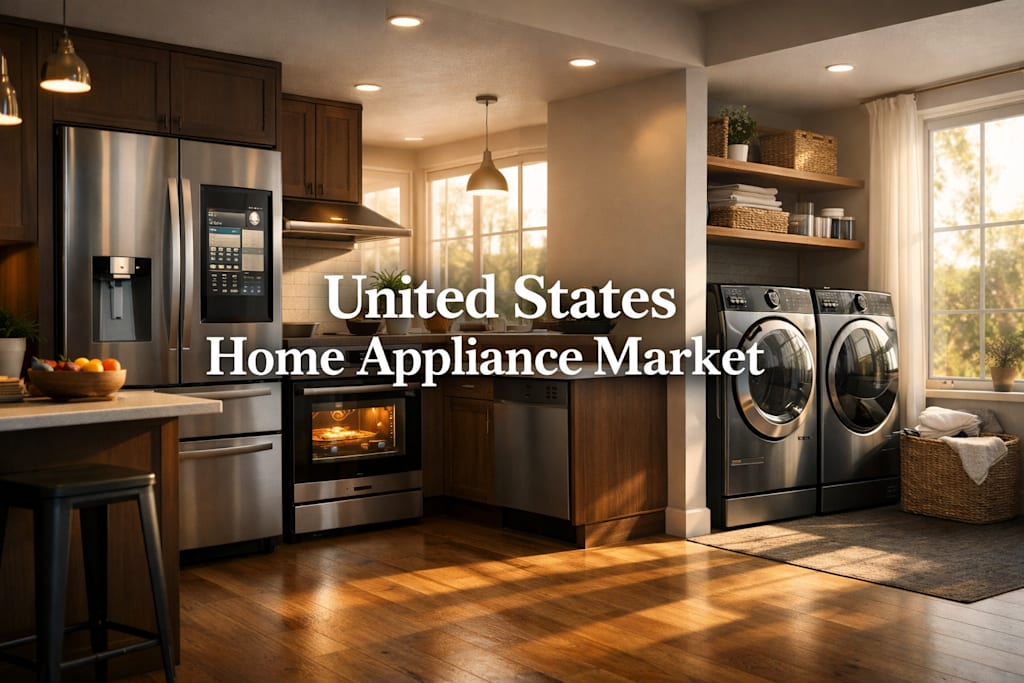
A quiet kitchen at dawn feels ordinary, until every appliance begins to speak in data, efficiency, and automation. The modern American home is no longer just a living space; it is a connected ecosystem quietly powered by innovation, consumption shifts, and rising expectations for convenience.
Behind this everyday transformation lies a rapidly scaling industry that is reshaping how households function across the United States. From intelligent refrigeration systems that track groceries to washers that optimize water usage, appliances are evolving into essential lifestyle companions rather than static machines.
The momentum driving this transformation is strongly reflected in industry research and long-term forecasts. According to Mordor Intelligence, “The United States home appliance market size is expected to grow from USD 87.26 billion in 2025 to USD 90.06 billion in 2026 and is forecast to reach USD 105.45 billion by 2031 at 3.21% CAGR over 2026-2031.”
What once was a replacement-driven category is now evolving into a technology-led ecosystem where connectivity, efficiency, and design define purchase decisions.
Smart Living Transformation in Households
The American household is undergoing a subtle but powerful shift where appliances are becoming intelligent participants in daily routines. This transformation is deeply tied to rising expectations for automation and convenience, where devices are expected to anticipate user behavior and reduce manual effort.
Within this environment, the United States home appliance market share is increasingly influenced by smart and energy-efficient product categories that dominate consumer upgrades. Refrigerators with internal cameras, ovens with app-based controls, and AI-powered dishwashers are no longer niche products but expanding mainstream offerings. These innovations are reshaping how households perceive value, shifting focus from durability alone to digital intelligence and sustainability.
Consumer lifestyles are also evolving in parallel, with urban households prioritizing compact, multi-functional appliances. This is especially visible in metro regions where space efficiency and energy savings drive purchasing behavior. As digital ecosystems expand, appliances are becoming interconnected hubs that align with broader smart home systems, reinforcing long-term adoption trends.
Rising Consumer Upgrade Cycles in Appliances
A defining force in the industry is the shortening replacement cycle driven by innovation and lifestyle upgrades. Consumers are no longer waiting for breakdowns to replace appliances; instead, they are proactively upgrading to newer, more efficient models.
This behavioral shift is directly contributing to the expansion of the US home appliance market size, as households invest in energy-saving systems that reduce long-term operational costs. Rising electricity prices and environmental awareness are also accelerating demand for inverter-based and energy-rated appliances.
At the same time, manufacturers are strategically introducing product refresh cycles more frequently, encouraging consumers to transition into newer ecosystems. This continuous innovation loop strengthens brand loyalty while also increasing overall category spending. Retailers, both online and offline, are adapting by offering bundled smart appliance packages, further stimulating purchase frequency and enhancing customer lifetime value.
Technology Integration and Connected Devices
Technology integration is redefining the foundation of modern appliances. Connectivity features such as Wi-Fi control, AI diagnostics, and predictive maintenance are becoming standard expectations rather than premium additions.
This digital transformation is central to the US home appliance industry, where software-driven features are increasingly as important as hardware performance. Appliances now operate as part of interconnected smart home networks, communicating with mobile devices and cloud-based systems to optimize energy consumption and user experience.
This evolution is also shaping consumer trust, as data-driven functionality allows for improved reliability and reduced maintenance costs. Smart sensors in appliances can now detect inefficiencies before failures occur, extending product lifespan and enhancing user satisfaction. As a result, manufacturers are investing heavily in IoT integration and AI-driven product development to remain competitive in a rapidly digitizing market landscape.
Competitive Landscape and Brand Positioning
Competition within the appliance sector has intensified as global and domestic players compete for dominance in innovation, pricing, and ecosystem integration. The US home appliance market growth trajectory is encouraging companies to expand product portfolios and strengthen technological capabilities.
Brand positioning is increasingly tied to ecosystem compatibility rather than standalone product features. Companies that offer seamless integration across kitchen, laundry, and home automation systems are gaining stronger consumer traction. Marketing strategies are also shifting toward sustainability narratives, emphasizing energy efficiency, reduced emissions, and long-term cost savings.
In this evolving landscape, consumer loyalty is shaped by experience rather than just product quality. The ability of brands to deliver seamless digital experiences, consistent updates, and cross-device compatibility is becoming the defining factor for long-term success. As competition intensifies, innovation speed and ecosystem depth will determine leadership in the years ahead.
The future of the industry reflects a broader transformation in American living—where homes are no longer passive spaces but intelligent systems evolving alongside human behavior.
About the Creator
Enjoyed the story? Support the Creator.
Subscribe for free to receive all their stories in your feed.
Comments
There are no comments for this story
Be the first to respond and start the conversation.