
Understanding the UAE’s New Tax Penalty Regime: What Changed in April 2026
Quick guide to the April 2026 updates

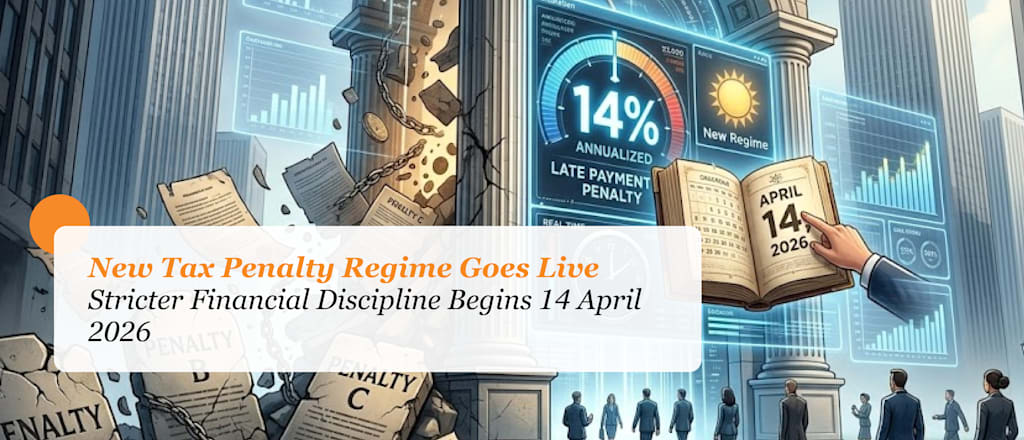
If you run a business in the UAE, you’ve probably felt it already—tax compliance is no longer something you can push aside or deal with at the last minute. Over the past few years, the system has evolved quickly, and in 2026, it’s becoming clearer than ever that the rules are tightening while also becoming more refined.
The updates introduced by the Federal Tax Authority (FTA) in April 2026 may not seem dramatic at first glance. There was no major overhaul or shocking announcement. But if you look closely, these changes reveal a shift in how the UAE approaches compliance, penalties, and business accountability.
And for businesses, that shift matters more than it appears.
A Subtle but Important Change in Direction
One of the most noticeable updates is how certain penalties have been adjusted. In some cases, administrative fines have been reduced compared to earlier years.
At first, this might seem like a minor relief. But in reality, it signals something bigger.
The FTA appears to be drawing a clearer line between intentional non-compliance and genuine mistakes. Businesses that are making an effort to follow the rules—keeping records, filing returns, and staying informed—are less likely to be punished harshly for minor errors.
This is a meaningful change.
For years, many businesses operated under the fear that even small mistakes could result in heavy financial penalties. Now, there’s a sense that the system is becoming more balanced—still strict, but more practical.
But Don’t Mistake This for Leniency
While some penalties have been reduced, others remain completely unchanged—and they are still significant.
This is where many businesses misunderstand the update.
The FTA has not relaxed its stance on core compliance requirements. In fact, if anything, it has reinforced them.
For example, late corporate tax registration continues to carry serious consequences. This is not treated as a minor oversight. From the authority’s perspective, failing to register on time means a business is not even attempting to comply.
Similarly, maintaining accurate records is no longer optional or flexible. With the increasing use of digital systems, the FTA has more visibility into business activities than ever before. Poor documentation is now easier to detect—and harder to justify.
In other words, while small errors may be treated more fairly, fundamental responsibilities are being enforced more strictly.
The Role of Digital Systems Is Growing Fast
One of the biggest changes behind the scenes is the rise of digital compliance.
Platforms like EmaraTax and the ongoing expansion of e-invoicing are transforming how businesses interact with the tax system. These tools are not just for convenience—they are part of a larger shift toward transparency and real-time monitoring.
For businesses, this means two things.
First, there is less room for manual errors or delayed reporting. Systems are becoming interconnected, and data is more accessible to authorities.
Second, compliance is no longer a periodic task. It’s something that happens continuously, as transactions are recorded and reported digitally.
This can feel overwhelming at first, especially for businesses that are still relying on manual processes. But for those who adapt early, it actually makes compliance more manageable over time.
Where Businesses Are Still Struggling
Despite these improvements, many businesses continue to face challenges.
In most cases, it’s not because they don’t understand the rules. It’s because staying consistent is harder than it sounds.
Deadlines come and go quickly. Financial teams get busy. Priorities shift.
And before you know it, something small—like a delayed filing or an incomplete record—turns into a penalty.
What’s interesting is that these issues are rarely caused by major mistakes. They’re usually the result of everyday operational pressure.
A growing business, for example, might be focused on sales, hiring, and expansion. Tax compliance becomes just one more task in a long list. And unless there are proper systems in place, it’s easy for things to slip.
What the 2026 Changes Really Mean
If you step back and look at the bigger picture, the April 2026 updates are not about making the system easier or harder.
They’re about making it more precise.
The FTA is sending a clear message:
• Honest mistakes may be treated more reasonably
• But ignoring basic responsibilities will not be tolerated
This creates a more predictable environment for businesses.
Those who stay organized and proactive are less likely to face unexpected penalties. On the other hand, those who delay compliance or treat it casually may find the system less forgiving than before.
Adapting to the New Reality
For businesses, the real challenge is not understanding the rules—it’s adapting to this new way of working.
Compliance is no longer something that can be handled at the end of the quarter or just before a deadline. It needs to be built into daily operations.
This often means:
• Using systems that track financial data automatically
• Reviewing records regularly instead of occasionally
• Staying updated on regulatory changes
It doesn’t necessarily require a complete overhaul. But it does require a shift in mindset.
A System That Rewards Preparedness
One of the most positive aspects of the current system is that it rewards businesses that are prepared.
Those who invest in proper processes, tools, and awareness are finding that compliance becomes less stressful over time.
Instead of rushing to meet deadlines, they stay ahead of them.
Instead of worrying about penalties, they focus on growth.
And that’s ultimately what the system is trying to encourage.
Final Thought
The UAE’s tax penalty regime in 2026 reflects a maturing system—one that is becoming more structured, more digital, and more focused on long-term compliance.
It’s not about punishing businesses. It’s about creating an environment where doing the right thing is clear, consistent, and expected.
For businesses, the takeaway is simple.
The risk is no longer just in making mistakes—it’s in not paying attention.
Because in this new system, the difference between a smooth operation and an expensive oversight often comes down to the smallest details.
About the Creator
NR Doshi and Partners
NR Doshi & Partners is a leading audit, tax, and business advisory firm in the UAE with more than four decades of professional excellence.
Enjoyed the story? Support the Creator.
Subscribe for free to receive all their stories in your feed.
Comments
There are no comments for this story
Be the first to respond and start the conversation.