
Understanding the Hydraulics Behind Modern Boat Travel Lift Cranes
How Hydraulic Systems Enable Safe, Synchronized, and High-Capacity Marine Vessel Lifting in Modern Shipyards
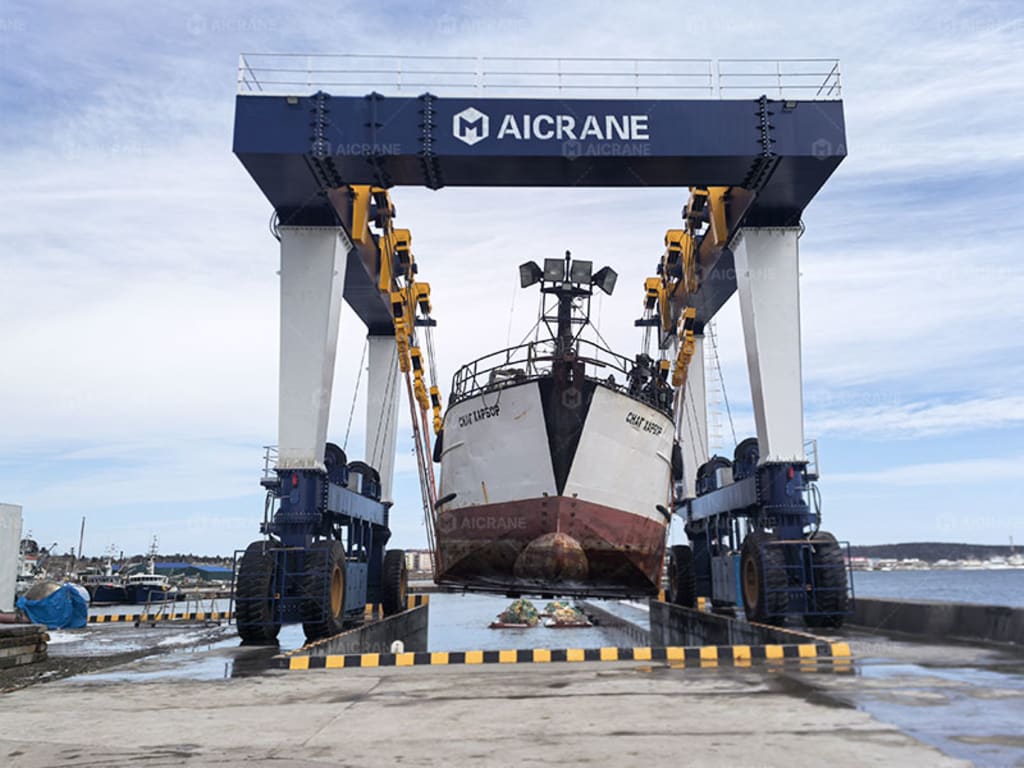
Boat travel lift cranes (also known as marine travel lifts or boat hoists) are essential equipment in shipyards, marinas, and waterfront maintenance facilities. They are widely used for lifting, transporting, and launching boats, yachts, barges, and other marine vessels. Unlike fixed lifting systems, boat travel lifts combine mobility with high-capacity lifting, making them one of the most versatile solutions in marine handling operations.
At the heart of this versatility lies a critical engineering system: hydraulics. The hydraulic system is what enables a boat travel lift to lift hundreds or even thousands of tons smoothly, safely, and with precise control. Without hydraulics, modern travel lifts would not be able to achieve their current level of performance, stability, and operational flexibility.
In this article, we will break down how hydraulic systems work in boat travel lift cranes, why they are essential, and how engineering design ensures safe and efficient marine lifting operations.
What Is a Boat Travel Lift Crane?
A boat travel lift is a mobile gantry-style lifting machine equipped with multiple hydraulic hoists and slings. It moves over vessels, lowers lifting slings beneath the hull, and then lifts the vessel out of the water for transport and maintenance.
Key applications include:
- Lifting yachts and recreational boats
- Handling commercial barges and workboats
- Shipyard maintenance operations
- Dry docking and launching vessels
- Marine repair and inspection work
Unlike traditional cranes, travel lift cranes must operate in harsh marine environments while maintaining high precision and load stability. This is where hydraulic engineering becomes essential.
Why Hydraulics Are Essential in Boat Travel Lifts
Hydraulic systems are used in boat travel lifts because they provide three critical advantages:
1. High Force Generation in Compact Systems
Hydraulics can generate extremely high lifting forces using fluid pressure in relatively compact components. This is essential for lifting heavy marine vessels.
2. Smooth and Controlled Motion
Marine vessels are sensitive to uneven lifting forces. Hydraulics allow smooth and synchronized lifting across multiple points, reducing stress on the hull.
3. Precise Load Distribution
Hydraulic systems ensure that all lifting points work together, preventing imbalance or structural deformation during lifting operations.
Without hydraulics, it would be extremely difficult to achieve the level of synchronization required for safe marine lifting.
Basic Principles of Hydraulic Systems
To understand boat travel lift hydraulics, we first need to understand the basic principle behind hydraulic systems:
Pascal’s Law
Hydraulic systems operate based on Pascal’s Law, which states:
Pressure applied to a confined fluid is transmitted equally in all directions.
This means that a small force applied at one point can be transformed into a much larger force at another point using hydraulic fluid.
In simplified terms:
- A hydraulic pump creates pressure
- The pressure is transmitted through hydraulic oil
- Hydraulic cylinders convert pressure into lifting force
This principle allows boat travel lifts to handle extremely heavy loads with precision.
Main Components of a Boat Travel Lift Hydraulic System
A modern boat travel lift hydraulic system consists of several key components working together:
1. Hydraulic Pump System
The hydraulic pump is the power source of the system. It converts mechanical energy (from diesel engines or electric motors) into hydraulic energy.
Functions include:
- Pressurizing hydraulic oil
- Supplying fluid to cylinders
- Maintaining consistent flow rate
Without the pump, no hydraulic movement is possible.
2. Hydraulic Cylinders
Hydraulic cylinders are the actuators that perform the actual lifting.
Each cylinder consists of:
- Piston rod
- Cylinder barrel
- Hydraulic seals
When pressurized oil enters the cylinder, it pushes the piston, creating linear lifting motion.
In boat travel lifts, multiple cylinders are used on both sides of the gantry to ensure balanced lifting.
3. Hydraulic Hoses and Pipelines
These components transport hydraulic fluid between system parts.
They must be:
- High-pressure resistant
- Flexible yet durable
- Corrosion-resistant (for marine environments)
Proper routing is essential to prevent leakage and pressure loss.
4. Hydraulic Control Valves
Control valves regulate:
- Oil flow direction
- Pressure levels
- Speed of cylinder movement
These valves ensure synchronized lifting and controlled lowering of vessels.
5. Hydraulic Power Unit (HPU)
The HPU is the central system that integrates:
- Motor or engine
- Hydraulic pump
- Oil tank
- Cooling system
- Filtration system
It acts as the “heart” of the hydraulic system.
6. Sensors and Control Systems
Modern boat travel lifts often include electronic control systems that monitor:
- Cylinder synchronization
- Load distribution
- Pressure levels
- Lifting height
These systems enhance safety and precision.
How the Hydraulic Lifting Process Works
The hydraulic lifting process in a boat travel lift follows a carefully controlled sequence:
Step 1: Positioning the Lift
The travel lift moves over the vessel using its rubber-tyred mobility system. The operator positions the lifting slings according to the vessel’s hull structure.
Step 2: Sling Adjustment
Hydraulic systems adjust sling height to ensure proper contact beneath the hull. This ensures even load distribution.
Step 3: Initial Load Engagement
Hydraulic cylinders begin applying pressure slowly, taking up slack in the slings and establishing initial contact with the vessel.
Step 4: Synchronized Lifting
All hydraulic cylinders operate in synchronization to lift the vessel evenly out of the water.
This is the most critical phase because:
- Uneven lifting can damage the hull
- Load imbalance must be avoided
- Structural stress must be minimized
Step 5: Transport Movement
Once lifted, the hydraulic system maintains constant pressure while the travel lift moves the vessel to a maintenance or storage area.
Step 6: Controlled Lowering
Hydraulics allow precise lowering of the vessel back into water or onto supports, ensuring safe placement.
Synchronization: The Most Critical Hydraulic Challenge
One of the biggest engineering challenges in boat travel lift hydraulics is synchronization.
Since multiple hydraulic cylinders lift the vessel at different points, even a small imbalance can cause:
- Hull deformation
- Uneven stress distribution
- Structural damage to the vessel
- Safety hazards for operators
To solve this, modern systems use:
Hydraulic Synchronization Systems
These systems ensure all cylinders move at the same speed and pressure.
Electronic Feedback Control
Sensors continuously monitor cylinder position and adjust flow rates automatically.
Load Equalization Systems
Pressure balancing ensures equal force distribution across all lifting points.
This engineering integration is essential for safe marine lifting.
Hydraulic Safety Systems in Modern Boat Travel Lifts
Safety is a top priority in hydraulic design. Modern systems include multiple layers of protection:
1. Overpressure Protection
Relief valves prevent excessive hydraulic pressure that could damage components.
2. Emergency Stop Systems
Operators can immediately halt hydraulic movement in case of abnormal conditions.
3. Load Monitoring Systems
Continuous monitoring ensures the load does not exceed safe limits.
4. Anti-Leak Protection
High-quality seals and hoses prevent hydraulic fluid leakage, which could compromise safety.
5. Redundant Hydraulic Circuits
Some systems include backup circuits to ensure operation even if one circuit fails.
Advantages of Hydraulic Systems in Boat Travel Lifts
Hydraulics offer several key advantages in marine lifting applications:
High Load Capacity
Hydraulic systems can easily handle very heavy vessels, including commercial barges and yachts.
Smooth Operation
Gradual pressure control reduces shock loading on hull structures.
Precision Control
Operators can adjust lifting speed and height with high accuracy.
Durability in Marine Environments
Properly designed hydraulic systems resist corrosion and operate reliably in humid, salty conditions.
Energy Efficiency
Modern hydraulic systems are designed to optimize energy consumption during lifting operations.
Maintenance of Hydraulic Systems
To ensure long-term performance, hydraulic systems require regular maintenance:
- Hydraulic oil replacement
- Filter cleaning and replacement
- Hose inspection for wear and leakage
- Cylinder seal inspection
- Pump performance testing
- Pressure calibration checks
Neglecting maintenance can lead to reduced lifting efficiency, safety risks, and system failure.
Common Hydraulic Issues and Solutions
1. Hydraulic Leakage
Caused by worn seals or damaged hoses. Solution: immediate replacement and system inspection.
2. Uneven Lifting
Caused by pressure imbalance. Solution: recalibration of synchronization system.
3. Overheating Hydraulic Oil
Caused by continuous operation or poor cooling. Solution: improve cooling system efficiency.
4. Slow Cylinder Response
Caused by clogged filters or low oil quality. Solution: replace filters and hydraulic oil.
Future Trends in Hydraulic Boat Travel Lift Technology
Hydraulic systems continue to evolve with modern engineering advancements:
- Smart hydraulic monitoring systems
- AI-based pressure optimization
- Energy-efficient hydraulic pumps
- Hybrid electro-hydraulic systems
- Predictive maintenance technologies
These innovations improve safety, reduce energy consumption, and enhance operational intelligence.
Conclusion
The hydraulic system is the core technology that enables modern boat travel lift cranes to operate safely, efficiently, and precisely. From generating lifting force to synchronizing multiple cylinders, hydraulics make it possible to handle massive marine vessels with smooth control and minimal structural stress.
Understanding how hydraulics work reveals why boat gantry cranes are so effective in shipyards and marine facilities. Their ability to combine high lifting capacity, precision control, and operational safety makes them an indispensable tool in modern marine engineering.
As hydraulic technology continues to advance, boat travel lifts will become even more efficient, intelligent, and reliable—supporting the growing demands of global marine transportation and maintenance industries.
About the Creator
Aicrane01
Welcome to the Aicrane Blog, your practical guide to lifting solutions. Discover articles covering overhead cranes, gantry cranes, winches, steel structures, boat lifts, and more.
Website: https://steelmillcranes.com/
Enjoyed the story? Support the Creator.
Subscribe for free to receive all their stories in your feed.
Comments
There are no comments for this story
Be the first to respond and start the conversation.