
Two Seconds of Doubt: How Dove Lost Its Sweet Spot
Inside the marketing fumble that turned a Valentine’s gift into a symbol of betrayal – and what it reveals about the fragile trust between brands and the people who once loved them.
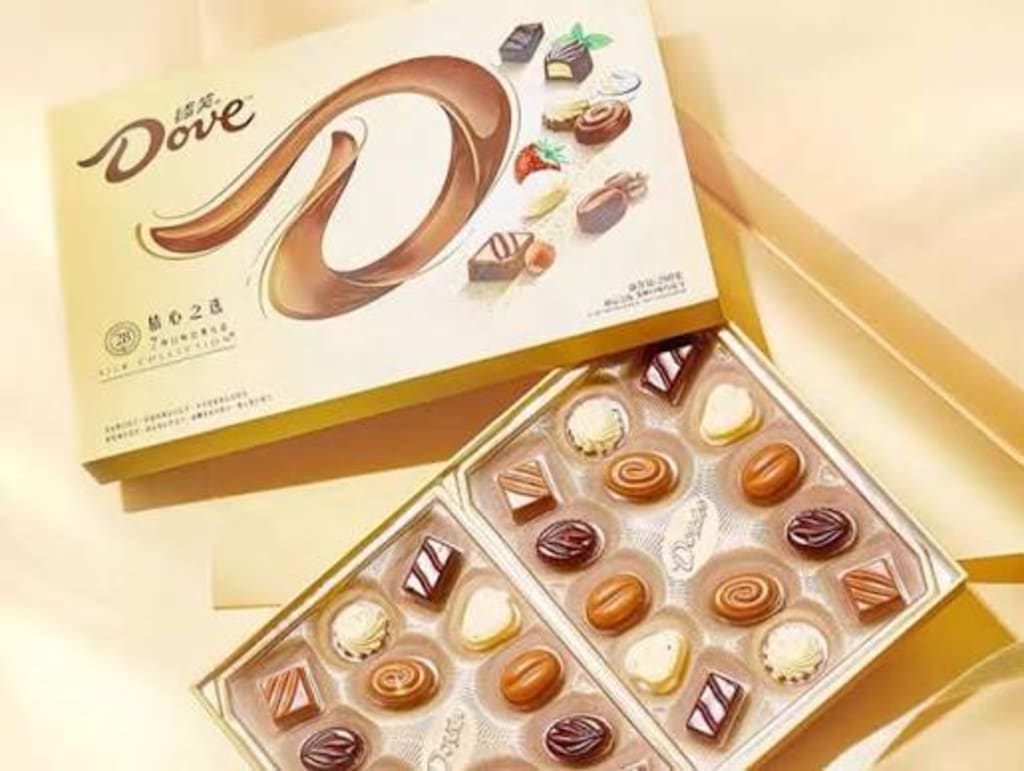
Three days after the Qixi Festival, a short video appeared on Dove's official Douyin account that would trigger a firestorm of criticism and expose the fault lines between outsourced marketing and brand integrity.
The video featured a first-person female narrative: "I asked my boyfriend for the Dove rainbow gift box for a long time, but he never got it for me. Today, while my boyfriend is away, I shared it with my 'ambiguous' friend, and he drove two hours to bring it over. So sweet!"
The video was a product promotion, complete with a purchase link in the corner. The rainbow gift box was marketed as a "Qixi Valentine's Day gift." Yet the brand's official account had just endorsed the idea that "an ambiguous friend cares more than a boyfriend" while simultaneously selling a "boyfriend-to-girlfriend Valentine's gift." The contradiction was glaring, and comments flooded in by the tens of thousands within hours.
On August 25, Dove issued an apology. The core message: the video was created by a third-party operations team and hadn't undergone the brand's content review process. But when netizens ran the statement through the text-AI detection tool in the National Anti-Fraud Center app, the result showed "suspected AI-generated." The incident had completed a full cycle: copywriting blunder followed by public-relations failure.
The Copy Was Not Improvised
The offending video went through five stages: topic selection, writing, filming, editing, and publishing. Each stage involved specific people. Either everyone saw no problem with the content, or the review process was never activated.
The narrative logic was simple: "Boyfriend doesn't buy" → "Ambiguous friend buys" → "So sweet." Three sentences formed a complete emotional contrast. The boyfriend's neglect established the premise; the ambiguous friend's action provided the twist; "so sweet" delivered the conclusion.
From a sales perspective, this logic only works if the target audience agrees that "being gifted by an ambiguous friend is more worth boasting about than being gifted by a boyfriend." The agency either overestimated audience tolerance for such a narrative or underestimated how strongly consumers would reject it.
The Customer Service Response That Made Things Worse
After public outcry, some netizens contacted the store's customer service. The reply: "The video content is a personal creation and does not represent the brand's position."
Legally, that statement might hold water. The content was not written by the brand's executives. But in public perception, anything posted on Dove's official flagship store account represents Dove. By using "personal creation" as a shield, the service team effectively told the public, "This has nothing to do with us."
No one stopped that reply. From the moment the agent typed it to the moment it was sent, there was no interception mechanism.
The Apology That Backfired
In the August 25 statement, Dove used the phrase "third-party store operations team." The public's default reading: "You're saying the main fault lies elsewhere." The statement added that "regardless of which link the issue arose from, we bear responsibility," but the order of subjects already signaled an attempt to deflect blame.
The statement also said "the store customer service team gave inappropriate responses to consumer queries." But "inappropriate" is vague. Inappropriate in what way? Wording? Attitude? Unauthorized response, or did it represent the brand's stance? The statement offered no concrete anchor.
Then came the extra blow: the statement was flagged as AI-generated. The public reasoning chain was devastating: "You used AI to write an apology → You couldn't be bothered to write it yourself → You don't really care."
Four Management Blind Spots
1. Outsourcing Oversight
Dove outsourced the short-video operations of its flagship store to Shanghai Zongzheng Food Co., Ltd. Outsourcing itself is standard practice. But where are its boundaries?
Content approval boundaries were clearly breached. Either the review process was bypassed or it was a formality. Both lead to the same outcome: the brand had no substantive control over what went out on its official channel.
The agency's KPIs almost certainly included completion rate, engagement rate, and conversion rate. These indicators are not problematic in themselves. But without a values-based veto, the team gravitates toward "whatever goes viral." Infidelity topics naturally generate high engagement on short-video platforms because they trigger strong emotions. When data is the sole compass, the agency has no incentive to hit the brakes.
2. Content Review
Suppose Dove did have an internal review process. What should the reviewer have seen when they received this video?
The first scene: The female character says, "I asked my boyfriend for a long time and he never got it for me." This establishes a narrative premise: "boyfriend is negligent." The reviewer should have asked: does this narrative offend a portion of consumers? A boyfriend not buying a gift does not mean he doesn't love his girlfriend, but the copy linked the two causally.
The second scene: The female character says "while my boyfriend is away, I share it with my ambiguous friend." The term "ambiguous friend" was deliberate, not a slip. The reviewer should have asked: what does the target audience associate with "ambiguous friend"? And is that association consistent with the emotional values the brand wants to convey?
The third scene: The ambiguous friend drives two hours to deliver the gift box, and the female character says "So sweet." That "sweet" refers both to the chocolate and to the interaction itself. The reviewer should have asked: does the brand permit official content to positively associate "chocolate" with "non-exclusive relationships"?
Any of those three questions yielding a "no" should have killed the video. It went live. Either the review stage didn't exist, or the reviewer lacked basic media literacy.
3. The Timing of Crisis Response
As the incident unfolded, Dove's message flow looked like this:
First: silence. Between the emergence of public opinion and its spread, there was no official voice. All discussion happened without brand participation. The narrative direction was uncontrolled.
Second: customer service reply. After silence, the first brand-affiliated voice was the service team's "personal creation" line. This came against rising public anger and was read as shifting blame, further fuelling the outrage.
Third: the apology statement. By then, public opinion had fully matured. No matter what the statement said, it faced the "too late" critique. The "third-party team" wording was read as a variant of "the intern takes the fall."
Fourth: AI detection. The apology was flagged as AI-generated. Public attention shifted from the original copy to a new issue: "was the apology sincere?"
Each response came at the wrong time, used the wrong wording, and reached an already angry audience. Crisis communication is not about "how to explain." It's about "when and with what tone."
4. Where Brand Values Belong
The brand name "DOVE" carries a story: "Do you love me?" – a confession. Chocolate as a category carries the association of "love." After years in the Chinese market, consumer perceptions of Dove cluster around "romance," "gift," and "couples." This is Dove's most valuable asset, built through years of consistent content.
What did the offending copy do? It set up a contrast: boyfriend doesn't buy vs. ambiguous friend does buy. It conveyed a narrative: whoever buys the chocolate cares about you more. It implied a relationship model: the ambiguous friend's action outweighs the boyfriend's commitment.
All three eroded the "token of love" association. When Dove's official content begins to suggest that "chocolate can be a tool for a third party to poach," what goes through the mind of someone who once thought of Dove as a Valentine's Day gift? The next time he stands in front of the supermarket shelf and picks up a box of Dove, what image flashes in his head?
Who Got Offended?
Boyfriends and husbands – They are the most direct buyers of Dove gift boxes. On holidays, they walk into a supermarket, pick up a box of Dove, pay, give it to their partner. In that consumption scenario, Dove is proof of "I care about you."
After that copy, the scenario changed. "I care about you" became a warning: "If I don't buy it for you, someone else will." Sending a box of chocolate now comes with implicit distrust. One netizen commented: "From now on, before giving Dove, I need to confirm I am the only one giving it."
Women – The copy portrayed the female character as someone who turns to an ambiguous friend simply because her boyfriend didn't buy her a gift. This framing carries two presuppositions. First, a woman's emotional loyalty can be exchanged for material goods. Second, women's behaviour in relationships is passive and driven by material incentives. To many readers, these are a stereotyped caricature of women.
Believers in healthy relationships – There is a third group who hold the value that "love should be loyal, exclusive, and honest." They instinctively reject narratives about ambiguity, infidelity, and betrayal. An official account cheering for "an ambiguous friend bringing chocolate" is enough to make them turn away from the brand for a long time.
One marketing blunder, three distinct groups offended through three separate paths.
Dove Is Not the First
Before Dove, several brands stepped into similar traps with short-video marketing. A consumer-electronics brand ran content with suggestive innuendo. A smartphone brand ran ad copy accused of objectifying women. Multiple FMCG brands posted borderline content on short-video platforms.
These cases share a common backdrop: slowing traffic growth, platform algorithms that favour high-emotion content, and brands constantly testing values boundaries under data pressure. The "bad publicity is still publicity" philosophy is debated in internal meetings.
Dove is not the first, and it won't be the last. When a brand's marketing content begins to rely on "affairs," "ambiguity," and "third parties" as traffic catalysts, can it ever go back to being a "token of love"? One viral misstep generates short-term exposure at the cost of long-term brand equity.
Paths to Redemption
Granularity in the Review Process
Dove's statement mentioned "strictly implementing the content review mechanism." But if that mechanism is merely "someone glances at it and approves," then no amount of "strict implementation" helps.
The review mechanism requires concrete granularity. Content tiering is essential: hard ads, brand stories, promotional offers, and short-video creative need different approval levels. Short-video creative, because of its high volume and tight timeliness, is the most vulnerable blind spot – and precisely the one that needs the strictest gatekeeping.
Checklist-based review cannot rely on gut feeling. It needs clear questions: Does this content involve gender stereotypes? Does it disparage any group? Does it conflict with the brand's core values? Each item must be checked off before release.
Explicit veto power means reviewers must have the authority to reject, and exercising that veto should not require escalation. Let the people closest to the content have the power to stop it.
Outsourcing Governance
The agency model itself is not the problem. The boundaries of responsibility need to be redrawn.
Final approval never leaves the brand. The agency can propose and create, but pre-publication approval must stay in-house. Even a simple approval flow ensures at least that "someone has seen it."
Values clauses in contracts should include explicit red lines on brand values, with specific penalties for violations. The agency is not just running an account – they are representing the brand's public image.
Periodic spot checks are necessary even with a sound review process. Randomly review published content. When issues are found, trace them back to the responsible individuals and the specific review step that failed.
Bottom Lines for Crisis Response
In this incident, public scepticism about "sincerity" outweighed the outcry over the initial error. The mistake happened at the copywriting stage. The "insincere" impression was created during the PR stage.
For any future crisis, several bottom lines need to be established. The first response must be human – not AI-generated, not lawyered to death. Spoken by the brand head in their own words, the phrasing can be imperfect but must have human warmth.
Never deflect the subject. Always use "we." Don't say "third party," "outsourced team," or "operations staff." The public will read those as "they are looking for a scapegoat."
Say "we have done" not "we will do." The weakest word in an apology is "will." "Will strengthen," "will improve," "will enhance" – these have no tense, no completion, no credibility. What makes people feel that "they actually did something" is the past tense.
Return to the Brand's Origin
Dove can ask itself one honest question: how many consumers today still believe in the story behind "DOVE"? If the answer is "fewer and fewer," the problem is not with consumers – it's with the brand. Years of accumulated emotional associations are being diluted by homogeneous promotional content, by agency-mass-produced traffic videos, and by a blind chase after data metrics.
Repairing brand image doesn't require a new grand narrative. It requires subjecting every piece of content to one simple filter: "Does this content belong under the name DOVE?" "Do you love me?" is not a slogan. It's a gate. And a gate's job is to filter. Some things come in. Others do not.
The Cost of a Two-Second Hesitation
One concrete scene can close this piece.
One afternoon, a young man walks into a supermarket and stops in front of the chocolate shelf. He remembers his girlfriend mentioned last week that she wanted some chocolate. His eyes scan across the Dove packaging. He recalls the trending topic from around Qixi. He hesitates for two seconds.
Then he reaches for a different brand of chocolate.
Those two seconds are the cost of Dove's misstep. They cannot be quantified in any data report. But they happen in the mind of everyone who once associated Dove with love. The goal of brand management is not to prevent those two seconds – they cannot be tracked. The goal is to make sure, in that real, unrecorded moment, that young man reaches out without hesitation.
About the Creator
Jin
Writer of reamstories
https://reamstories.com/jin
Enjoyed the story? Support the Creator.
Subscribe for free to receive all their stories in your feed. You could also become a paid subscriber, letting them know you appreciate their work.
Comments
There are no comments for this story
Be the first to respond and start the conversation.