
Truth, Testimony, and Timing: The Charges Against Two Former FBI Officials
The Allegations A Familiar Saga Questions of Process Defence and Concerns The Broader Political Shadow What Lies Ahead

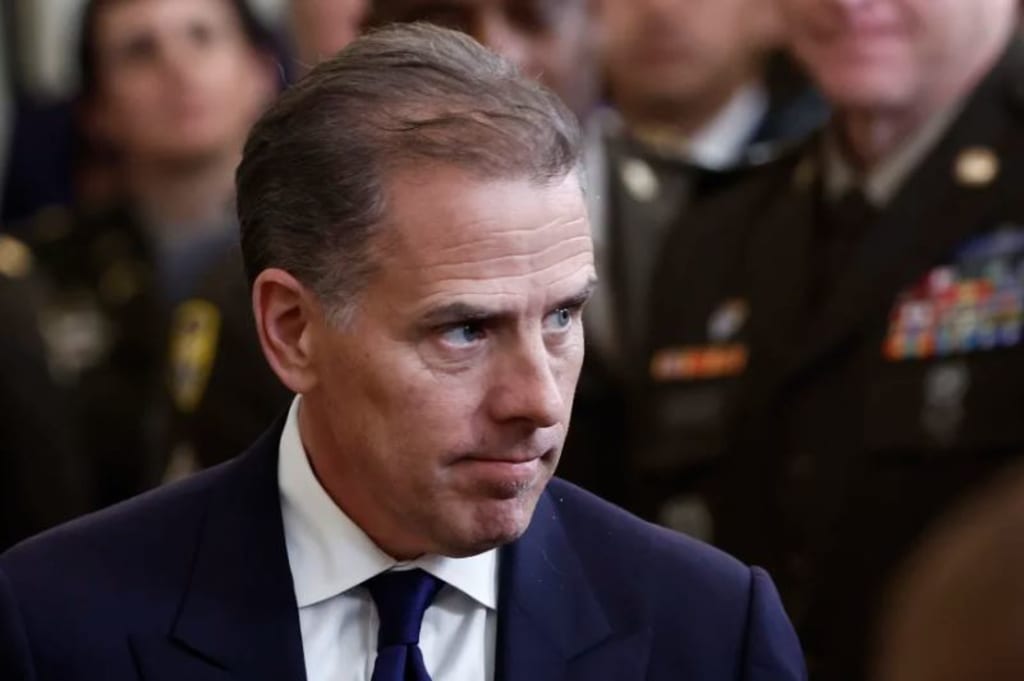
When two veteran federal law enforcement officials walked into a Washington, D.C., courtroom last week, they did not stand alone. Bradley Benavides and Nikki Floris appeared before a magistrate judge facing charges that they lied to Congress, but the case extends far beyond the statements they made. It reaches back to the chaotic final months of the 2020 presidential election, to the contested origins of the Hunter Biden laptop story, and to the simmering debate over whether the U.S. Department of Justice has become a tool of partisan power. The prosecution of these two career officials is not merely a legal proceeding; it is the latest chapter in a struggle to define what justice means in an era where every decision is scrutinised through a political lens.
The Case Against Benavides and Floris
Benavides, 56, and Floris, 46, held senior roles on the FBI’s Foreign Influence Task Force, a unit created to detect and address foreign interference in American democracy. According to the criminal complaint filed by the office of U.S. Attorney Jeanine Pirro, both gave testimony to the House Judiciary Committee in 2023 that was materially false. They allegedly claimed to have limited knowledge of the Hunter Biden investigations, with one asserting they learned details only “from Wikipedia,” even though evidence shows they were actively involved in shaping how the laptop story was framed and shared ahead of the election. Prosecutors argue their statements were not merely mistaken but deliberate attempts to conceal their involvement, hindering Congress’s ability to conduct a full inquiry.
Yet the proceedings carry unusual features. Magistrate Judge Zia Faruqui noted that both defendants hold “sparkling backgrounds” as long‑serving public servants. He also observed that bringing charges by criminal complaint rather than through a grand jury indictment for conduct several years old departs from standard practice. Floris’s legal team has called the accusations baseless, describing their client as a dedicated “patriot” of nearly 20 years whose service is now being discarded for political ends. They contend the charges are timed to influence the midterm elections, emerging just as voters prepare to cast their ballots.
A Story Years in the Making
The roots of the controversy stretch back to 2019 and 2020, when a laptop belonging to Hunter Biden was left at a Delaware repair shop and later obtained by former President Trump’s personal lawyer, Rudy Giuliani. Weeks before Election Day 2020, The New York Post published reports based on its contents, igniting a firestorm that has never fully faded. Since then:
Hunter Biden was convicted in June 2024 on federal gun charges and later entered guilty pleas to separate tax offences.
In December 2024, then‑President Joe Biden issued a pardon, saying his son had been “treated differently” and that “raw politics” had warped the process, a reversal of his earlier public promise not to intervene.
House Republicans launched an impeachment inquiry focused on Hunter Biden’s business dealings during his father’s vice presidency, but no evidence has been presented showing Joe Biden personally profited.
Throughout, questions persisted about how the FBI handled the laptop, what information was shared, and when questions that the testimony of Benavides and Floris was meant to answer.
Process as Politics
This prosecution arrives amid broader concerns about the independence of federal law enforcement under President Trump. Critics warned months ago in May 2025 that despite pledges to end the “weaponization” of the Justice Department, the opposite appeared to be happening. Reports have since noted that grand juries in Washington and elsewhere have hesitated to return indictments in high‑profile, politically sensitive cases, leading the administration to pursue matters through alternate legal channels. The decision to proceed by complaint rather than indictment in the Benavides and Floris case has reinforced fears that established safeguards are being bypassed.
Supporters of the prosecution see it differently: they argue false statements to Congress undermine the very foundation of legislative oversight. If witnesses can mislead lawmakers without consequence, the public loses confidence in what the government does and does not know. From this view, accountability cannot be dismissed as politics simply because it touches powerful people or occurs before an election.
Competing Visions of Accountability
What makes this moment so divisive is that both sides can claim to stand for the same principle: fairness.
One side asks: Can we expect ordinary citizens to respect the law if those inside the system are not held to the highest standard of truthfulness?
The other asks: Can we trust the law when it is wielded by an administration against perceived opponents, on the eve of voting, using procedures that depart from long‑established norms?
There is no neutral ground left from which to answer. Every development, the filing of charges, the scheduling of hearings, statements from prosecutors and defence alike is absorbed into competing narratives. For some, Benavides and Floris are being called to account. For others, they are the latest victims of a system that prioritises loyalty above justice.
The Uncertain Path Forward
The preliminary hearing scheduled for next Tuesday will begin to test these competing claims. It will determine whether there is sufficient evidence to proceed to trial, but it may not resolve the deeper question hanging over the case: whether any outcome will be accepted as fair. In an environment where trust in institutions is already fragile, the process matters as much as the result. If the public concludes that justice is being administered selectively, the damage extends beyond this case to the rule of law itself.
The prosecution of Bradley Benavides and Nikki Floris is more than a legal dispute; it is a mirror held up to the American political system. It reflects a nation uncertain whether its institutions can remain above partisanship. Two career officials stand accused of failing to tell the truth; the government stands accused of the same. In the months ahead, the court will weigh the facts of what happened in 2023. But the court cannot decide what the country believes. That verdict rests with the public, and it is not clear what will satisfy them. Justice, when it finally arrives, will mean little if no one believes it is real.
About the Creator
Mark Lim
Hi I am mark an automotive student and a car, tech and food enthusiast ! Im gonna try and post daily & hope you enjoy what I write and do share my page with people you know. I would gladly appreciate it! Cheers
Enjoyed the story? Support the Creator.
Subscribe for free to receive all their stories in your feed.
Comments
There are no comments for this story
Be the first to respond and start the conversation.