
Traffic Signal Controller Market: The Technology Powering Smarter Roads
How intelligent traffic systems are reducing congestion, improving safety, and transforming urban mobility
Hook Intro
The signal turns green just as traffic begins to build. Vehicles move smoothly through the intersection, buses stay on schedule, and pedestrians cross safely without delays. Most people barely notice the technology making it happen.
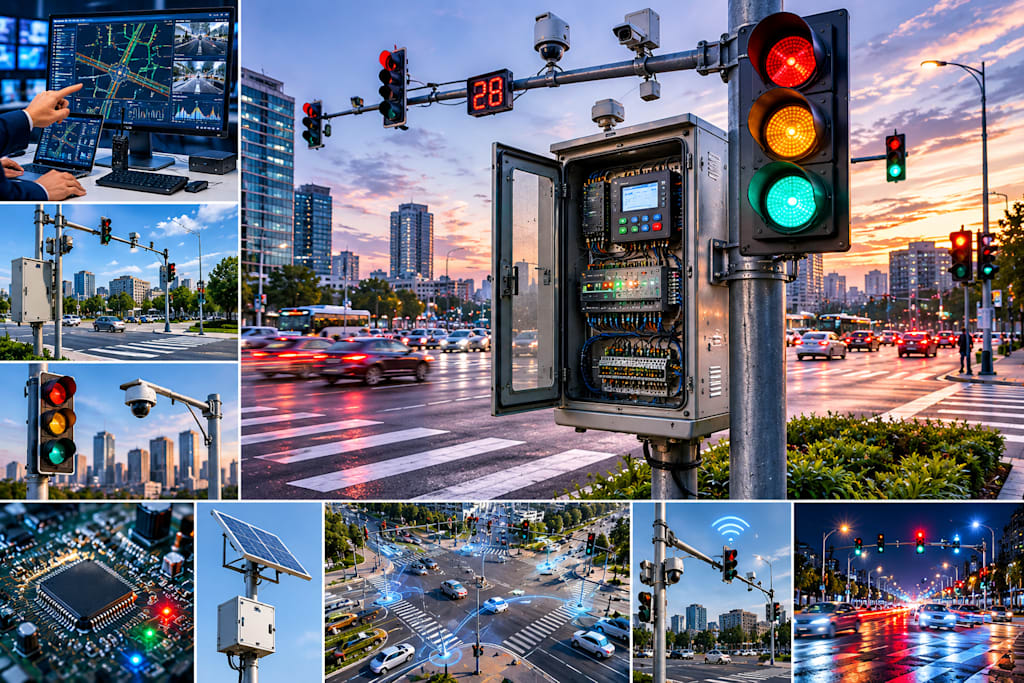
Behind every efficient intersection is a traffic signal controller working in real time to manage vehicle movement, reduce congestion, and improve road safety. As cities become larger and transportation networks more complex, the Traffic Signal Controller Market is emerging as a critical part of modern urban infrastructure.
Today, traffic control is no longer just about timers and signals. It is becoming smarter, connected, and increasingly data driven.
Why Traffic Signal Controllers Matter Today
Urbanization, rising vehicle ownership, and growing traffic congestion are placing enormous pressure on transportation infrastructure worldwide. Traditional traffic systems often struggle to adapt to changing traffic conditions, resulting in delays, fuel wastage, and increased emissions.
Traffic signal controllers help solve these challenges by coordinating traffic flow, managing pedestrian crossings, prioritizing emergency vehicles, and improving intersection efficiency. Advanced systems can analyze real time traffic data and adjust signal timing dynamically to optimize movement.
According to Mordor Intelligence, the Traffic Signal Controller Market size is projected to grow from USD 6.44 billion in 2026 to USD 11.54 billion by 2031, registering a CAGR of 12.38% during the forecast period. This growth is being supported by increasing investments in intelligent transportation systems and smart city infrastructure.
Understanding Traffic Signal Controller Market Size and Share
The Traffic Signal Controller Market size is expanding as governments modernize aging transportation infrastructure and invest in connected mobility solutions. Cities are increasingly adopting adaptive traffic management systems to reduce congestion and improve travel efficiency.
Municipal transportation authorities account for a major share of deployments, as urban intersections require increasingly sophisticated traffic control capabilities. Smart city projects are further accelerating the installation of intelligent traffic management technologies across both developed and emerging economies.
The Traffic Signal Controller Market share remains strong in North America due to significant investments in intelligent transportation systems and roadway modernization programs. Meanwhile, Asia Pacific is witnessing rapid growth driven by urban expansion, rising vehicle volumes, and large scale infrastructure development initiatives.
Traffic Signal Controller Market Trends Driving the Industry
Several Traffic Signal Controller Market trends are shaping the future of urban transportation.
AI based adaptive traffic control systems are enabling real time signal optimization.
Smart city initiatives are increasing demand for connected traffic infrastructure.
Vehicle to Infrastructure communication is improving traffic coordination and road safety.
Cloud based traffic management platforms are enhancing network wide visibility and control.
Advanced sensors and cameras are providing more accurate traffic monitoring capabilities.
These innovations are helping cities move beyond fixed timing schedules toward intelligent systems that respond dynamically to traffic conditions.
Why Governments Are Investing in Intelligent Traffic Management
Traffic congestion creates significant economic and environmental costs. Longer travel times increase fuel consumption, reduce productivity, and contribute to higher emissions.
Intelligent traffic signal controllers help improve intersection performance by reducing vehicle delays and supporting smoother traffic movement. Public transportation systems can also benefit through signal prioritization, improving schedule reliability and passenger experience.
Emergency response vehicles gain faster access through busy intersections, while pedestrians benefit from safer crossing management. These advantages continue to strengthen the broader Traffic Signal Controller Market analysis as cities focus on improving transportation efficiency without expanding road capacity.
Challenges Facing the Industry
Despite strong market growth, several challenges remain. Upgrading legacy infrastructure often requires substantial investment in communication networks, sensors, software platforms, and system integration.
Compatibility between older traffic systems and modern intelligent technologies can create deployment complexities. Cybersecurity is also becoming increasingly important as transportation networks become more connected and data dependent.
In addition, municipalities must balance budget constraints with growing demand for advanced traffic management solutions, particularly in developing regions.
Traffic Signal Controller Market Forecast and the Road Ahead
The Traffic Signal Controller Market forecast indicates continued expansion as governments prioritize smarter transportation infrastructure and sustainable urban development.
Future traffic controllers are expected to integrate artificial intelligence, predictive analytics, edge computing, and connected vehicle technologies. These systems will not only react to traffic conditions but increasingly predict and prevent congestion before it occurs.
As connected and autonomous vehicles become more common, traffic signal controllers will play a larger role in enabling communication between vehicles and infrastructure. This evolution will help create safer, more efficient, and more responsive transportation ecosystems.
Final Thought
Modern cities depend on more than roads and vehicles. They depend on intelligent systems that keep everything moving efficiently behind the scenes.
Traffic signal controllers may not be the most visible part of urban infrastructure, but they are becoming one of the most important technologies shaping the future of mobility.
About the Creator
Enjoyed the story? Support the Creator.
Subscribe for free to receive all their stories in your feed.
Comments
There are no comments for this story
Be the first to respond and start the conversation.