
Tooth Swelling: Causes and Effective Treatment Options
Tooth swelling can be painful and alarming. Understand the causes and explore practical treatment options. Your path to relief starts here—read more!


Tooth swelling, often referred to as a dental abscess, is a painful condition marked by inflammation and infection around or within a tooth. This condition can affect individuals of all ages and, if left untreated, may lead to severe complications. The symptoms of tooth swelling are unmistakable, including intense pain, swelling in the cheek or gum, pus discharge, bad breath, and, in more severe cases, fever. Understanding the causes of tooth swelling and the available treatment options is crucial for maintaining oral health and preventing further issues.
Potential Causes of Tooth and Gum Swelling
Tooth swelling can arise from various underlying factors, each with specific implications for treatment. Here are the most common causes:
1. Dental Abscess
A dental abscess resulting from a bacterial infection can manifest at the root's apex (periapical) or along the tooth's root side (periodontal). These abscesses are filled with pus and often arise from untreated cavities, dental trauma, or procedures where fractures provide entry points for bacteria to infect the tooth. Common symptoms of a dental abscess include:
- A pulsating toothache that may radiate to the neck, ear, or jawbone
- Enlarged lymph nodes near the jaw or neck
- Fever
- Increased sensitivity to hot and cold stimuli
- Swelling in the facial and neck regions
- Discomfort when biting or chewing
Experiencing a painful, swollen infection is distressing. It is essential to seek professional medical care if you are dealing with an abscess or facial swelling caused by a tooth infection. Even if the abscess drains spontaneously, a dentist's visit is necessary to prevent the infection from spreading. Treatment typically focuses on managing the infection, which may involve draining the abscess and prescribing antibiotics. In some cases, a root canal procedure or tooth extraction may be required.
2. Wisdom Teeth Irritation
The eruption of wisdom teeth can sometimes lead to swelling. Impacted wisdom teeth, which are trapped under the gums, can cause swelling or create spaces for bacterial infection if they break through.
Treatment for swollen gums caused by wisdom teeth often involves removal. Post-removal, swelling may persist as your mouth heals. Rinsing with warm salt water and applying ice packs can help alleviate discomfort and combat bacteria. Severe swelling requires an immediate consultation with a dentist.
3. Gingivitis and Periodontal Disease
Gingivitis, the inflammation of the gums caused by plaque buildup, can progress to periodontal disease if left untreated. These conditions affect the supporting structures of the teeth and often cause swelling of the gums, accompanied by redness, bleeding, and bad breath.
4. Tooth Decay
Tooth decay, or cavities, occurs when bacteria in the mouth produce acids that erode tooth enamel. If the decay reaches the tooth's inner layers, it can cause infection and inflammation, leading to swelling. This is particularly true if the decay has reached the pulp, the innermost part of the tooth containing nerves and blood vessels.
5. Vitamin C Deficiency
Scurvy, a disease resulting from a Vitamin C deficiency, can cause swelling around the teeth. Fortunately, increasing your intake of citrus fruits like oranges and grapefruits, which are rich in Vitamin C, can help. Vitamin C supplements can also be beneficial. If you suspect a Vitamin C deficiency, consult with your dentist to determine the appropriate amount to add to your diet.
6. Sinus Infection
In some cases, a sinus infection can cause tooth swelling, particularly in the upper jaw. The sinuses are located close to the roots of the upper teeth, and an infection or inflammation in the sinuses can cause pressure and swelling in the teeth and gums.
Symptoms Associated with Tooth Swelling
Tooth swelling is often accompanied by other symptoms that help identify the underlying cause. These symptoms may include:
- Pain: Varying from dull to severe, often radiating to the jaw or ear.
- Redness: The affected area may appear red and inflamed.
- Sensitivity: Increased sensitivity to hot, cold, or sweet foods.
- Bad Breath: Often a result of infection.
- Pus: In cases of abscess, pus may be present around the swollen area.
- Fever: Indicative of a systemic infection.
Recognizing these symptoms and seeking prompt dental care can prevent complications and promote faster healing.
Effective Treatment and Pain Relief Options for Tooth Swelling
The treatment and pain relief options for tooth swelling depend on the underlying cause. Here are some effective options:
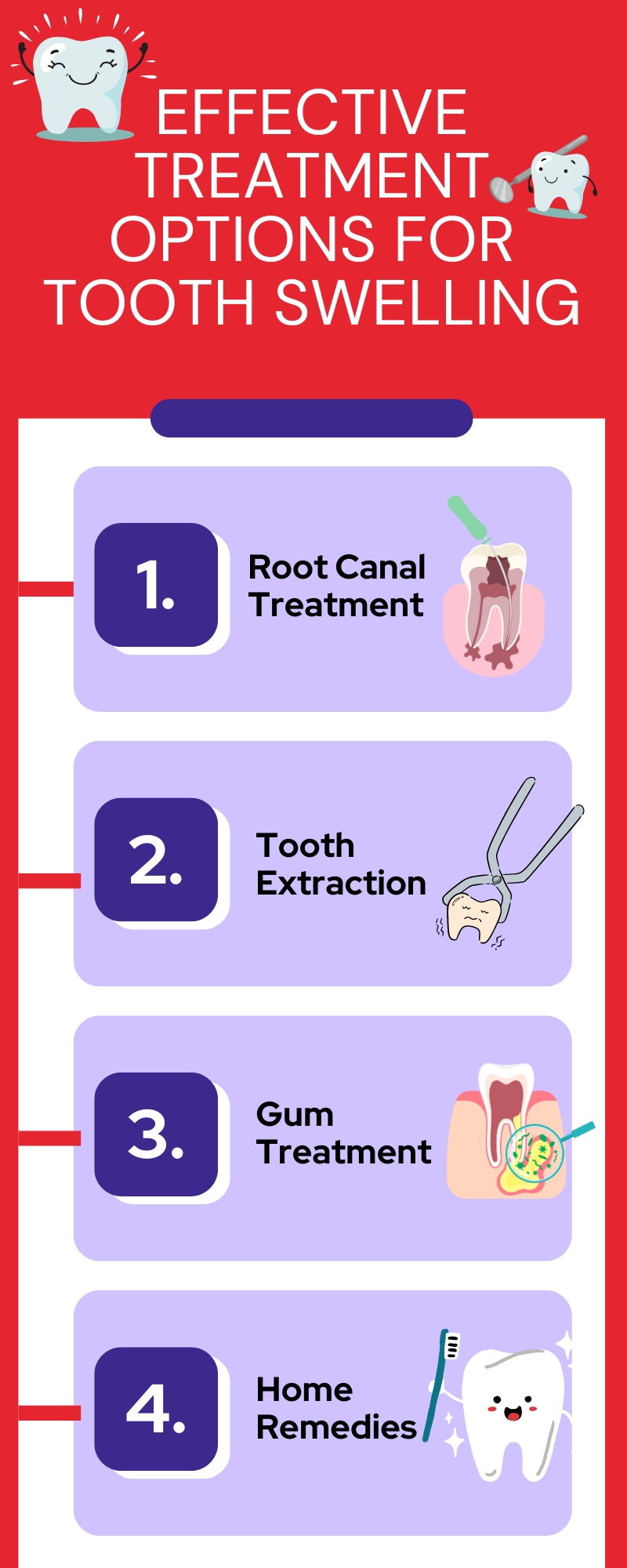
1. Root Canal Treatment
If tooth decay has reached the pulp, a root canal may be necessary. This procedure involves removing the infected pulp, cleaning the inside of the tooth, and sealing it to prevent reinfection. A crown is often placed over the tooth to restore its function and appearance.
2. Tooth Extraction
In cases where the tooth is severely damaged, or the infection cannot be controlled, tooth extraction may be necessary. Removing the affected tooth can help prevent the spread of infection and alleviate swelling.
3. Gum Treatment
Professional cleaning (scaling and root planing) may be required to remove plaque and tartar buildup for swelling caused by gum disease. In more advanced cases, surgical intervention may be needed to repair damaged gum tissues and bone.
4. Addressing Impacted Wisdom Teeth
If impacted wisdom teeth are causing swelling, your dentist may recommend their removal. This is often done under local anesthesia, and the recovery time varies depending on the complexity of the extraction.
5. Home Remedies
While professional treatment is crucial, there are some home remedies that can help alleviate symptoms:
- Saltwater Rinse: Gargling with warm salt water can reduce inflammation and kill bacteria.
- Cold Compress: Applying a cold compress to the outside of the cheek can help reduce swelling and numb pain.
- Clove Oil: Known for its analgesic properties, clove oil can be applied to the swollen area for temporary relief.
When to See a Dentist?
Tooth swelling should never be ignored, as it often indicates an underlying issue that requires professional attention. You should see a dentist immediately if:
- The swelling persists for more than a couple of days.
- The pain is severe and unrelenting.
- You notice pus, which is a sign of infection.
- You develop a fever, which could indicate the infection is spreading.
- The swelling extends to your face or neck, which could be a sign of a serious infection.
Good oral hygiene is essential for preventing tooth swelling and other dental problems. Brush your teeth twice a day with fluoride toothpaste, floss daily, and see your dentist for regular checkups. If you have a history of tooth decay or gum disease, you may need to see your dentist more frequently.
Tooth swelling is a painful and potentially serious condition. If you experience any symptoms of tooth swelling, it is important to see a dentist for prompt treatment. Early diagnosis and treatment can help prevent complications and save the tooth.
About the Creator
Christina B Lacy
Christina B Lacy is an expert writer with 10+ years of experience, specializing in creating clear, engaging content on oral health and dental innovations for practices and publications worldwide.
Enjoyed the story? Support the Creator.
Subscribe for free to receive all their stories in your feed.
Comments
There are no comments for this story
Be the first to respond and start the conversation.