
Tom Cruise Champions “Abundance” as Paramount Pledges 30 Films a Year in Post-Merger Era
In endorsing David Ellison’s ambitious slate, the star reframes studio output not as corporate strategy but as communal necessity arguing that only volume can sustain the ecosystem that nurtures cinematic artistry.

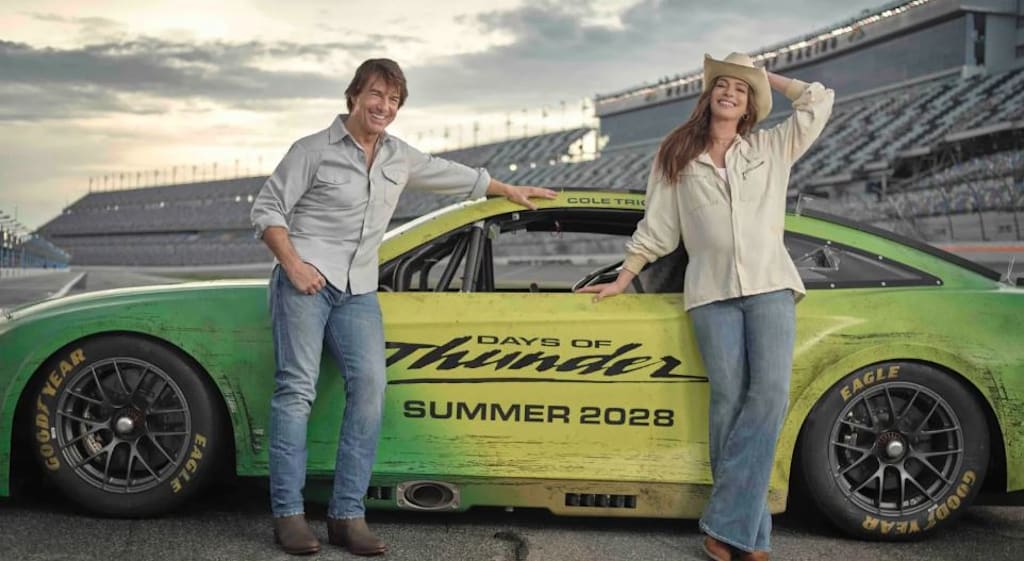
Tom Cruise has thrown his considerable cultural weight behind Paramount CEO David Ellison’s pledge to release 30 theatrical films annually should the proposed merger with Warner Bros. Discovery close, transforming what could be dismissed as executive optimism into a manifesto for Hollywood’s survival. Speaking on Pat McAfee’s show while promoting Days of Thunder 2, Cruise didn’t merely express confidence in the target; he redefined it as a moral imperative for the industry. “It’s not an industry. It’s a community,” he declared, emphasizing that achieving such volume requires collective mobilization beyond any single studio’s resources. His framing shifts the conversation from balance sheets to belonging, from content quotas to creative stewardship. In doing so, Cruise articulates a vision where scale isn’t antithetical to artistry but essential to its continuity, asserting that “production begets production” and that abundance is the only antidote to contraction.
Cruise’s argument rests on a deeply personal understanding of how talent develops. He invoked the formative journeys of auteurs like Iñárritu, Spielberg, Nolan, and himself not as untouchable icons but as artists who were given repeated chances to fail, learn, and refine their craft through successive projects. “I want that for every writer, every director, every producer, every artist,” he said, positioning the 30-film commitment as infrastructure for apprenticeship rather than a mere product pipeline. This perspective challenges prevailing narratives that equate fewer, bigger bets with quality or sustainability. Instead, Cruise suggests that a robust middle tier of mid-budget films the kind that once served as training grounds and risk-tolerant laboratories is necessary to replenish the top tier. Without consistent opportunities across budget levels, the next generation of visionaries may never emerge, leaving franchises orphaned and innovation stagnant. His endorsement thus carries strategic weight: it aligns commercial ambition with generational responsibility, making volume a proxy for vitality.
The timing of this advocacy is no accident. As streaming recalibrates toward profitability and studios retrench amid post-strike uncertainty, theatrical exhibition faces existential questions about relevance and supply. A guaranteed annual slate of 30 films would signal unwavering commitment to cinemas at a moment when many exhibitors struggle with inconsistent programming. Moreover, if Paramount-WBD combines libraries, talent rosters, and distribution muscle, hitting that number becomes plausible without sacrificing quality, provided, as Cruise notes, the broader creative community rallies around it. His call for collaboration implicitly acknowledges that no entity can sustain such output alone; it demands renewed partnerships with producers, financiers, and international co-producers. Crucially, he ties success to expansion: “If we do well with those, those 30 movies are going to turn into 40.” Growth, in his view, is earned through execution, not assumed through consolidation.
Amid this macro-level vision, Cruise also offered tangible proof of concept with Days of Thunder 2, set for summer 2028 and co-starring Anne Hathaway. His decades-long contemplation of Cole Trickle’s return reflects the very ethos he champions: stories deserve time, care, and authentic engagement. “I’ve been thinking about Cole Trickle for a long time,” he shared, linking the sequel to lifelong passions for racing, machinery, and immersive storytelling. His insistence on personally driving the race cars “If I’m making a movie about airplanes, I’m flying them. I’m driving.” isn’t just stuntmanship; it’s philosophical consistency. Just as he believes artists must earn mastery through repetition, he embodies that principle physically, refusing to outsource authenticity. This integrity lends credibility to his broader message: abundance without craftsmanship is noise, but volume grounded in dedication is legacy.
Ultimately, Cruise’s intervention transcends promotion. At a juncture when Hollywood debates whether to shrink or reinvent, he offers a third path: grow deliberately, inclusively, and communally. By anchoring corporate strategy in humanistic values, he transforms a numerical target into a covenant with the future of film. Whether Paramount delivers remains to be seen, but Cruise has ensured the metric will be judged not just by box office returns but by how many new voices it amplifies along the way. In an era obsessed with disruption, his most radical act may be insisting that salvation lies not in novelty, but in nurturing the ecosystem that makes all stories possible.
About the Creator
Mark Lim
Hi I am mark an automotive student and a car, tech and food enthusiast ! Im gonna try and post daily & hope you enjoy what I write and do share my page with people you know. I would gladly appreciate it! Cheers
Enjoyed the story? Support the Creator.
Subscribe for free to receive all their stories in your feed.
Comments
There are no comments for this story
Be the first to respond and start the conversation.