
Tips for Designing a High-Impact 10x20 Trade Show Booth
Tips to design a high-impact 10x20 trade show booth that attracts more visitors and builds your brand.

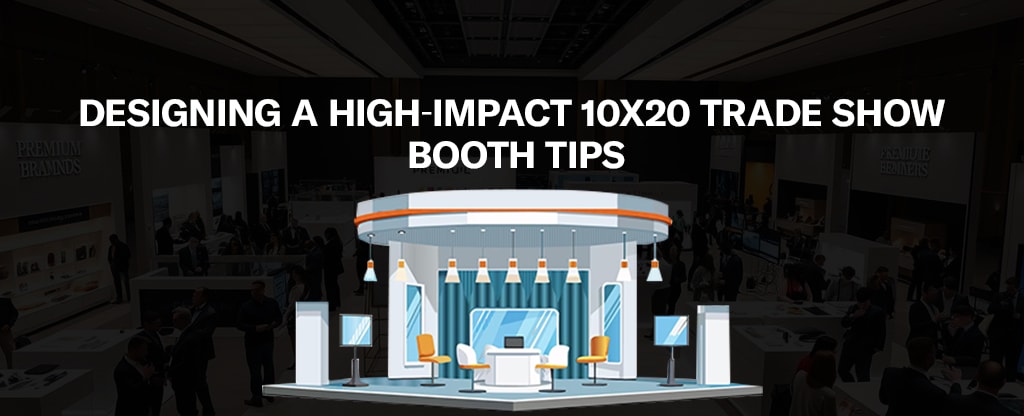
Trade shows can be remarkably helpful for developing a business. A well-planned booth can certainly draw in visitors and help in garnering prospective business relationships. On the contrary, a poorly organized and complex booth can drive visitors away. This demonstrates why planning is critical, especially when working with a 10x20 trade show booth. The space available is enough to satisfy your creative impulses while still keeping the design organized. Indeed, planning everything around a design transforms everything.
Here are simple, how-to-make-them easy tips that can be used to design a memorable 10x20 booth that will make a wonderful impression.
Keep the Layout Open and Easy to Walk Through
The first rule? Don’t block the way.
Avoid putting tables right at the front. Keep the space open so people feel welcome to come in. Arrange displays around the sides and leave space in the middle for visitors to move around comfortably.
Use flooring to guide people in—like a bright rug or special pattern. A clean path always invites more foot traffic.
Choose One Clear Message
You only have a few seconds to catch someone’s attention. So, don’t overload your booth with text. Choose one main message. Make it big and bold. Place it high so it can be seen from across the room. Your product or service should be easy to understand at a quick glance.
A clear booth message is key to designing a high-impact 10x20 trade show booth.
Use Quality Graphics
Good visuals always draw people in. Invest in sharp, professional graphics that reflect your brand colors and style.
Use large banners or backdrops to fill the wall space. Keep your design simple. Stick to two or three colors. Don’t clutter the walls with too many words or logos.
Let your images and key phrases do the talking.
Add Lighting to Stand Out
Lights can change everything.
Use spotlights to highlight your products or logo. Add LED lights under shelves or counters to create a modern look. Soft, warm lighting makes your booth feel more inviting.
Many booths at trade shows use poor lighting. So, using good lighting will make yours stand out instantly.
Use Vertical Space
Your booth may be 10x20 but don’t forget to go up. Add shelves, tall signs, or hanging banners. This helps your booth get noticed from a distance. Use the back wall to show off your main message or key product.
Smart use of vertical space can make your booth look bigger and more professional.
Make it Interactive
People love hands-on experiences. So give them something to do. Set up a demo station. Offer a product trial. Let them play a quick game. Even a touchscreen display or video on your website helps keep visitors engaged.
Interactive booths are more likely to be remembered—and shared.
Train Your Staff to Be Friendly and Helpful
Your booth staff matters more than the booth itself. Make sure they smile, greet visitors, and know what to say. Avoid sitting behind a table or using phones while people walk by. Invite people in with a simple “Hi there! Want to check this out?”
Personal contact is one of the biggest benefits of trade shows. Don’t waste it.
Keep Storage Hidden
You don’t want bags, boxes, or wires lying around. That makes your booth look messy.
Add hidden storage under counters or behind displays. Use simple covers or curtains to keep things out of view.
Clean booths always attract more attention.
Give People a Reason to Stay
Freebies work. But go beyond basic pens or brochures. Offer samples, special offers, or fun giveaways that connect to your brand. You can also have a charging station or free water. These little things make people stop and stick around—and that gives you more time to talk to them.
Practice the Setup
Don’t wait for show day to test your booth. Set it up in your office or warehouse first.
Check that everything fits and works well. Test lights, graphics, and product displays. This helps avoid stress during the real event.
A smooth setup leads to a confident and successful show.
Conclusion:
Although a 10x20 trade show booth might not be the most spacious area in a trade show, with the right planning it can have significant influence. You should avoid clutter with straightforward designs, striking graphics, and approachable staff. Maintain a consistent and clear message, and do not forget the importance that good lighting and cleanliness have in effective design.
With the right strategies in place, your booth should optimally increase your chances of meeting key people.
AARS Exhibits LLC focuses on creating booths that best portray a business during trade shows. Our staff is available to help you with everything from a 10x20 trade show booth to a full-size exhibit. We offer creative booth concepts, custom designs, and professional help that incorporates all details from ideation to execution. We seamlessly optimize your trade show experience through industry tested processes and attention to detail. AARS Exhibits LLC does not just set up a booth: we set up services that brings your brand to life.
FAQs:
1. Why is a 10x20 booth a good size?
It gives you enough space to design a clean, welcoming layout without being too large or costly.
2. What’s the best way to use space in a 10x20 booth?
Keep the layout open, use the back wall, and build up with shelves or tall displays.
3. Can AARS Exhibits LLC help with booth design?
Yes! We offer design, planning, and setup for custom booths, including 10x20 trade show booths.
About the Creator
David Murk
David Murk is Marketing Executive of AARS Exhibits, a leading provider of custom trade show booth rentals and full-service exhibit solutions across the USA.
Enjoyed the story? Support the Creator.
Subscribe for free to receive all their stories in your feed.
Comments
There are no comments for this story
Be the first to respond and start the conversation.