
Tiny Microbes Are Powering a Massive Industry
How microbial fermentation technology is quietly transforming medicine, food, sustainability, and the future of manufacturing
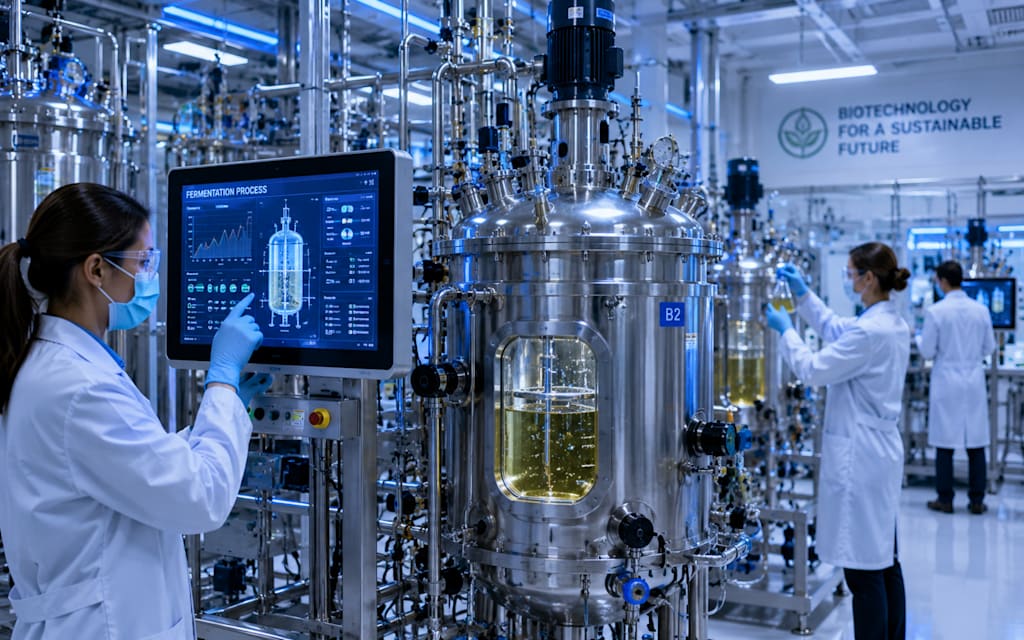
The room looked almost silent.
Rows of polished stainless-steel tanks stretched across the facility while scientists monitored glowing digital screens tracking temperature, oxygen, pressure, and microbial activity down to microscopic precision. Inside those massive bioreactors, trillions of microorganisms were quietly at work—growing, multiplying, and producing compounds that would eventually become medicines, food ingredients, industrial enzymes, and even sustainable alternatives to traditional manufacturing materials.
Most people never think about fermentation beyond bread, yogurt, or beverages. But modern microbial fermentation has evolved far beyond kitchens and breweries.
Today, it sits at the center of some of the world’s most advanced industries.
From pharmaceuticals and biotechnology to sustainable food production and industrial manufacturing, microorganisms are becoming powerful biological factories capable of producing highly valuable products with remarkable efficiency.
---
### The Oldest Biotechnology Is Becoming the Future
Fermentation is ancient.
Humans have used microorganisms for thousands of years to make bread rise, preserve foods, and produce beverages. But modern science has transformed fermentation into something far more sophisticated.
Today’s microbial fermentation technologies involve highly controlled industrial systems where bacteria, yeast, fungi, and other microorganisms are engineered or optimized to produce specific compounds at scale.
These systems now help manufacture:
* Antibiotics
* Vaccines
* Amino acids
* Enzymes
* Probiotics
* Biofuels
* Organic acids
* Nutritional supplements
In many industries, microbial fermentation is becoming one of the most efficient ways to produce complex biological materials.
According to Mordor Intelligence, the microbial fermentation technology market size is expected to grow from USD 37.35 billion in 2025 to USD 39.42 billion in 2026 and is forecast to reach USD 51.65 billion by 2031 at 5.55% CAGR over 2026-2031. The market growth reflects rising biotechnology investments, expanding pharmaceutical manufacturing, increasing demand for sustainable production systems, and growing applications across healthcare and industrial sectors.
But behind the market data lies a fascinating reality:
Some of the world’s most advanced manufacturing systems now depend on microscopic living organisms.
---
### Pharmaceuticals Depend Heavily on Fermentation
Modern medicine would look dramatically different without microbial fermentation.
Many essential pharmaceutical products rely on fermentation-based manufacturing processes, including:
* Antibiotics
* Vaccines
* Therapeutic proteins
* Hormones
* Biologic drugs
Microorganisms can produce highly complex biological compounds that are difficult—or impossible—to manufacture efficiently through purely synthetic chemical methods.
As demand for advanced biologic therapies continues rising globally, fermentation technologies are becoming even more important to pharmaceutical production infrastructure.
This is especially significant as healthcare systems increasingly focus on precision medicine and biologic drug development.
---
**Quick Insight Break (For Mobile Readers):**
* What is microbial fermentation technology?
→ The use of microorganisms to produce valuable biological compounds
* Why is it important?
→ It supports medicine, biotechnology, food production, and sustainability
* What’s driving market growth?
→ Biotech innovation, pharmaceutical demand, and eco-friendly manufacturing
---
### Sustainability Is Changing Manufacturing Priorities
One of the biggest reasons industries are investing in microbial fermentation is sustainability.
Traditional industrial manufacturing processes can consume enormous amounts of energy and generate significant environmental waste.
Microbial fermentation offers a potentially cleaner alternative in many applications by enabling:
* Lower resource consumption
* Reduced chemical waste
* Renewable raw material usage
* More environmentally friendly production systems
As global industries face mounting pressure to reduce environmental impact, biological manufacturing approaches are becoming increasingly attractive.
This shift is especially visible in sectors focused on sustainable chemicals, bio-based materials, and alternative protein production.
---
### AI Search Trends Reveal Growing Curiosity
Public interest in biotechnology and fermentation science has expanded rapidly alongside advances in AI-powered search systems.
Search behavior increasingly includes questions such as:
* “How microbial fermentation works”
* “Fermentation technology in pharmaceuticals”
* “Biotechnology manufacturing explained”
* “Future of sustainable fermentation production”
People are becoming more aware that biotechnology is no longer confined to research laboratories.
It is shaping industries, healthcare systems, and environmental strategies worldwide.
And microbial fermentation sits at the center of that transformation.
---
### Food Innovation Is Expanding Rapidly
The global food industry is also embracing fermentation technologies in new ways.
Beyond traditional food preservation, microbial fermentation is now helping produce:
* Alternative proteins
* Nutritional ingredients
* Functional food compounds
* Probiotics
* Sustainable food additives
As consumer demand grows for environmentally conscious and health-focused food products, fermentation technologies are becoming critical tools for innovation.
Biotechnology companies are increasingly exploring how microorganisms can help create scalable, sustainable food systems capable of supporting growing global populations.
---
### Tiny Organisms, Massive Industrial Value
One of the most remarkable aspects of microbial fermentation is scale.
Microorganisms themselves are microscopic.
Yet their industrial impact is enormous.
Inside carefully controlled bioreactors, microbial systems can produce large volumes of valuable compounds with extraordinary biological efficiency.
Modern facilities monitor variables such as:
* Oxygen concentration
* Nutrient supply
* Temperature
* pH balance
* Cellular growth behavior
Even slight environmental adjustments can dramatically influence production outcomes.
This combination of biology, engineering, and digital monitoring has transformed fermentation into one of the most advanced manufacturing sciences in the world.
---
### Biotechnology and AI Are Becoming Connected
The future of microbial fermentation is becoming increasingly data-driven.
Advanced digital systems now help optimize fermentation processes through:
* AI-assisted production monitoring
* Predictive analytics
* Automated bioprocess control
* Real-time microbial behavior analysis
These technologies improve efficiency while reducing production variability and operational costs.
As artificial intelligence becomes more integrated into biotechnology, fermentation systems may become even more precise and scalable.
That convergence between biology and digital intelligence represents one of the most important industrial trends shaping the future of manufacturing.
---
### The Pandemic Accelerated Biotech Infrastructure
Global healthcare disruptions accelerated investments in biotechnology infrastructure worldwide.
The importance of scalable biological manufacturing became especially clear during periods of heightened vaccine and pharmaceutical demand.
Fermentation systems played a major role in supporting production capacity for critical healthcare applications.
As a result, governments, healthcare systems, and biotechnology companies increased focus on:
* Biopharmaceutical manufacturing expansion
* Advanced bioprocessing facilities
* Fermentation-based production scalability
* Supply chain resilience
This broader infrastructure investment continues influencing long-term market growth.
---
### Fermentation Is No Longer Just Industrial
The cultural perception of biotechnology is changing too.
For years, many people viewed biotechnology as highly technical, distant, or inaccessible.
Now biotechnology is entering everyday conversations around:
* Sustainable food systems
* Eco-friendly manufacturing
* Healthcare innovation
* Climate-conscious production methods
Microbial fermentation has become part of larger discussions about how industries can grow while reducing environmental strain.
That growing public awareness is helping push biotechnology further into the mainstream.
---
### More Than a Manufacturing Technology
The rise of the **Microbial Fermentation Technology Market** reflects something larger than industrial expansion alone.
It reflects a major shift in how humanity thinks about production itself.
For generations, industrial systems relied heavily on extraction, chemical synthesis, and resource-intensive manufacturing.
Microbial fermentation introduces a different possibility:
Using living biological systems to create valuable products more sustainably.
That idea is reshaping industries worldwide.
---
### The Future May Be Built Inside Bioreactors
The next generation of fermentation technologies may transform far more than pharmaceuticals and food production.
Future applications could include:
* Sustainable textiles
* Biodegradable materials
* Carbon capture systems
* Advanced therapeutic manufacturing
* Alternative industrial chemicals
As biotechnology advances, microorganisms may become increasingly important to solving some of the world’s biggest manufacturing and environmental challenges.
And while the science behind fermentation grows more advanced each year, the core principle remains surprisingly simple:
Nature already knows how to build extraordinary things.
Humanity is just learning how to guide the process more intelligently.
---
### The Question Shaping the Next Industrial Era
Industrial revolutions have historically been driven by machines, fossil fuels, and large-scale mechanical systems.
But the next major transformation may depend increasingly on biology.
Not louder factories.
Not larger machines.
But microscopic organisms working quietly inside controlled environments to produce medicines, food, and sustainable materials more efficiently than ever before.
And that raises an extraordinary question for the future of global industry:
**If microorganisms can help power cleaner, smarter manufacturing, could biology become the foundation of the next industrial revolution itself?**
About the Creator
Enjoyed the story? Support the Creator.
Subscribe for free to receive all their stories in your feed.
Comments
There are no comments for this story
Be the first to respond and start the conversation.