
Time Tracking Systems: A Complete Guide for Growing Companies
Maximizing Productivity and Efficiency with the Right Tools

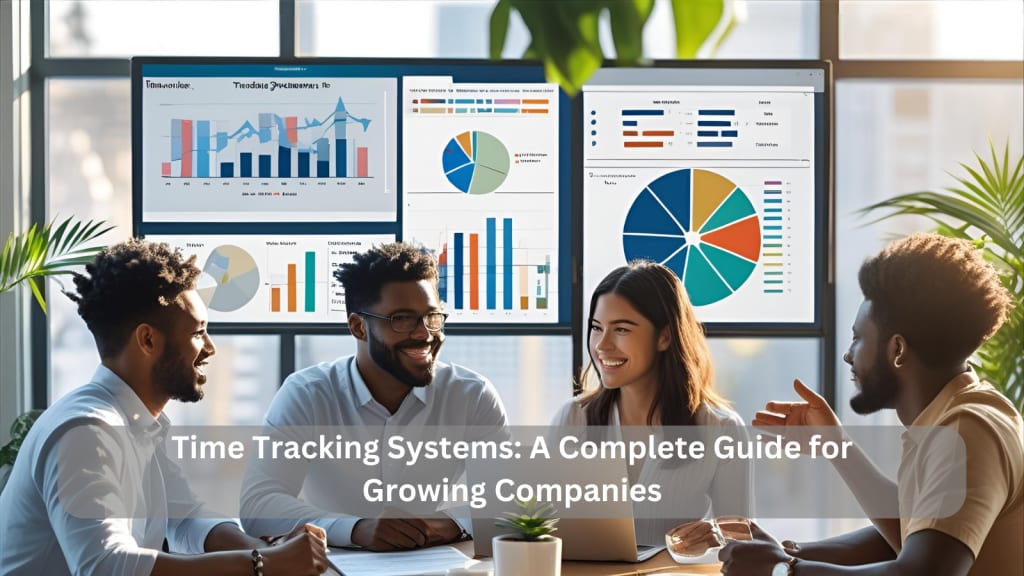
Are you using one of the time tracking systems in your business? If not, then you are missing out on many benefits. If you are in doubt, we are here to tell you all about the different types of time tracking systems available for businesses, organizations, and enterprises worldwide. You will know what a time tracking system is, its categories, and even the time tracking software solution we use to track the work hours of our employees and teams. With that being said, let us get started right away with it.
What are Time Tracking Systems?
Time tracking systems are systematic tools and apps that you use to track work hours. Businesses use these to track the work-time utilization and project hours of employees. Overall, they can even be the simplest things. For instance, if you are using a piece of paper to only note down employee hours, then that, too, is a time tracking system. Quite messy, though, but still it is. However, another interesting thing to note is that time tracking systems usually have a format for recording work hours.
6 Types of Time Tracking Systems
Businesses use these types of tracking systems to track the work hours of their employees.
1. Manual Time Clocks
These are the very basics of time tracking systems out there. Yep, we are discussing the round mechanical things that tell the time. Usually, employees use it to track down the hours, minutes, and seconds and to note their clocking times. However, these are heavy, bulky, and employees can be inaccurate by even a few seconds, which can drastically affect payroll.
2. Time Cards
These are formatted cards on which employees write the clock-in and clock-out time for each day. However, since these don’t have some mechanics in place, they are easy to manipulate. For example, employees can steal time by writing down false hours to indicate early clock-in and late clock-out. This can cost you money.
3. Punch Cards
Punch cards look and feel like your credit and debit cards. However, the currency here is time. Workers insert or tap these on a reader to clock in and out of their shifts. These are handy and foolproof or tamperproof. However, employees in a hurry can forget to tap these hours, which means that they literally were absent for the day. Nonetheless, punch cards can also be used to record the initial and end times of tasks or half-day shifts.
4. Pen & Paper Timesheets
Back in the ancient era, we used to use pen and paper timesheets to note down the start and end times of tasks and projects. These are again the most inaccurate hours tracking systems ever. For starters, these can easily get messy, and a bulk of these sheets can get heavy. Plus, they are easy to lose, get torn or dusted, or get stolen, too.
5. Biometric Clocking
First of all, these are accurate, foolproof, and tamperproof. Plus, they can also be integrated with the other tools businesses use to track time. Plus, these can also be personalized for specific employees. For instance, employees who use reading glasses can always clock in and out with their thumbs.
6. Time Tracking Software
It’s the most accurate time tracking system ever. It automatically tracks employee hours and can integrate with all the other tools you use, such as your attendance application.
5 Benefits of Using Time Tracking Software Solutions for Businesses
Here’s why you should implement time tracking software in your organization.
1. Reduced Time Theft
The right time tracking software will make the most precise online timesheets and work-hour reports with data analytics to show you if someone has worked less than they actually told you. This helps you prevent time theft.
2. Streamlined Payroll Processing
With accurate work hours data integrated into the payroll tool, there are no unnecessary steps, which speeds up and optimizes processing, leading to employees getting paid fairly and on time.
3. Increased Employee Work-Time Utilization Efficiency
By using the right time tracking software, you will easily spot obstacles, such as work gaps, delays, unproductive patterns, and time-consuming tasks, which help you boost the work-time utilization efficiency levels of your employees.
4. Streamlined Workflows
Time tracking software helps you detect and prevent unnecessary time-consuming steps to streamline workflows.
5. Reduced Break Time Exceeds
Time tracking software can also detect if the break or idle time has exceeded the limit and will notify you in real-time.
Conclusion
With that, we are done putting our post for today’s title, Time Tracking Systems: A Complete Guide for Growing Companies, under wraps. To summarize, conclude, and provide you with a final word, we can say that as a growing business, it is essential for you to keep tabs on what your employees are working on and for how much, along with accurate clocking times. Knowing this data helps you identify workforce requirements and expand. For even more detailed insights, though, use DeskTrack, the ultimate project time tracking software.
About the Creator
james war
My name is James War, and I'm a successful marketing manager with three solid years of experience in the IT sector. I'm a tech-loving marketing expert adept at developing and assembling winning marketing campaigns.
Enjoyed the story? Support the Creator.
Subscribe for free to receive all their stories in your feed.
Comments
There are no comments for this story
Be the first to respond and start the conversation.