
Three Defining Crosscurrents: AI, Energy, Debt and the Global Economy at a Turning Point
Kristalina Georgieva’s Singapore Address Dual Shocks Pulling in Opposite Directions AI as Transformative as Railroads and the Grid Debt Nearing 100% of Global GDP Preparing for the 2026 IMF Annual Meeting in Thailand

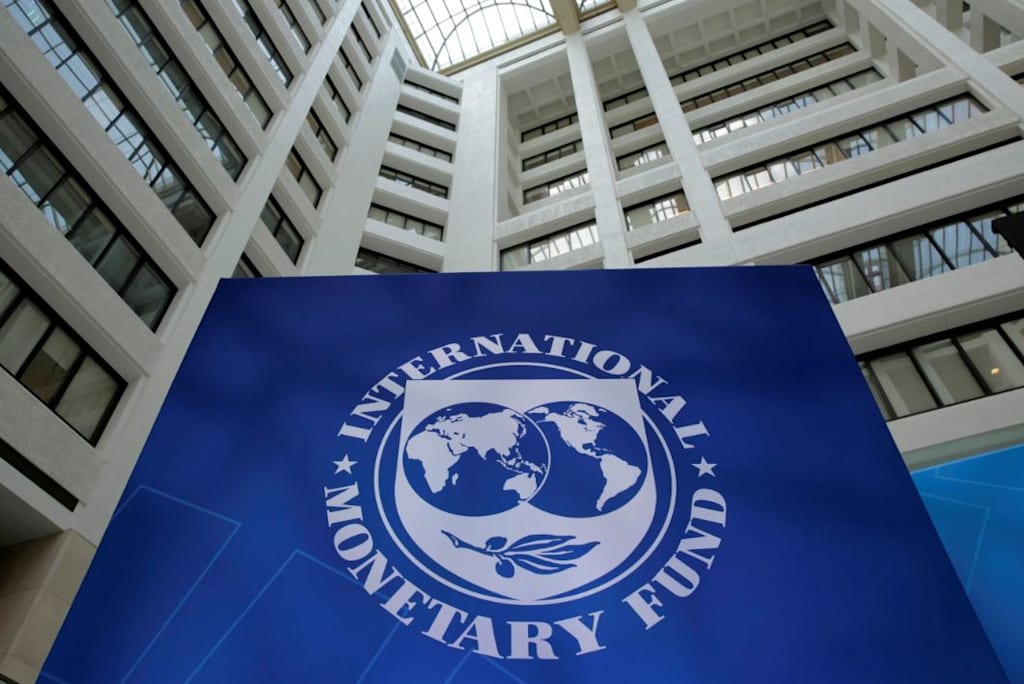
Delivering a major address at the Lee Kuan Yew School of Public Policy in Singapore on Wednesday, with Singapore President Tharman Shanmugaratnam in attendance, International Monetary Fund Managing Director Kristalina Georgieva laid out a clear, compelling, and at times sobering assessment of the forces reshaping the world economy. Speaking ahead of the 2026 IMF Annual Meeting in Thailand next week, she identified three powerful, interconnected crosscurrents: the rapid and transformative arrival of artificial intelligence, persistently elevated energy prices, and historically high levels of public debt. Together, they create a landscape of extraordinary opportunity and significant risk, one that will define national fortunes for decades to come.
Two Shocks, Pulling the World Apart
The most immediate tension, Georgieva explained, is that the global economy is being driven by two opposing forces that do not neatly offset one another. On one side stands a negative supply shock from energy: prices remain stubbornly high, flowing through every sector and keeping inflation elevated. This forces central banks to maintain higher interest rates for longer, pushes up government bond yields, squeezes household purchasing power, and raises costs for businesses across every region. On the other side surges a positive demand shock driven by artificial intelligence, a wave of investment, innovation, and technological adoption that is reshaping industries, creating new markets, and promising substantial gains in productivity.
These forces do not balance each other out; they complicate every decision. Higher energy costs restrain growth even as AI accelerates it; inflation lingers while technological progress opens new possibilities; central banks must guard against price pressures without stifling the very investment that will drive future prosperity. The result is an economy that is neither slowing uniformly nor advancing smoothly; it is being stretched, and managing that tension is the central challenge facing policymakers today.
AI: As Transformative as Rail and Electricity
Georgieva emphasised that AI is no longer an emerging trend it is here, and it is already reshaping global trade and investment. AI hardware and related technology products now account for more than one‑tenth of all goods traded worldwide, and that share is rising rapidly. “Love it, hate it, or fear it, AI is here, rapidly becoming a key driver of countries’ relative fortunes in the world economy,” she stated plainly.
The scale of investment is comparable to the great infrastructure revolutions of the past. “Global investment‑to‑GDP in AI will reach and likely exceed the amounts that went into building the railroads, the electricity grid, or the telecommunication network,” she noted a comparison that underscores just how fundamentally economic activity will be reconfigured. The potential reward is immense: IMF research suggests that if deployed wisely, AI could add up to half a percentage point to global growth each year. That may sound modest, but it is transformative: lifting annual growth from 3.0% to 3.5% would, over a decade, add an entire economy the size of ASEAN to the world’s total output.
Realising that promise, however, will not happen automatically. “We will learn as we go,” Georgieva acknowledged, “but we know AI preparedness is key.” That means building robust digital infrastructure, helping workforces adapt to new roles, and putting in place regulatory guardrails to protect citizens while fostering innovation. Nations that prepare well will surge ahead; those that fall behind risk being left further behind.
The Weight of History: Debt at a Post‑War Peak
Compounding these opportunities and challenges is the third crosscurrent one that limits how boldly nations can act. “This takes us to the third major factor affecting the global economy today: excessive fiscal deficits, record levels of public debt and high debt‑servicing costs,” Georgieva said. Global public debt is now nearing its highest point since the end of the Second World War and is on track to exceed 100% of total global GDP. This is not a temporary blip or a problem for a few nations; it is a broad, structural reality touching advanced economies and emerging markets alike.
The timing could not be more difficult. Just as interest rates rise to combat inflation, governments face larger repayment bills. Just as they need resources to invest in digital infrastructure, education, and clean energy, a growing share of revenue is diverted to servicing past obligations. Fiscal space the ability to respond flexibly to shocks, support vulnerable populations, and seize new opportunities, is shrinking. Nations find themselves caught in a bind: delay necessary investment and fall further behind; invest heavily and deepen indebtedness. There is no easy path forward, and the choices made now will define fiscal health for a generation.
Interconnected Challenges, Shared Solutions
What makes this moment uniquely demanding is that none of these three forces operates in isolation. High energy prices widen deficits and swell debt; AI offers the productivity gains that could ease debt burdens over time but only if nations can afford to invest in it; heavy debt limits the ability to subsidise energy transitions or digital modernisation. Each crosscurrent amplifies the others, creating a web of interdependencies that national action alone may not be sufficient to untangle.
That is why next week’s Annual Meeting in Thailand matters so deeply. The conversations there will not be abstract: they will shape how AI benefits are shared, how energy security is pursued alongside decarbonisation, and how debt is managed without stifling growth. As Georgieva’s Singapore remarks make clear, this is not merely an economic moment it is a defining one. The choices made now will determine whether this era of transformation becomes one of shared progress or widening division.
About the Creator
Mark Lim
Hi I am mark an automotive student and a car, tech and food enthusiast ! Im gonna try and post daily & hope you enjoy what I write and do share my page with people you know. I would gladly appreciate it! Cheers
Enjoyed the story? Support the Creator.
Subscribe for free to receive all their stories in your feed.
Comments
There are no comments for this story
Be the first to respond and start the conversation.