
The Wedding That Was Actually a Licensing Deal
What a Blue House banquet and a mobile telecom tender reveal about the difference between a family alliance and a marriage
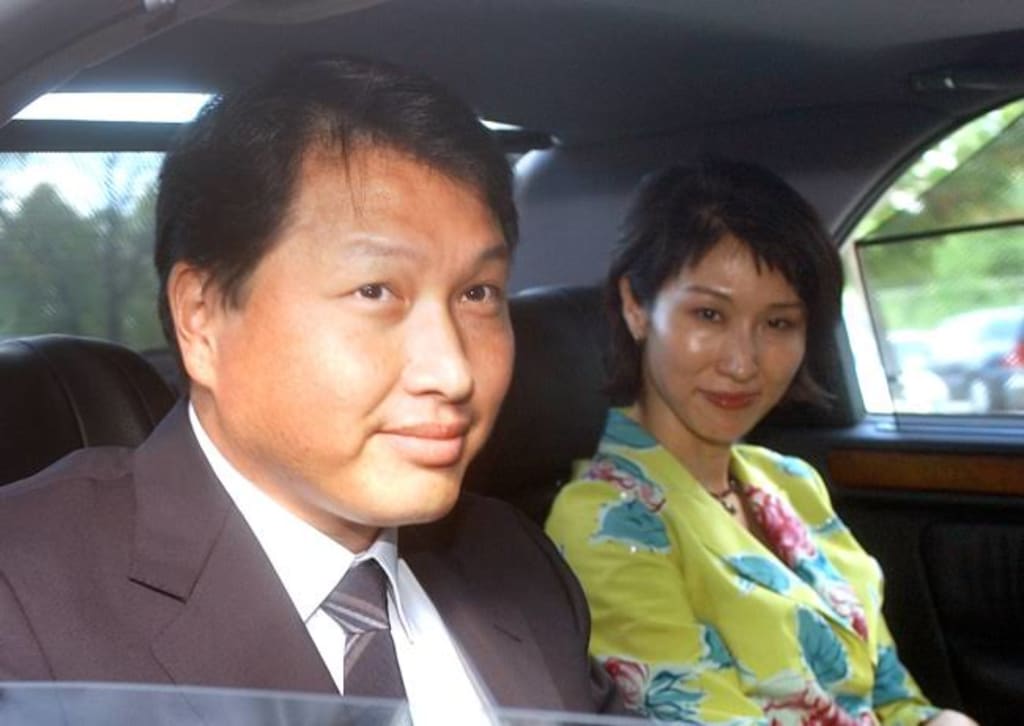
In September 1988, Seoul. Two names were printed on the invitations: Roh So-young and Chey Tae-won. Someone counted the guest list. A few from the Blue House, a few from SK, the rest distributed among Samsung, Hyundai, and LG. The groom's father, Chey Jong-hyun, stood at the entrance greeting guests, his handshake a little harder than usual.
Nobody mentioned the mobile telecom license that day. But people in SK's strategic planning office knew the chairman had been rereading a document about the second operator license. Sunkyong, SK's predecessor, had applied. Hyundai was competing. The identity of President Roh Tae-woo's son-in-law was visible at a certain point in the approval process, even if no one said it aloud.
What followed was messier than the wedding suggested. In 1992, SK was selected as the second operator. Opposition leader Kim Dae-jung held up documents in the National Assembly and called it "a shameless act of presidential cronyism." The Blue House sent SK a letter recommending it return the license. Within a week, SK withdrew voluntarily. The real turn came in 1994, under Kim Young-sam, when SK acquired Korea Mobile Telecommunications through a public tender. No cronyism accusation that time. The president had changed.
The appellate court later found that Roh Tae-woo and Roh So-young "provided financial support and made contributions to the growth of SK Group." The retrial court found that the 30 billion won Roh Tae-woo provided was illegal money and could not count toward her contribution. The judicial system priced the political value of a president's daughter: part counted, part voided. What she gave up for it never entered a balance sheet.
At the University of Chicago, classmates remembered her sitting in the third row, taking notes in blue-black ink, handwriting very small. She studied education; her thesis direction was curriculum design. She withdrew quickly. The registrar's office said she wore a beige trench coat the day she handed in the form and asked, "If I want to come back later, how long can my credits be kept?" Five years. She never came back. A Korean classmate from the same cohort later became a professor at a private university in Seoul. When she saw Roh Tae-woo's obituary, she remembered Roh So-young's library habit: reserving a seat with a green-covered Korean-English dictionary.
In the early married years, at SK events, Roh So-young stood beside Chey Tae-won. In the order of precedence she came after the chairman's wife and before the vice chairman's wife. Her role was speeches and group photos. She never entered the family's core meetings. Once, when SK acquired an education company, she mentioned curriculum integration to her husband. Chey Tae-won said, "You don't need to worry about these things." The sentence repeated in her head for years.
In 2003, Chey Tae-won was imprisoned for an economic crime. Roh So-young went to the lawyer's office several times. In the hallway she made three calls. Her father's former secretary said it was not convenient. A former Blue House economic adviser picked up; they talked for seven minutes. SK's legal office gave her the bail figure. Chey Tae-won's sentence was reduced. She did not meet him on release day. SK's press release said "the chairman returns to the frontline of management." It did not say who made the calls.
On December 29, 2015, Chey Tae-won admitted in an open letter that he had an extramarital affair and a daughter out of wedlock, and said he wanted a divorce. The newspaper arrived while Roh So-young was eating breakfast. Three sets of bowls and chopsticks on the table; all three children present. She folded the paper, put it on the sideboard, finished her porridge. That afternoon her lawyer issued a statement: she did not want a divorce, and she could consider accepting her husband's illegitimate daughter. SK stock fell 3.2 percent that day, rose 1.8 percent the next. The market moved on faster than she did.
Adultery had been ruled unconstitutional in February 2015. Chey Tae-won's affair no longer faced criminal prosecution. Roh So-young held no SK shares. The children were in university and high school. Her father had been imprisoned for corruption, then pardoned; what remained of his political network was thin and mostly retired. Publicly refusing divorce was a choice made under those conditions at once. Seoul divorce lawyers later debated the case on television. Some said she should have left earlier. Some said she endured correctly. Both missed the point: in 2015 she had nothing to play.
She waited until 2019. Her eldest daughter, Chey Yoon-jung, had entered SK Biopharmaceuticals; her second daughter, Chey Min-jung, handled international trade; her youngest son, Chey In-geun, worked in SK's strategy division. Those positions grew year by year through parent-teacher meetings, internship recommendations, departmental rotations. In 2019 she filed a divorce counterclaim: 2 trillion won in marital property, 3 billion won in solatium, all cash. The cash demand proved decisive. Chey Tae-won could keep his shares. She would take money and leave, without touching the equity structure, without triggering dilution, without tying her remaining years to SK's share price.
December 2022, first instance: 66.5 billion won in property division, 100 million won in solatium. Both sides appealed. May 2024, appellate court: 1.3808 trillion won, 2 billion won solatium. Chey Tae-won appealed. October 2025, Supreme Court: upheld the solatium, overturned the property division, remanded. July 2026, retrial: 944 billion won, about 4.37 billion RMB. Still the highest divorce property division in South Korean history. Either side could still appeal.
On the day she signed the retrial documents, according to people around her who later spoke to the media, she paused on the property division page and asked her lawyer how long another appeal would take. A year to a year and a half, he said. She nodded, signed. That afternoon she went to a gallery in Seoul for a young artist's solo show. The gallery owner posted a photo on social media: "Ms. Roh said the colors reminded her of autumn in Chicago." She had left Chicago before finishing. Her credits were kept for five years.
The 944 billion won does not buy back the years. It does make the arithmetic visible: endurance alone produces nothing. What produced the settlement was the pile of leverage she built while enduring: her father's remaining contacts, three children placed inside SK, a complete evidentiary record of marital fault, a press environment that eventually turned, and the decision to take cash instead of equity.
Most women in comparable marriages do not have that pile.
In 2009, Lee Joo-hyun divorced from Samsung. The settlement closed in a week. The money later saved Daesang Group. Her quick exit gets compared to Roh So-young's decade-long fight, but the useful difference is not whose family was stronger. It is the opponent's structure: Samsung wanted to buy dignity, Chey Tae-won calculated that Roh So-young would not flip the table. Exit capacity depends on how much the other side fears scandal, how much contribution a court will recognize, and whether you hold something the other side does not want to lose.
After the divorce, SK events no longer included a speech from her. She appears occasionally at art exhibitions and university donation ceremonies in Seoul. Her clothes changed from dark suits to looser cuts. A reporter at a gallery asked how she was doing. "Learning pottery," she said. "My hands are clumsy." No financial outlet quoted it. It had nothing to do with SK's share price.
The forty minutes she spent at the gallery on signing day were closer to the afternoon she was twenty and reserving a seat in the Chicago library than any Blue House wedding. Only now the green-covered dictionary holds down a receipt for a painting.
About the Creator
Jin
Writer of reamstories
https://reamstories.com/jin
Enjoyed the story? Support the Creator.
Subscribe for free to receive all their stories in your feed. You could also become a paid subscriber, letting them know you appreciate their work.
Comments
There are no comments for this story
Be the first to respond and start the conversation.