
The Unsung Hero of Fusion Power: How Kyoto Fusioneering Is Building the Supply Chain for a Clean Energy Future
While most of the world focuses on the reactors themselves, one Japanese startup is quietly assembling the specialized equipment that will make fusion power a reality.

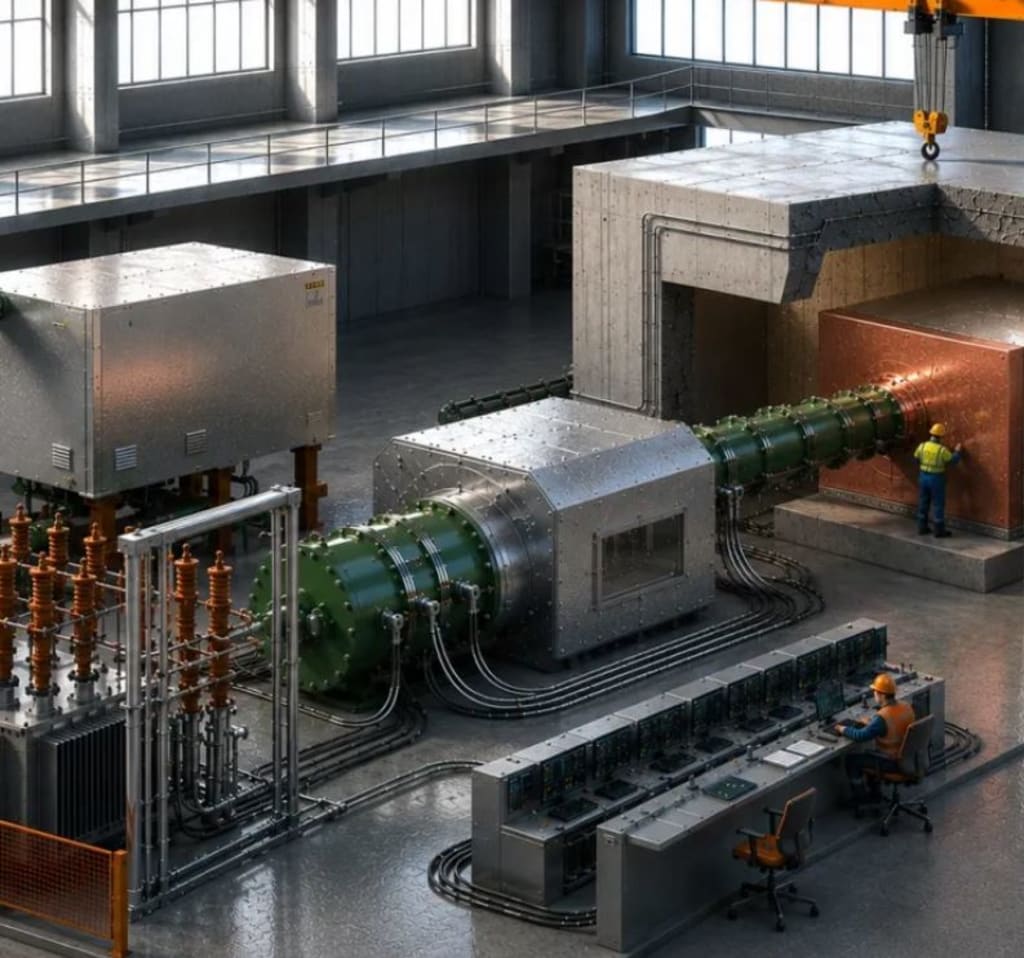
In the fusion power world, most of the attention gets lavished on the reactors themselves, where atoms fuse to unleash enormous amounts of energy. But a fusion reactor can't run for long without a lot of other equipment, and building a fusion reactor is expensive enough on its own. Plenty of startups are happy to let someone else handle the rest. Enter Kyoto Fusioneering, a Japan-based company that has emerged as one of the most critical players in the fusion industry not by building reactors, but by building everything else.
Among the dozens of companies in the emerging fusion-power supply chain, few specialists are bigger than Kyoto Fusioneering. The company has raised $121 million in committed capital, according to FusionX. Now it has landed grants from the U.S. Department of Energy and the state of Tennessee to build a prototype fuel breeding device at Oak Ridge National Laboratory (ORNL). Alongside the announcement, Kyoto Fusioneering exclusively told TechCrunch that it's moving its U.S. headquarters to Oak Ridge.
The move positions Kyoto Fusioneering at the heart of America's fusion research ecosystem, placing it within walking distance of one of the world's premier national laboratories and a growing cluster of fusion startups. It's a strategic decision that underscores the company's ambition to become the go-to supplier for the fusion industry.
The Supply Chain That Fusion Needs
The startup has emerged as a key player in the fusion power industry. Over half of fusion startups have said they plan to work with external suppliers like Kyoto Fusioneering on fuel cycle technologies, according to a recent Fusion Industry Association survey. That's a remarkable statistic for a company that operates behind the scenes, providing the specialized equipment that reactor builders don't want to develop themselves.
Kyoto Fusioneering's forthcoming device, called Unity-3, is being developed with ORNL and will test a fuel cycle technology known as a breeding blanket. Breeding blankets harvest energy from the fusion reactor while also generating fresh fusion fuel. One breeding blanket design will use liquid lithium, which will absorb both heat and neutrons. As the lithium atoms in the blanket are bombarded with neutrons, they split into helium and tritium, an isotope of hydrogen that's an important fuel for many reactor designs. The tritium is then separated from the blanket and sent to the reactor, while heat is extracted to generate power.
All of this requires heat-resistant materials, bespoke pumps, and other specialized equipment, and it's just one slice of a fusion power plant that needs to be developed before it can connect to the grid. Kyoto Fusioneering is also developing systems to heat fusion fuel into a plasma, recycle unburned fuel from the exhaust, and harvest heat to generate electricity.
Unity-3 will test the performance of not just liquid lithium, but a range of other breeding blanket materials, Kyoto Fusioneering told TechCrunch. The device will help researchers and startups validate the data they've been generating, so far mostly through computer models. Other fusion startups, including Realta Fusion, Thea Energy, Type One Energy, and Xcimer Energy, will use data from the Unity-3 experiments to design their reactors. It's a range of startups—and approaches to fusion power that should help position Kyoto Fusioneering as a go-to supplier when fusion power is ready for the grid.
The Challenge of Fueling a Fusion Reactor
One of the most overlooked challenges in fusion power is the fuel itself. Most commercial fusion reactor designs rely on a combination of deuterium and tritium as fuel. Deuterium is abundant and can be extracted from seawater, but tritium is scarce. It's a radioactive isotope of hydrogen with a half-life of just 12.3 years, meaning it decays relatively quickly and must be continuously replenished.
This is where breeding blankets come in. A breeding blanket surrounds the fusion reactor core and serves two critical functions: it captures the energy released by the fusion reaction and converts it into heat that can be used to generate electricity, and it produces new tritium fuel by bombarding lithium with neutrons. Without an effective breeding blanket, a fusion reactor would quickly run out of fuel.
The challenge is that breeding blankets must withstand extreme conditions: intense heat, high radiation, and constant neutron bombardment. They must also be efficient at capturing neutrons and converting them into tritium. Developing materials that can survive these conditions for years at a time is one of the biggest technical hurdles facing the fusion industry.
Kyoto Fusioneering's Unity-3 device will test a range of different breeding blanket designs, helping researchers identify which materials and configurations work best. The data generated by these experiments will be critical for fusion startups that are designing their own reactors, many of which lack the resources to build their own breeding blanket test facilities.
A Strategic Move to the Heart of U.S. Fusion Research
Oak Ridge National Laboratory is one of the world's leading centers for fusion research. It's home to the Spallation Neutron Source, which provides researchers with powerful beams of neutrons for materials testing, and it has a long history of fusion-related research dating back to the 1950s. By moving its U.S. headquarters to Oak Ridge, Kyoto Fusioneering is positioning itself at the center of the American fusion ecosystem.
The move also brings the company closer to a growing cluster of fusion startups that are setting up operations in the Tennessee Valley. The region offers access to research facilities, a skilled workforce, and abundant low-cost electricity, all essential ingredients for the fusion industry.
"Oak Ridge is the perfect location for our U.S. headquarters," Kyoto Fusioneering CEO Taka Nagao told TechCrunch. "The proximity to ORNL, the talent pool, and the supportive business environment make it an ideal base for our operations. We're excited to be part of this community and to contribute to the growth of the fusion industry in the United States."
The grants from the Department of Energy and the state of Tennessee will help fund the construction and operation of Unity-3. The exact amount of the grants has not been disclosed, but they represent a significant vote of confidence in Kyoto Fusioneering's technology and its importance to the U.S. fusion program.
The Fusion Industry's Hidden Giant
Kyoto Fusioneering was founded in 2019 by a group of fusion researchers from Kyoto University. The company's founders recognized that while many startups were focused on building reactors, there was a gap in the market for the specialized equipment that reactors would need. They set out to fill that gap, developing a suite of technologies that cover the entire fusion fuel cycle.
Today, Kyoto Fusioneering is one of the most important companies in the fusion industry that most people have never heard of. Its technologies are being incorporated into reactor designs by startups around the world, and its expertise is in high demand. The company's $121 million in committed capital is a testament to investor confidence in its vision and its execution.
The company's growth reflects a broader trend in the fusion industry: the emergence of a specialized supply chain that will be essential for commercializing fusion power. Just as the semiconductor industry has a vast ecosystem of suppliers that provide specialized equipment and materials, the fusion industry will need a similar ecosystem to succeed.
Kyoto Fusioneering is positioning itself to be a leader in that ecosystem. Its focus on fuel cycle technologies, plasma heating, and heat extraction puts it at the center of the fusion value chain. And its partnership with ORNL and other national laboratories gives it access to world-class research facilities and expertise.
The fusion industry is at a pivotal moment. After decades of research, fusion is finally approaching commercial viability. Startups around the world are developing innovative reactor designs, and governments are investing billions of dollars in fusion research. But for fusion to become a reality, the industry needs more than just reactors. It needs a supply chain of specialized equipment and materials.
Kyoto Fusioneering is helping to build that supply chain. Its work on breeding blankets, fuel cycle technologies, and other critical systems is essential for the commercialization of fusion power. And with its new grants and its move to Oak Ridge, the company is positioning itself to play an even larger role in the years ahead.
"Fusion power has the potential to transform the global energy system," Nagao said. "But to get there, we need more than just innovative reactor designs. We need a robust supply chain of specialized equipment and materials. Kyoto Fusioneering is committed to building that supply chain and helping to make fusion power a reality."
As the fusion industry continues to grow, companies like Kyoto Fusioneering will become increasingly important. They are the unsung heroes of the fusion revolution, the companies that are building the infrastructure that will make fusion power possible. And with its new grants and its move to Oak Ridge, Kyoto Fusioneering is taking a big step toward becoming a leader in that effort.
About the Creator
Mark Lim
Hi I am mark an automotive student and a car, tech and food enthusiast ! Im gonna try and post daily & hope you enjoy what I write and do share my page with people you know. I would gladly appreciate it! Cheers
Enjoyed the story? Support the Creator.
Subscribe for free to receive all their stories in your feed.
Comments
There are no comments for this story
Be the first to respond and start the conversation.