
The Unlikely Fight for Arkansas: Can a Deep-Red State Turn Blue in 2026?
How frustration, economic strain, and shifting turnout patterns are shaking up one of America’s reddest states

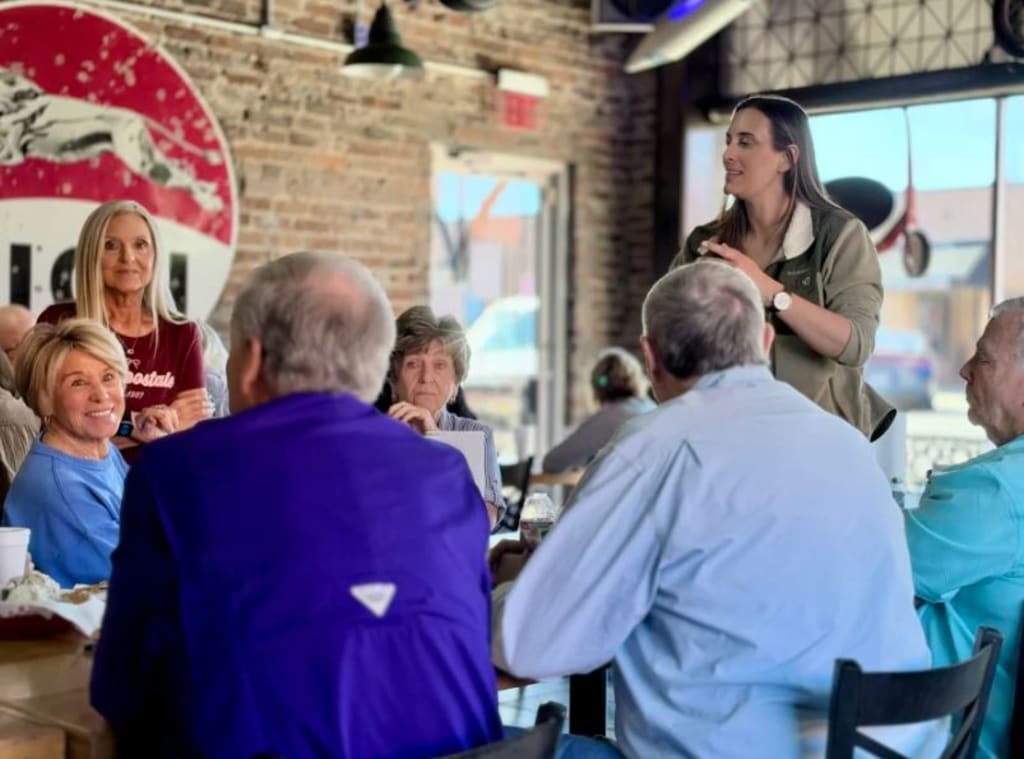
HOPE, Ark. — Hallie Shoffner does not lead with her party affiliation. On the campaign trail across Arkansas, the Democratic U.S. Senate candidate introduces herself first as an Arkansan, a farmer, a neighbour, someone who knows the land and the daily struggles of the people who work it. It is a deliberate choice in a state where nearly two out of three voters backed President Trump in 2024, and Republican Senator Tom Cotton won re-election handily in 2020. But as Election Day draws near, Shoffner and a growing cohort of Arkansas Democrats are sensing an opening that few political observers saw coming.
“This is the sleeper race,” Shoffner told NPR. “No one’s noticed it, and no one is going to see it coming.”
Values Over Party
Shoffner’s campaign is forged from personal experience. A multigenerational farmer, she made the difficult decision to shut down her family’s operation in 2025, crushed by rising input costs, shifting trade policies, and the ripple effects of tariffs and global instability. “I come from a community that faded away in my lifetime,” she said. “I was the last one left, and I felt left behind, like people in power were making decisions about me, but never talking to me.”
That feeling of being overlooked resonates far beyond traditional Democratic strongholds. Vanilla Hannah, a local candidate supporting Shoffner, summed up the mood at a campaign gathering: “When it comes down to putting food on the table and making ends meet, the letter next to your name doesn’t matter. We’re all facing the same struggles, and we’re all ready for something different.” Shoffner calls it her “Arkansas First” campaign, refusing outside spending from national groups, rejecting imported messaging, and framing the contest not as a battle between left and right, but between Washington insiders and people who actually understand the state.
A Wider Wave of Discontent
Running in Arkansas’ 2nd Congressional District, Democratic nominee Chris Jones is tapping into that same frustration. Jones, who built name recognition during his 2022 gubernatorial run, says voters who supported the Trump administration are the very ones now approaching him with their doubts. “They voted hoping for lower prices, peace abroad, and accountability at home,” he said. “None of it happened. They’re hurting, and they’re looking for answers.”
It is easy to forget, Jones points out, that Arkansas had an all-Democratic congressional delegation just 15 years ago. The shift toward the GOP was not a permanent destiny it was a reaction to economic anxiety and a sense that leadership had grown distant. “We are right back in that same moment,” he observed. “People aren’t switching ideologies; they’re searching for someone who sees their reality.”
Republicans have taken notice, pouring millions into defensive advertising and get-out-the-vote efforts across both races. Most forecasters still list Arkansas’ Senate seat and the 2nd District as leaning Republican, but the margin is tightening faster than models predicted.
The Electorate Shifts
Another force is altering the landscape: Black voter turnout is surging across the South in response to changes in voting laws and redistricting plans that have weakened representation in several states. In primaries and early voting, participation is running higher than expected, particularly in communities that feel their voice has been diluted. “People have realised if we don’t show up now, there may not be another chance,” Jones said.
Supporters like Marcus Hatley, who hosted Shoffner at his family farm, call it a “course correction.” “People are tired of being ignored,” he said. “They’re ready to vote differently, and that could change everything.”
Shoffner knows the odds remain steep. But she also knows her state, and right now, voters of all affiliations are telling her the same thing: they are tired, they are struggling, and they are ready to be heard. “This isn’t about a political party,” she said. “It’s about who shows up and who shows up for them.” Whether Arkansas turns a shade bluer on November 3 is anyone’s guess. But the fact that it is even a question is itself a sign that something has shifted in the heart of the South.
About the Creator
Mark Lim
Hi I am mark an automotive student and a car, tech and food enthusiast ! Im gonna try and post daily & hope you enjoy what I write and do share my page with people you know. I would gladly appreciate it! Cheers
Enjoyed the story? Support the Creator.
Subscribe for free to receive all their stories in your feed.
Comments
There are no comments for this story
Be the first to respond and start the conversation.