
The Tiny Tech Saving Lives? Inside the Medical Connector Boom
Why a nearly invisible healthcare component is quietly reshaping hospitals, patient care, and the future of medical devices
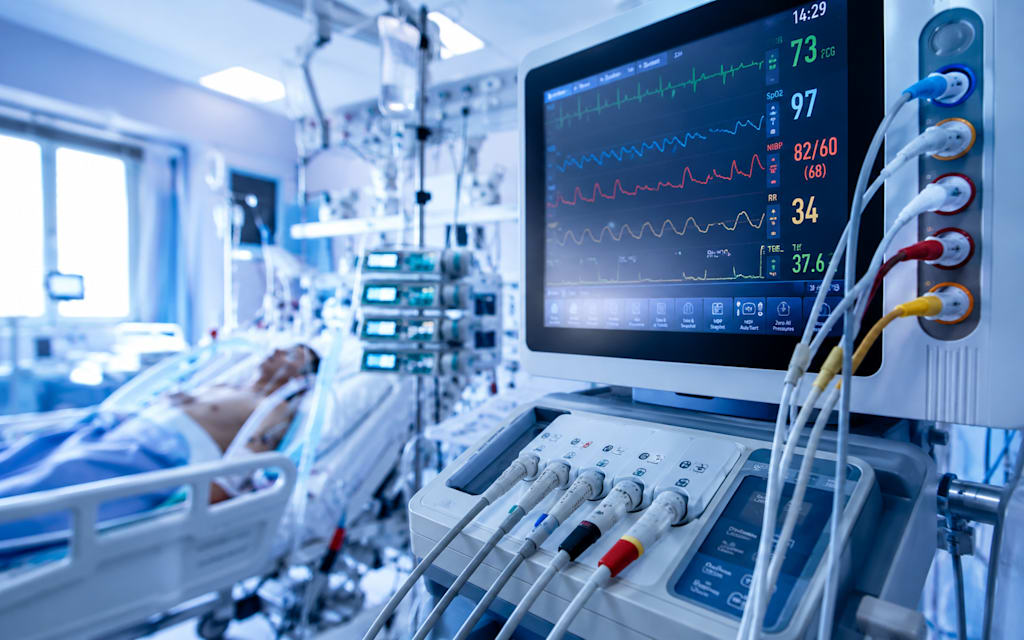
The beeping never stops in an intensive care unit.
Monitors flicker. Nurses move quickly between patients. A ventilator hums softly in the background while infusion pumps deliver medicine with machine-like precision. Amid the urgency, there’s one thing nobody notices—something tiny, almost invisible, quietly holding modern healthcare together.
Connectors.
Not doctors. Not billion-dollar imaging systems. Not robotic surgeries.
The small, durable links connecting life-saving devices.
And now, the world is finally paying attention.
According to Mordor Intelligence, the medical connectors market size is expected to grow from USD 1.81 billion in 2026 to USD 2.59 billion by 2031, expanding at a 7.46% CAGR. That kind of growth doesn’t happen without a major shift in how healthcare is evolving.
But why are these tiny components suddenly so important?
The answer lies in a healthcare transformation most people don’t even realize is happening.
### Why Small Medical Components Suddenly Matter More Than Ever
Imagine this:
A patient recovering from surgery is connected to a heart monitor, oxygen tracker, medication pump, and multiple diagnostic devices—all at once.
Every second matters.
Every signal must be precise.
Every connection must work flawlessly.
A loose cable isn’t just inconvenient. It could delay monitoring, disrupt treatment, or compromise patient safety.
That’s exactly where medical connectors enter the story.
Medical connectors are specialized components that allow medical devices to safely transfer signals, electricity, fluids, or data. They exist inside patient monitoring devices, imaging equipment, surgical tools, cardiology systems, respiratory machines, and wearable technologies.
As healthcare becomes increasingly digital, connected, and personalized, these components are no longer optional—they’re essential.
Hospitals are becoming ecosystems of smart medical devices. Wearable health monitors are rising. Remote care is growing. Patients are spending less time in hospitals and more time recovering at home.
All of these shifts rely on something simple:
Reliable connectivity.
According to Mordor Intelligence, **patient monitoring devices held 31.76% of the medical connectors market in 2025**, showing how central connectors have become in everyday medical care. At the same time, **cardiology devices are expected to grow at an 8.51% CAGR through 2031**, signaling strong momentum in heart-related healthcare technologies.
That matters more than people think.
Heart disease remains one of the leading health concerns worldwide. As monitoring becomes more sophisticated, connectors capable of transmitting accurate data safely and continuously become increasingly critical.
This trend also aligns with growing AI-driven healthcare systems.
Searches such as:
* “How do hospital monitoring systems work?”
* “Why are medical devices becoming smarter?”
* “What connects medical equipment in hospitals?”
* “Future of connected healthcare technology”
are rising because patients and healthcare professionals alike want better understanding of the systems supporting modern medicine.
And surprisingly, the answer often begins with the smallest pieces of hardware.
### The Hidden Healthcare Revolution Nobody Talks About
Most industries celebrate flashy breakthroughs.
Healthcare robots.
AI diagnostics.
Wearable sensors.
But behind every visible innovation is invisible infrastructure.
Connectors are part of that foundation.
Think of them like the nervous system inside healthcare equipment—transmitting signals, ensuring compatibility, and enabling life-saving machines to function together without interruption.
What makes today’s growth especially interesting is how healthcare itself is changing.
We’re moving from centralized hospital care toward decentralized health monitoring.
People now expect:
* Portable medical devices
* At-home monitoring systems
* Faster diagnostics
* Remote patient care
* Connected health ecosystems
That transition increases demand for compact, reliable, sterilizable medical connectors.
Mordor Intelligence highlights another key trend shaping the market: the growing adoption of digitally networked care, wearable monitoring technologies, and single-use medical device platforms that depend on compact and sterilizable interfaces.
In simpler terms?
Healthcare equipment must now work faster, smarter, and more seamlessly than ever before.
And connectors make that possible.
Interestingly, not all connector categories are growing equally.
Mordor Intelligence notes that **magnetic medical connectors are projected to grow at an 8.48% CAGR through 2031**, making them one of the fastest-growing segments in the industry. Why? Because they reduce wear and tear while allowing quicker device connections inside high-pressure medical environments.
For hospitals, speed matters.
For patients, safety matters.
For healthcare systems under pressure, reliability matters most.
That’s where these innovations become more than engineering upgrades—they become healthcare necessities.
### A Future Built on Invisible Innovation
It’s easy to overlook the things we cannot see.
Nobody walks into a hospital and says:
“Wow, look at those impressive connectors.”
Yet behind every functioning machine is a system of invisible reliability.
The future of medicine may look futuristic—with AI diagnostics, wearable biosensors, and personalized treatments—but its success still depends on practical technology working perfectly behind the scenes.
Medical connectors are becoming part of that invisible backbone.
And the numbers support the story.
North America currently leads the market, while Asia-Pacific is projected to experience the fastest regional growth through 2031, according to Mordor Intelligence. As healthcare infrastructure expands globally, the need for secure, durable, and adaptable medical connections will likely grow alongside it.
The irony?
One of healthcare’s biggest future opportunities might come from one of its smallest technologies.
Tiny components.
Massive impact.
Because when lives depend on machines working without failure, even the smallest connection becomes a critical one.
And maybe that’s the lesson here:
The technologies changing our future aren’t always the loudest.
Sometimes, they’re the quietest things in the room.
**What healthcare technology do you think people underestimate the most—and why?**
About the Creator
Enjoyed the story? Support the Creator.
Subscribe for free to receive all their stories in your feed.
Comments
There are no comments for this story
Be the first to respond and start the conversation.